7 AI Image-to-3D Generators I Tested in 2026: Which One Is Actually Worth Using?
Using the same portrait and default settings, we tested Prism 3.1, Meshy 6, Tripo P1, Hunyuan3D, Forge, Trellis 2 and Rodin 2.5. See how they compare in facial similarity, texture, hair, clothing and mesh quality, plus which tools work best for realism, game assets and further editing.

Artificial Intelligence is transforming the way we create 3D content. Tasks that once required hours—or even days—in Blender or Maya can now be completed in just a few minutes using a single image.
The number of AI Image-to-3D models has grown rapidly over the past year. Some prioritize geometry accuracy, others focus on realistic textures, while some are designed specifically for game-ready assets.
To see how these models perform in real-world scenarios, I tested seven popular Image-to-3D generators using the same portrait image under similar conditions.
Rather than relying on marketing claims, this article shares my first-hand experience with each model, highlighting their strengths, weaknesses, and the situations where they perform best.
Testing Method
To make the comparison as fair as possible, every model was tested using:
- The same portrait image
- Default generation settings whenever possible
- No manual cleanup or post-processing
- Evaluation based on:
- Facial similarity
- Texture quality
- Hair reconstruction
- Clothing details
- Overall visual quality
Keep in mind that Image-to-3D generation is still evolving. The final result can vary depending on the input image, prompts, and generation parameters.
1. Prism 3.1
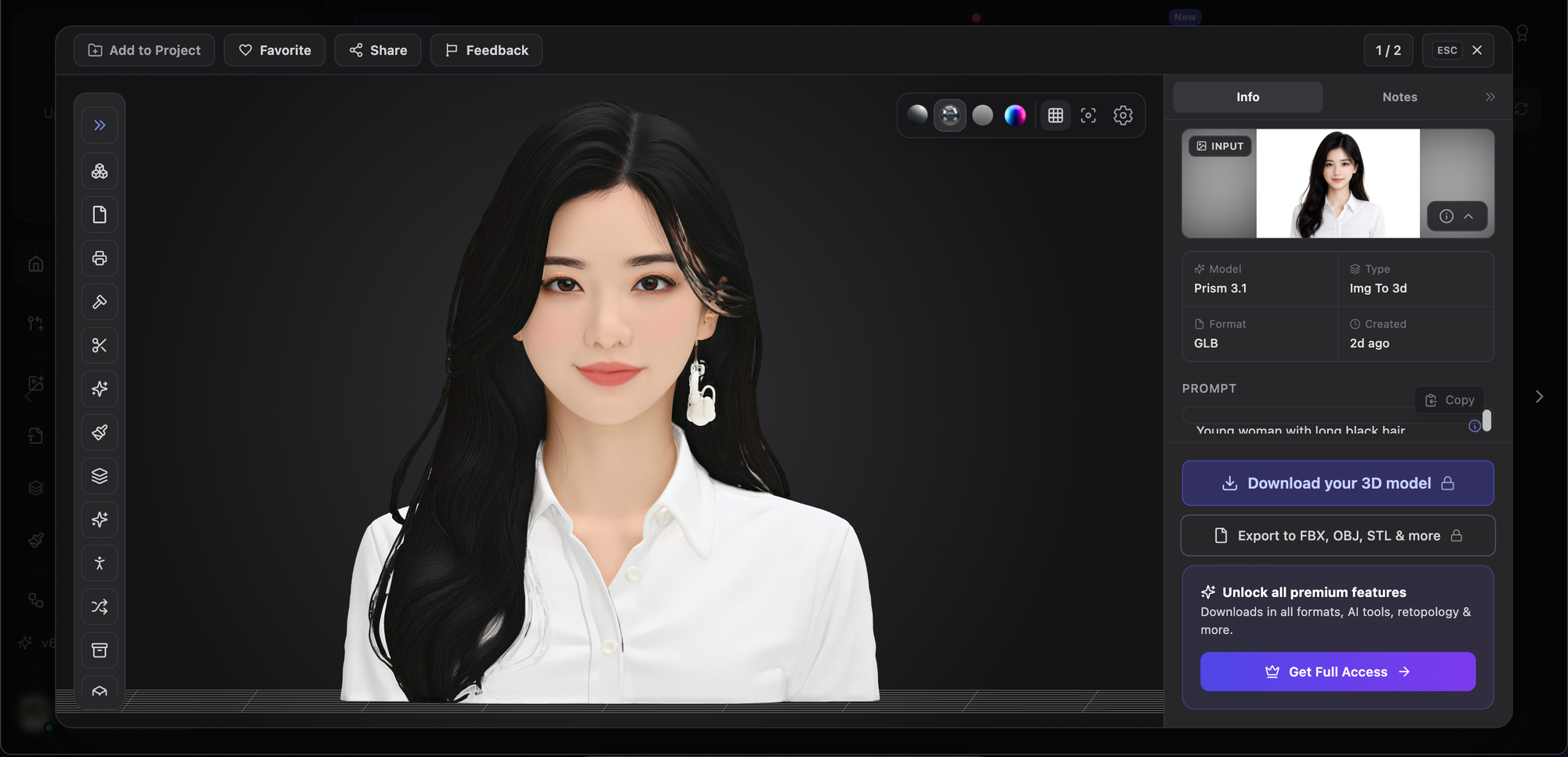
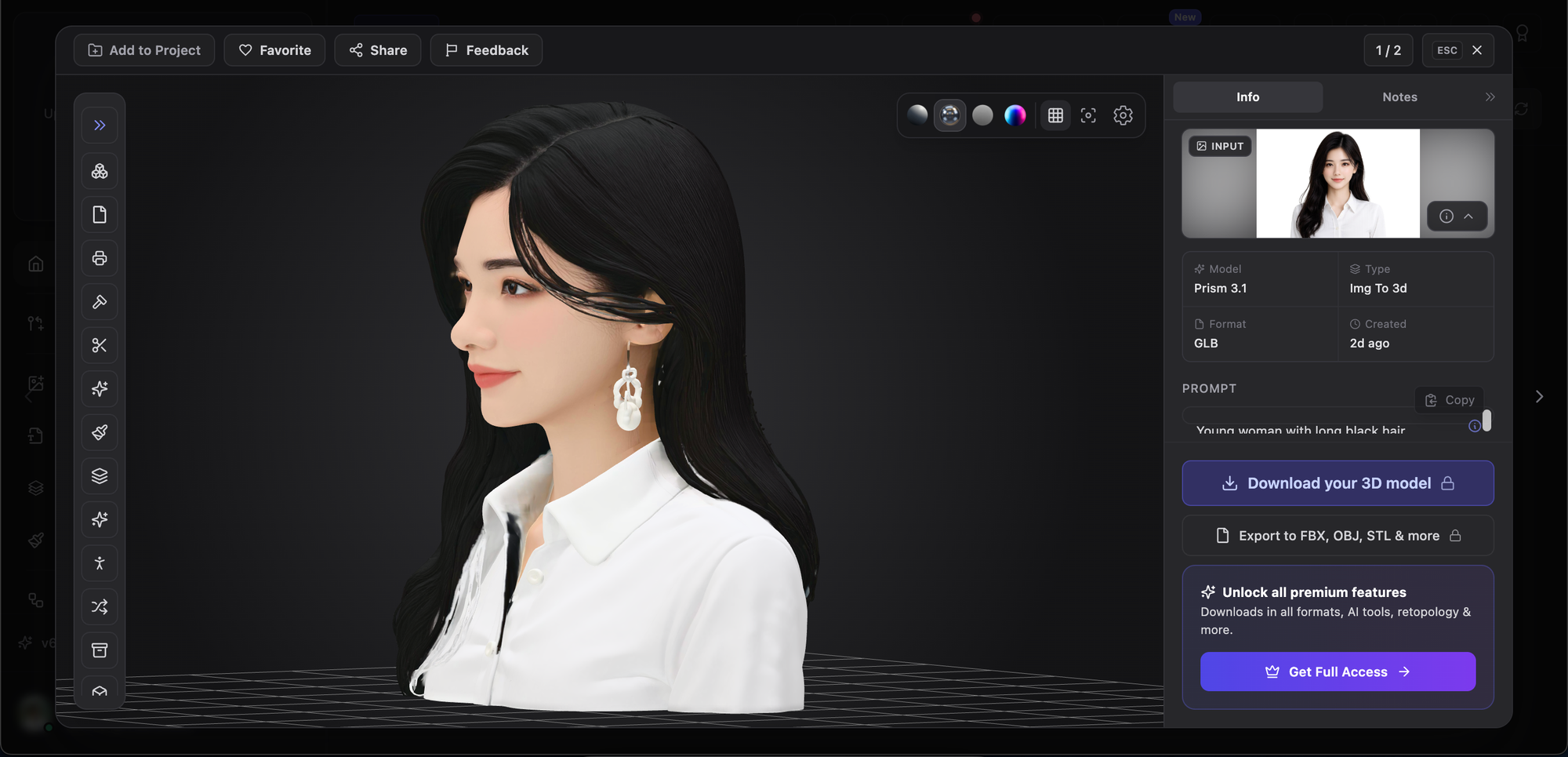
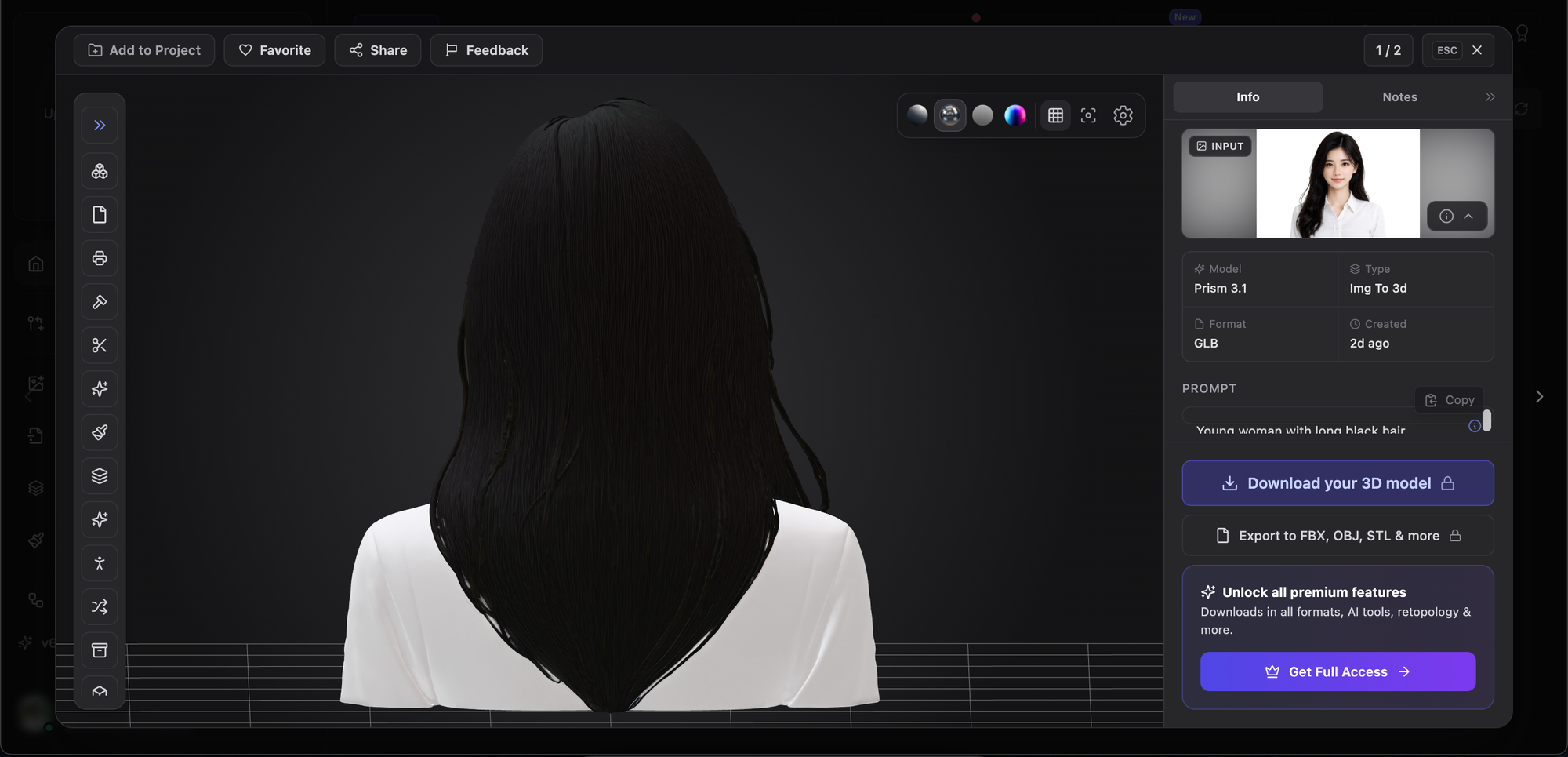
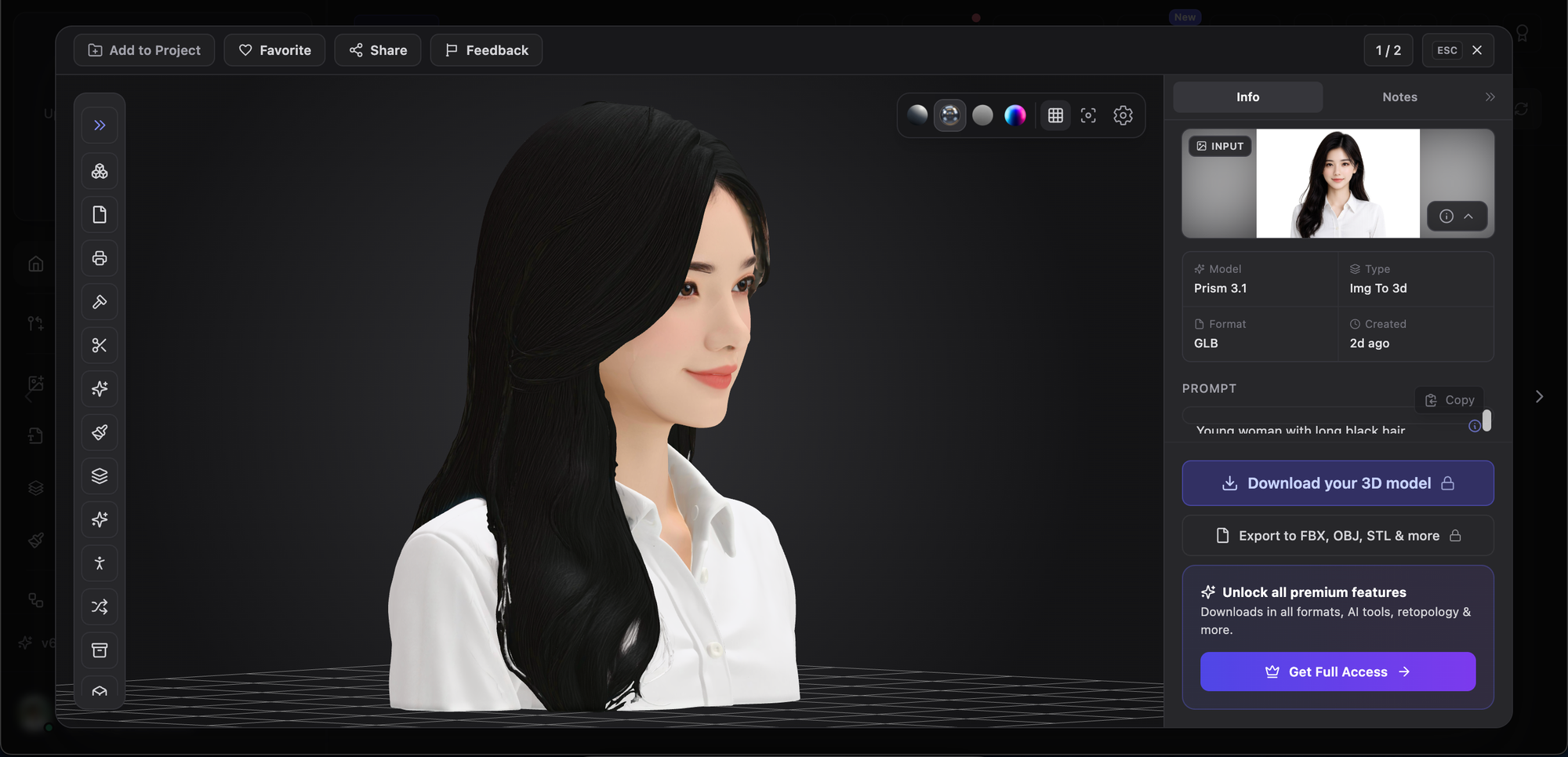
Among all the models I tested, Prism 3.1 delivered one of the most realistic results.
The facial structure closely matched the original image, skin textures appeared clean, and both the hairstyle and clothing preserved a remarkable amount of detail. The generated mesh also looked well-balanced and required very little correction.
The only noticeable issues were slight distortions around several strands of hair, along with a few AI-generated accessories that weren't present in the original image.
Pros
- Excellent facial similarity
- Sharp and detailed textures
- Natural-looking hair and clothing
- High overall quality
Cons
- Minor hair deformation
- Occasionally generates extra accessories
Verdict
If your priority is visual quality and realistic character reconstruction, Prism 3.1 is easily one of the strongest choices available today.

2. Meshy 6
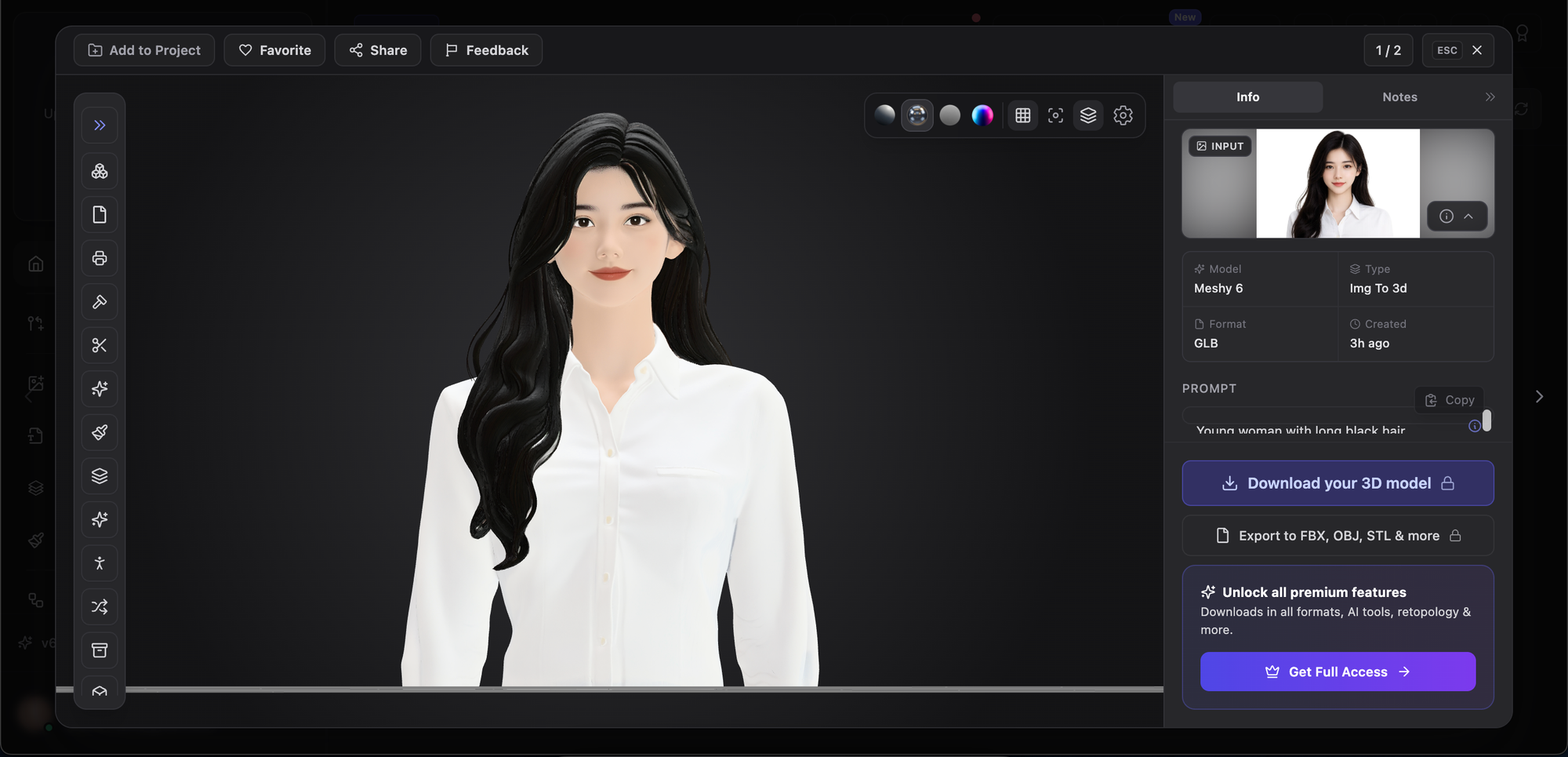
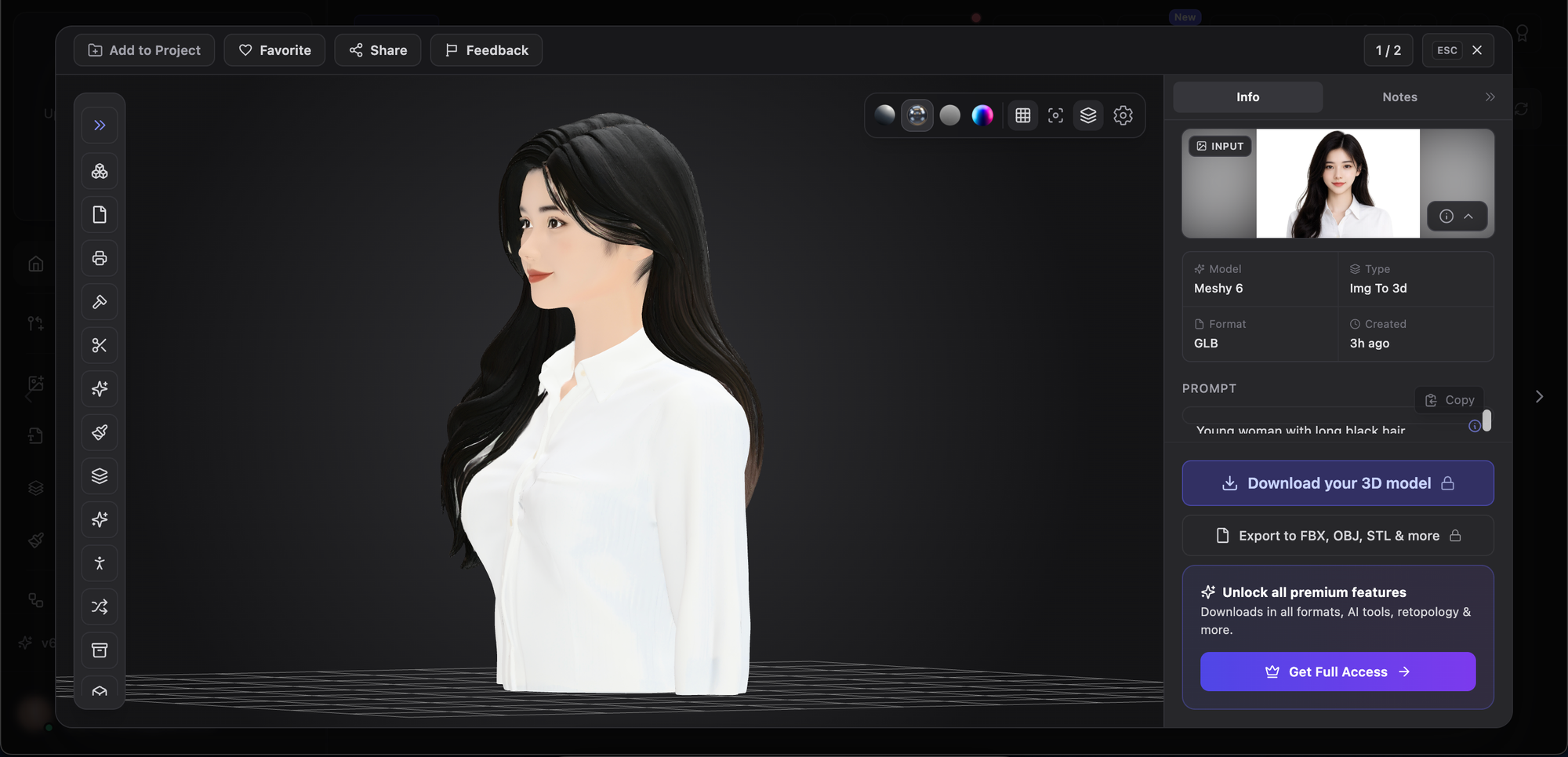
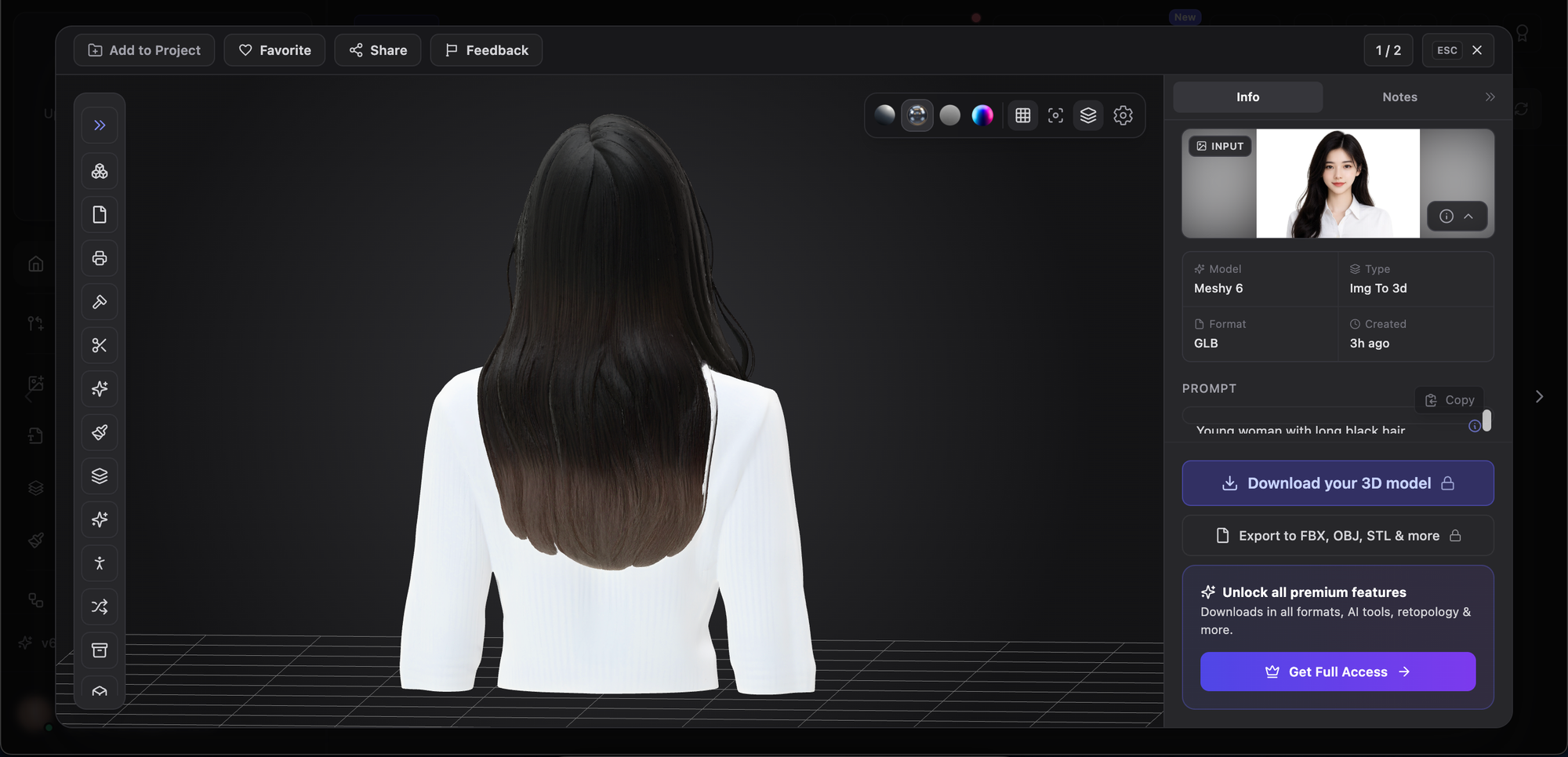
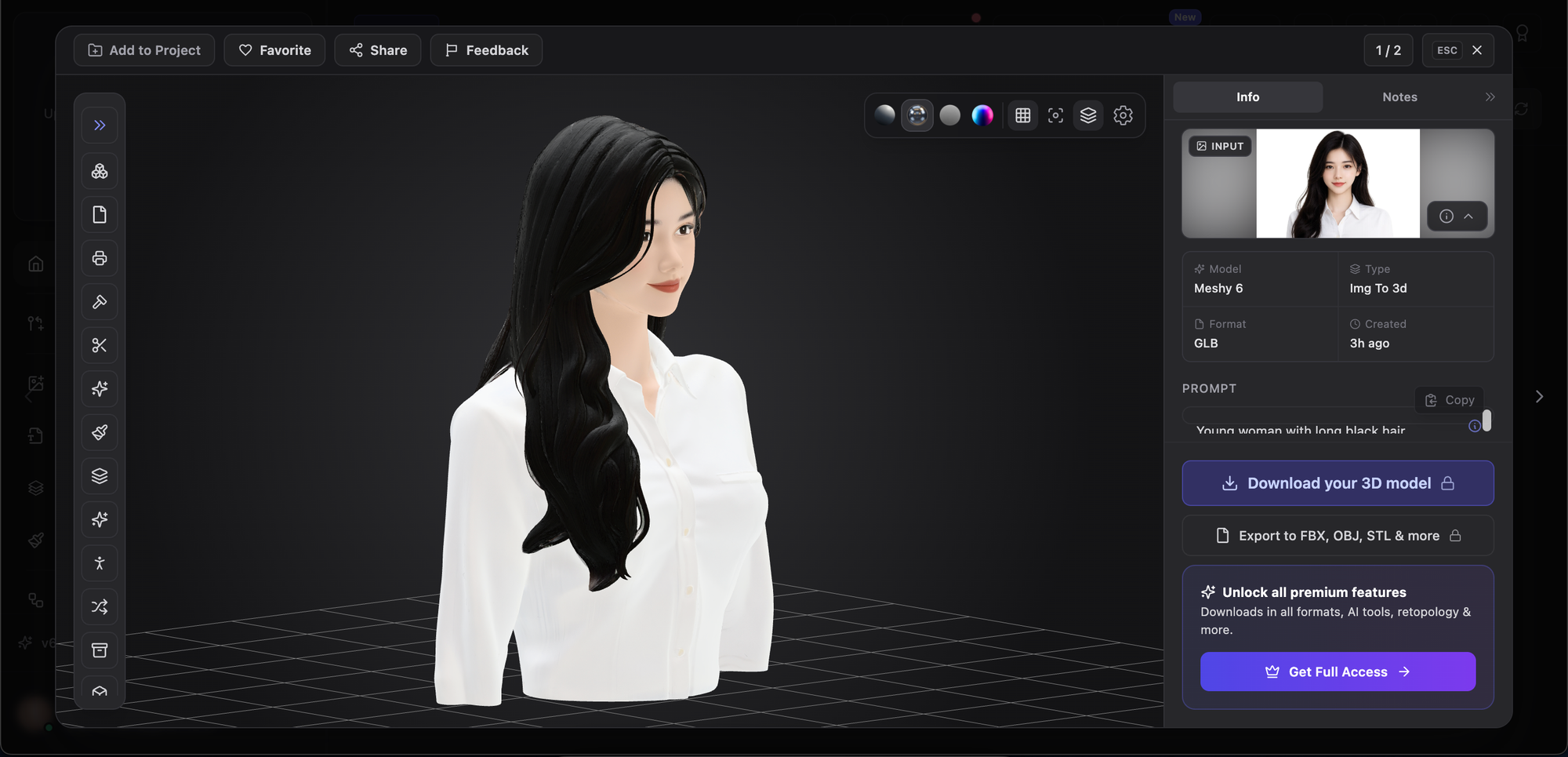
Meshy 6 focuses on speed and simplicity, making it attractive for artists who need rapid asset generation.
The model successfully reconstructed the upper body with clean geometry, but facial features were noticeably simplified. Fine details around the eyes, nose, and lips were softened, giving the final result a slightly stylized appearance.
Hair volume was preserved reasonably well, although individual strands and clothing wrinkles lacked detail.
Pros
- Fast workflow
- Clean topology
- Good body proportions
Cons
- Simplified facial features
- Softer textures
- Slight cartoon-like appearance
Verdict
Meshy 6 works well for quick prototypes and game assets, although it sacrifices realism compared to the top-performing models.

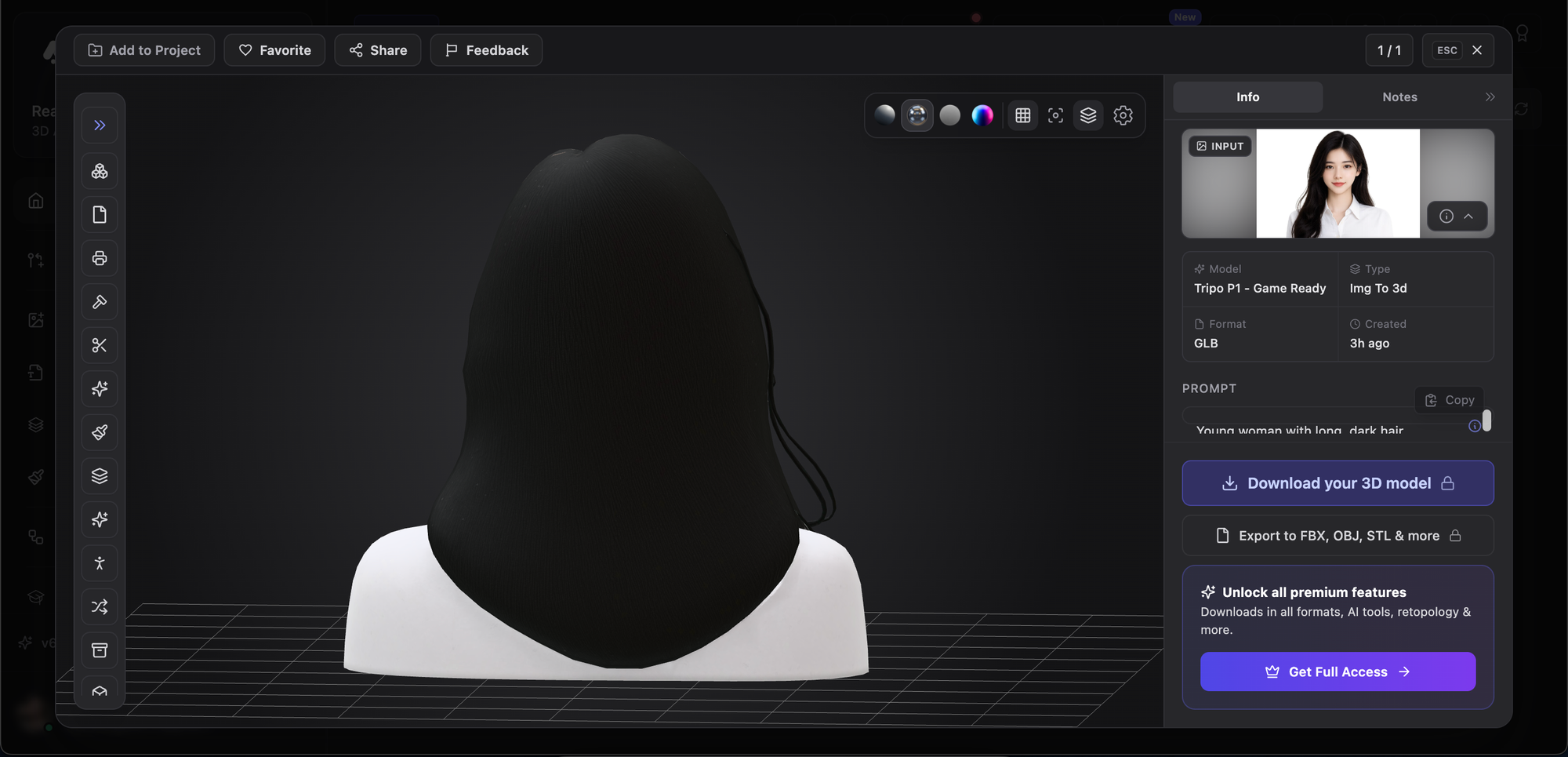
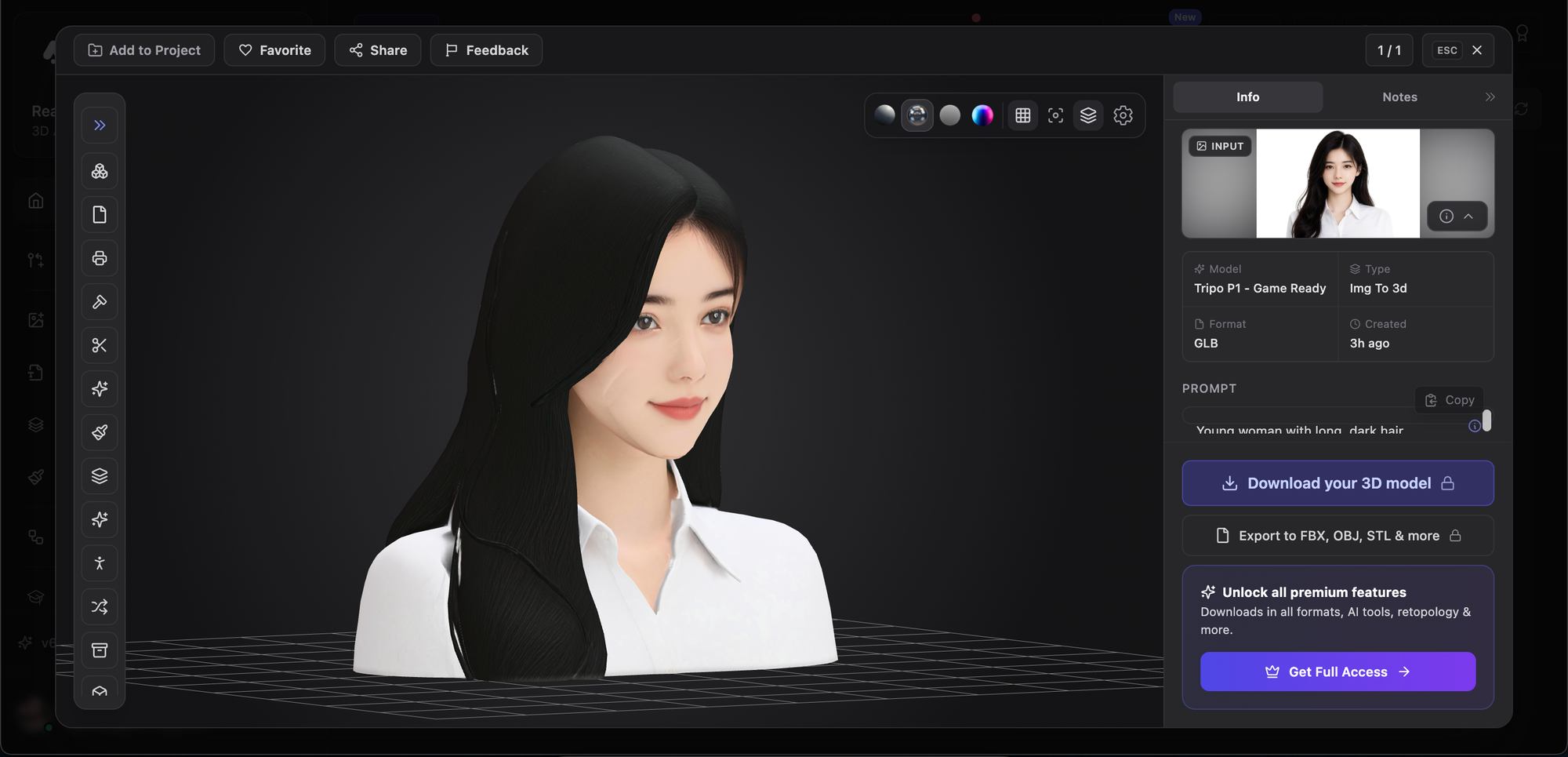
3. Tripo P1
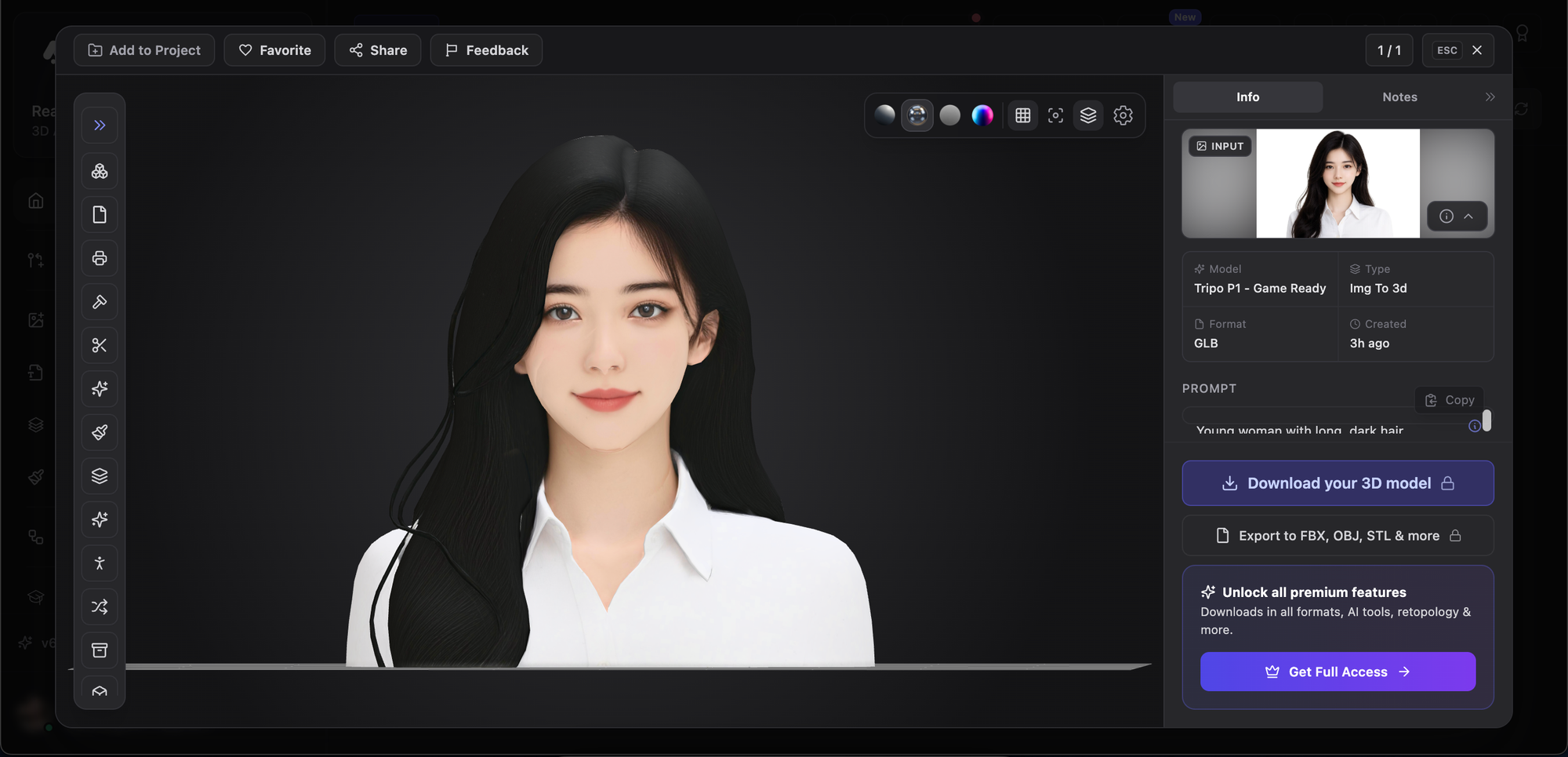
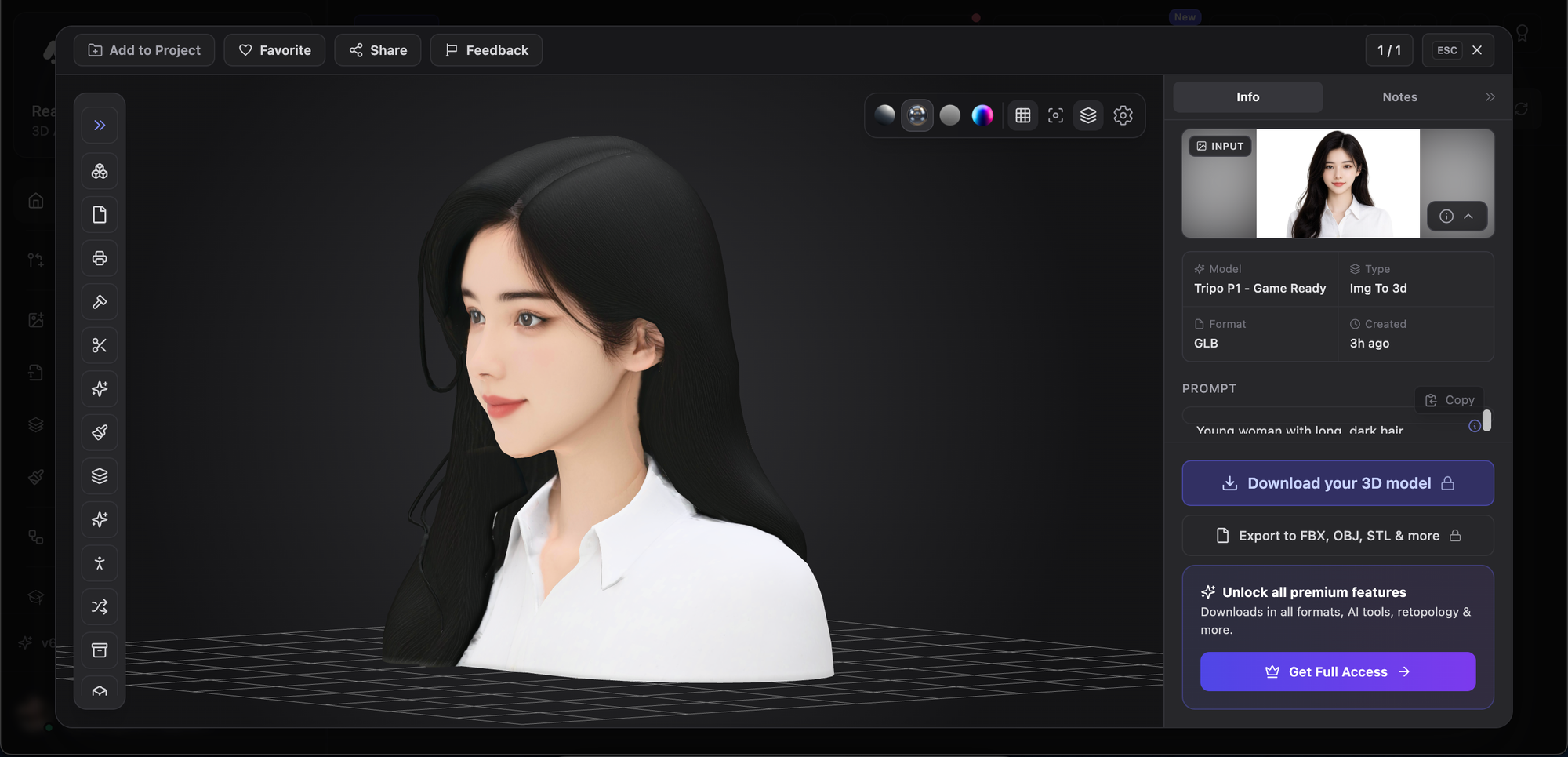
Tripo P1 was arguably the most balanced model in this comparison.
It reconstructed facial features with impressive accuracy while maintaining sharp textures and natural proportions. Hair, clothing, and skin tones all looked convincing, making the generated character feel much closer to the original photograph.
Only a few small artifacts remained around the edges of the hair.
Pros
- Outstanding resemblance to the source image
- Excellent texture quality
- Stable mesh generation
- Fast processing
Cons
- Minor artifacts around hair edges
Verdict
Tripo P1 offers one of the best combinations of quality, speed, and production readiness, making it especially suitable for game development workflows.

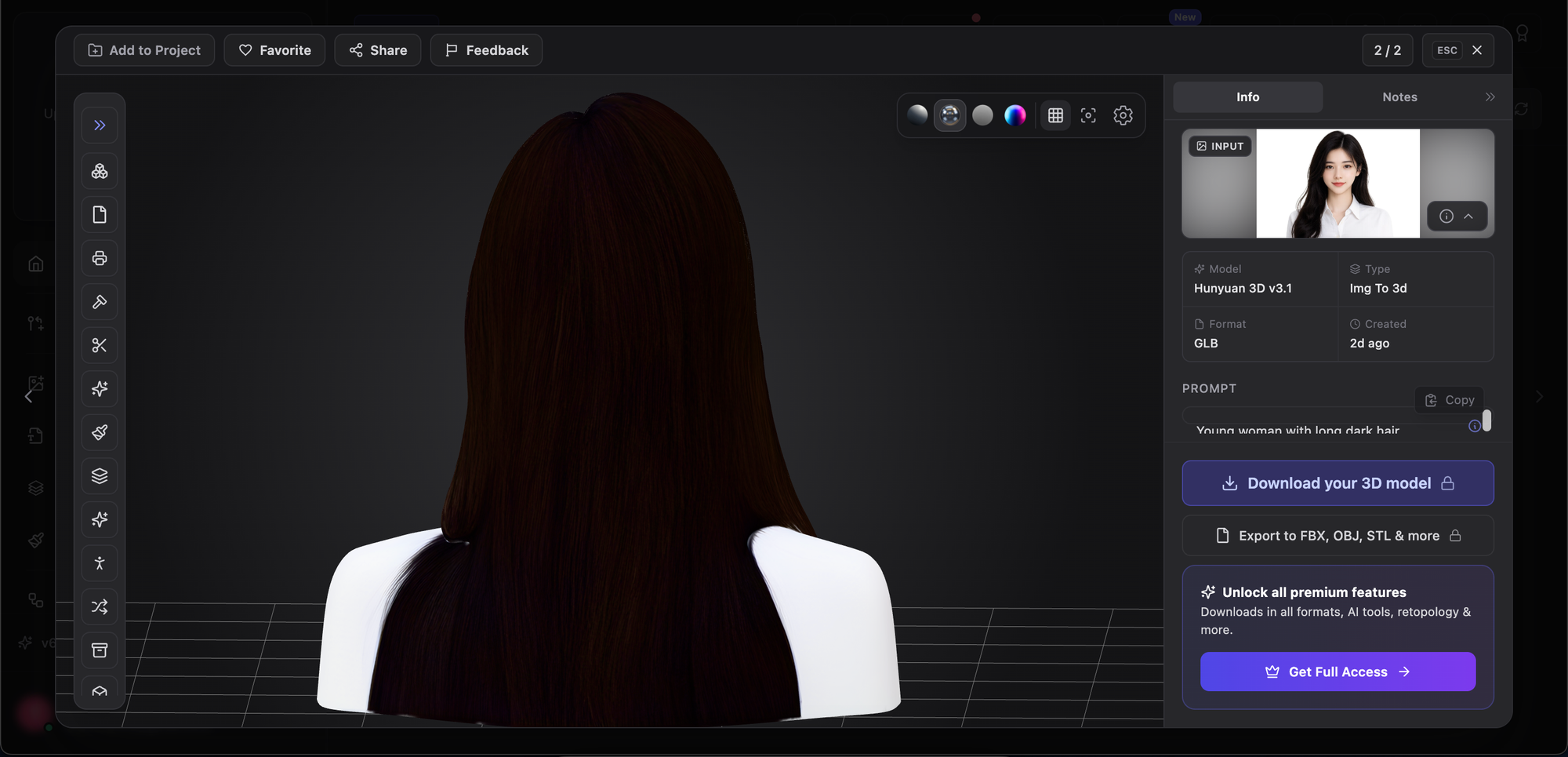
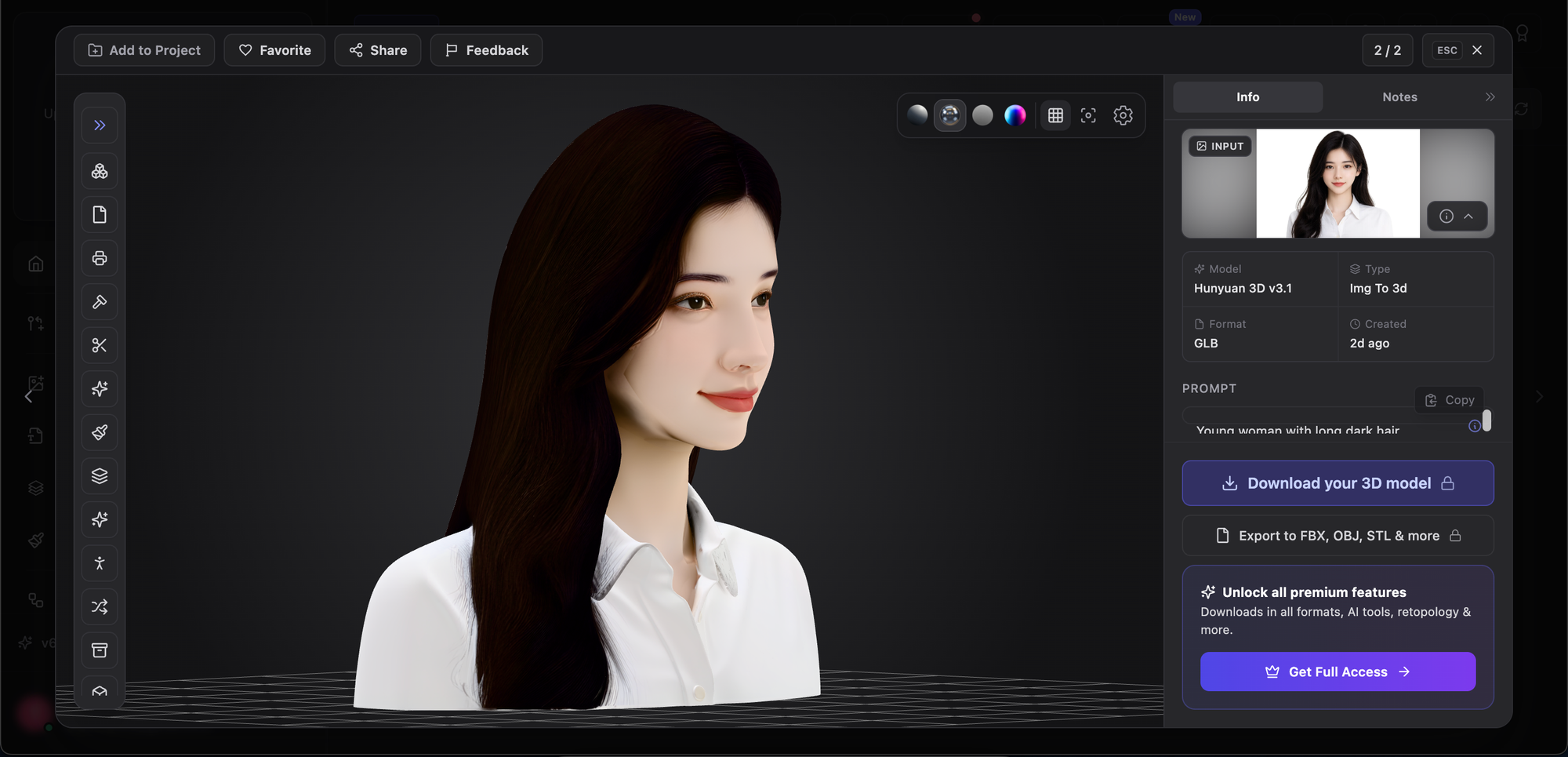
4. Hunyuan3D
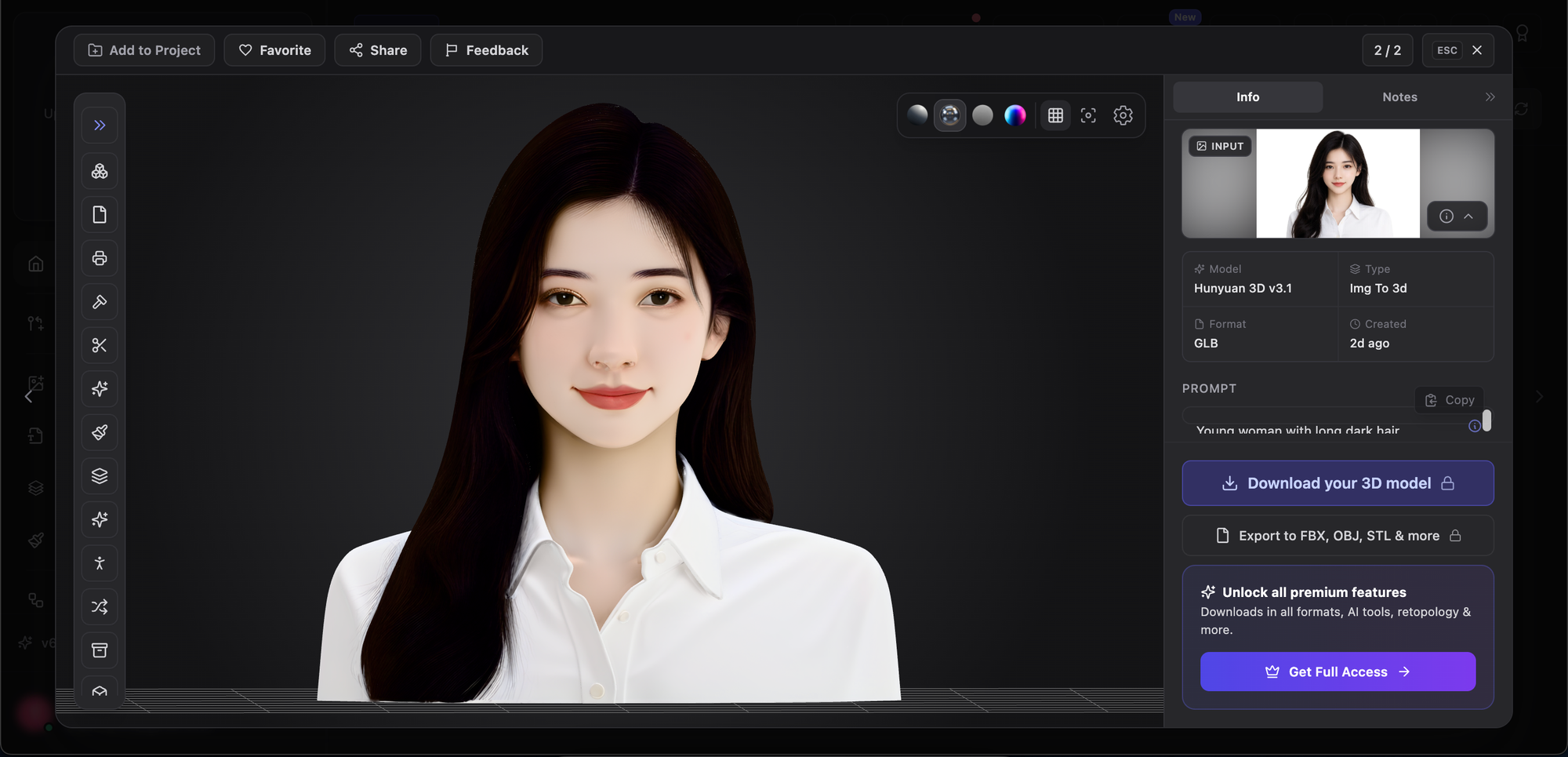
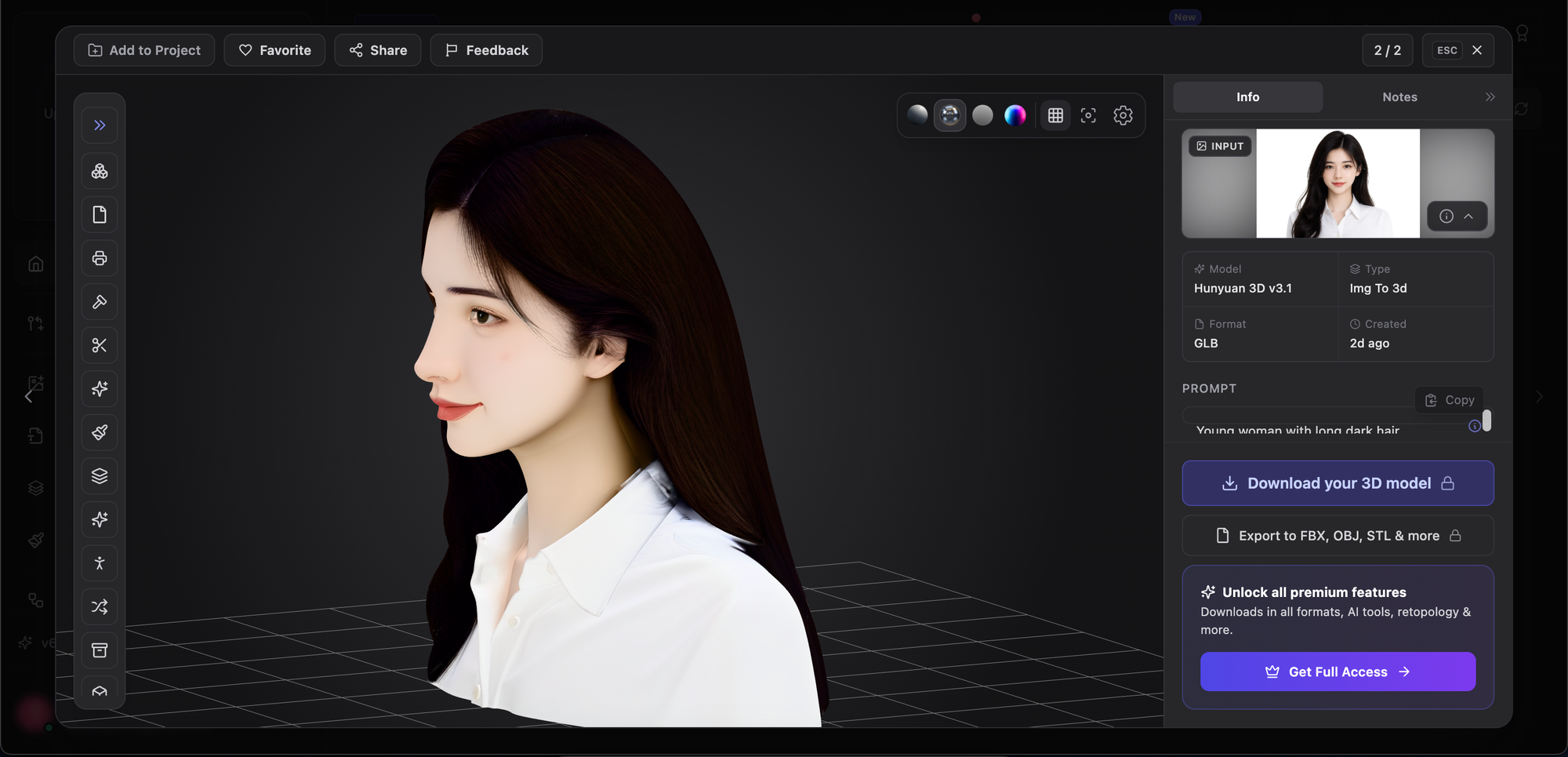
Tencent's open-source Hunyuan3D produced surprisingly clean results.
The overall geometry remained faithful to the original portrait, while textures appeared clean and consistent. However, facial expressions felt somewhat rigid, and smaller facial features lacked depth compared to Prism or Tripo.
Hair reconstruction was neat but relatively simple.
Pros
- Clean textures
- Good facial proportions
- Balanced geometry
Cons
- Less expressive face
- Softer facial details
- Limited hair detail
Verdict
Hunyuan3D provides solid and reliable output, particularly considering that it is open source.

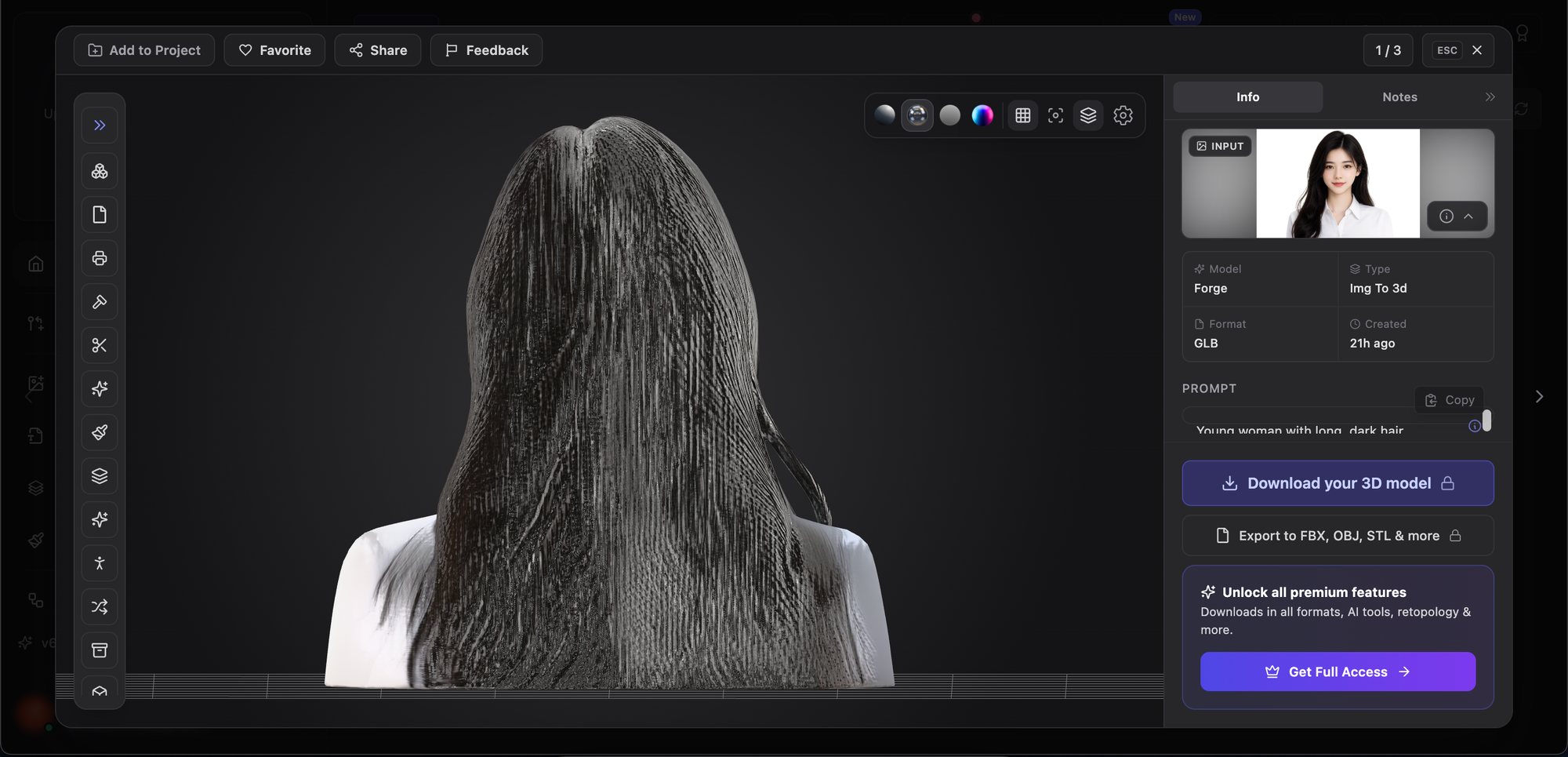
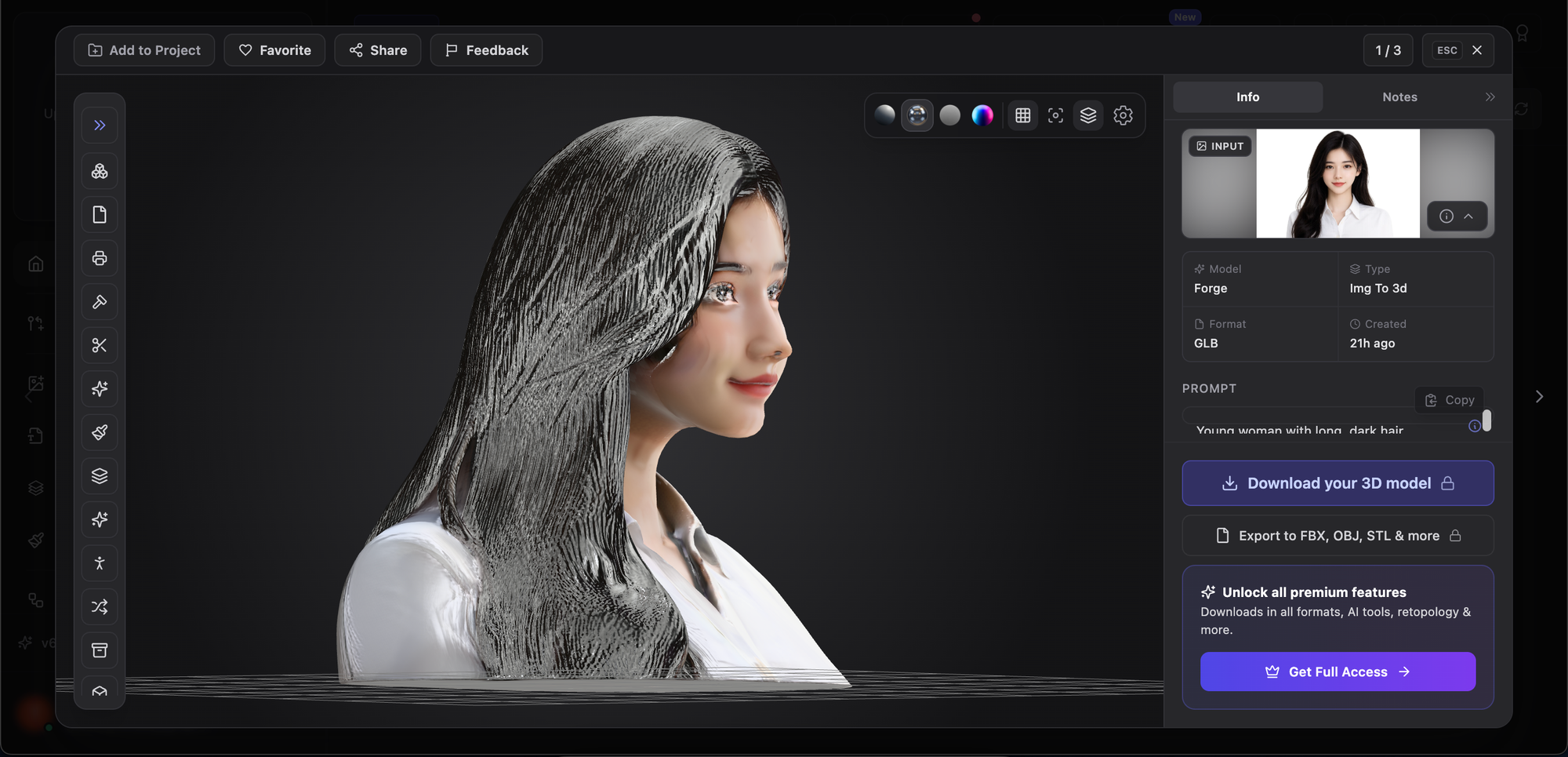
5. Forge
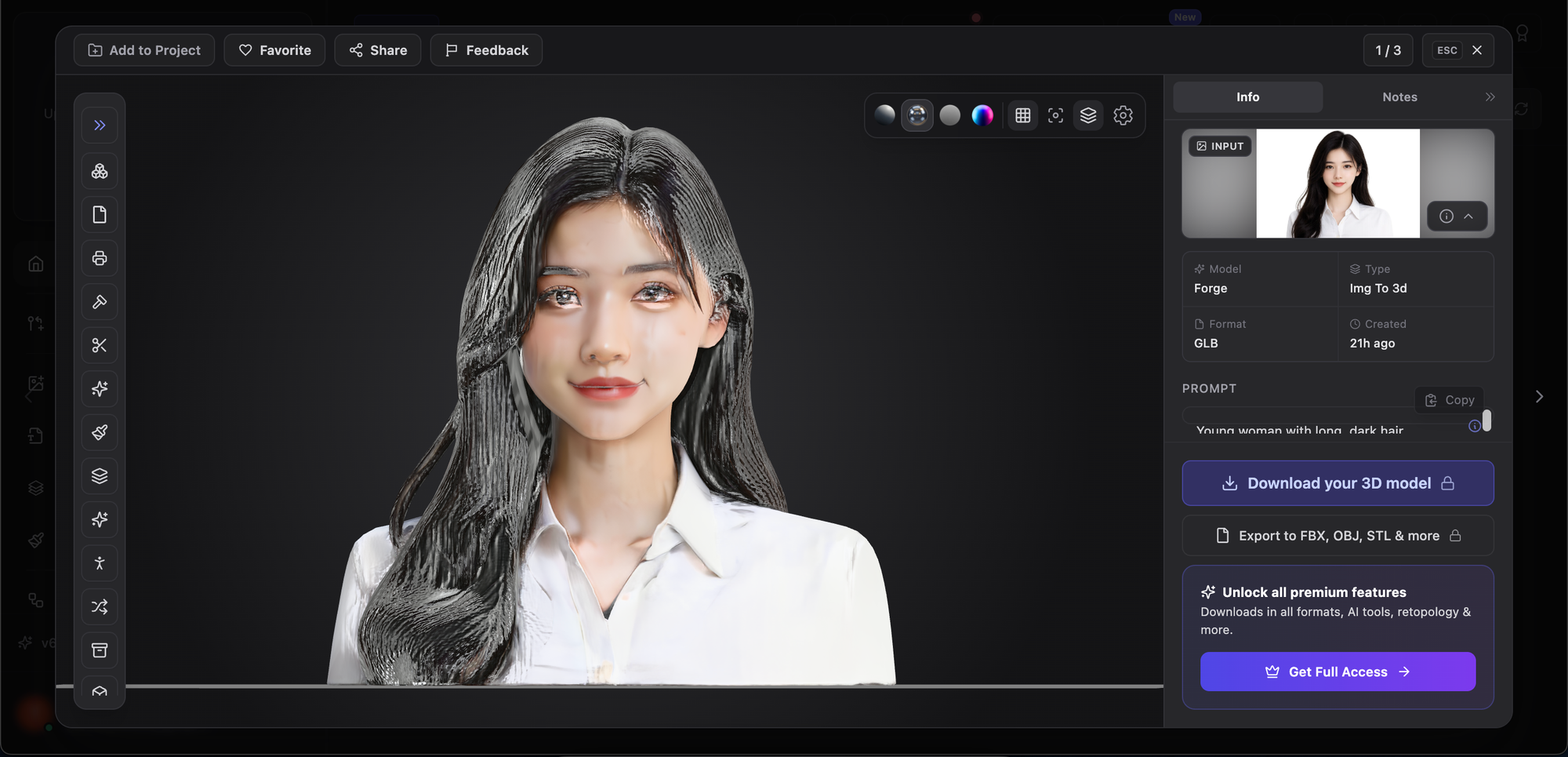
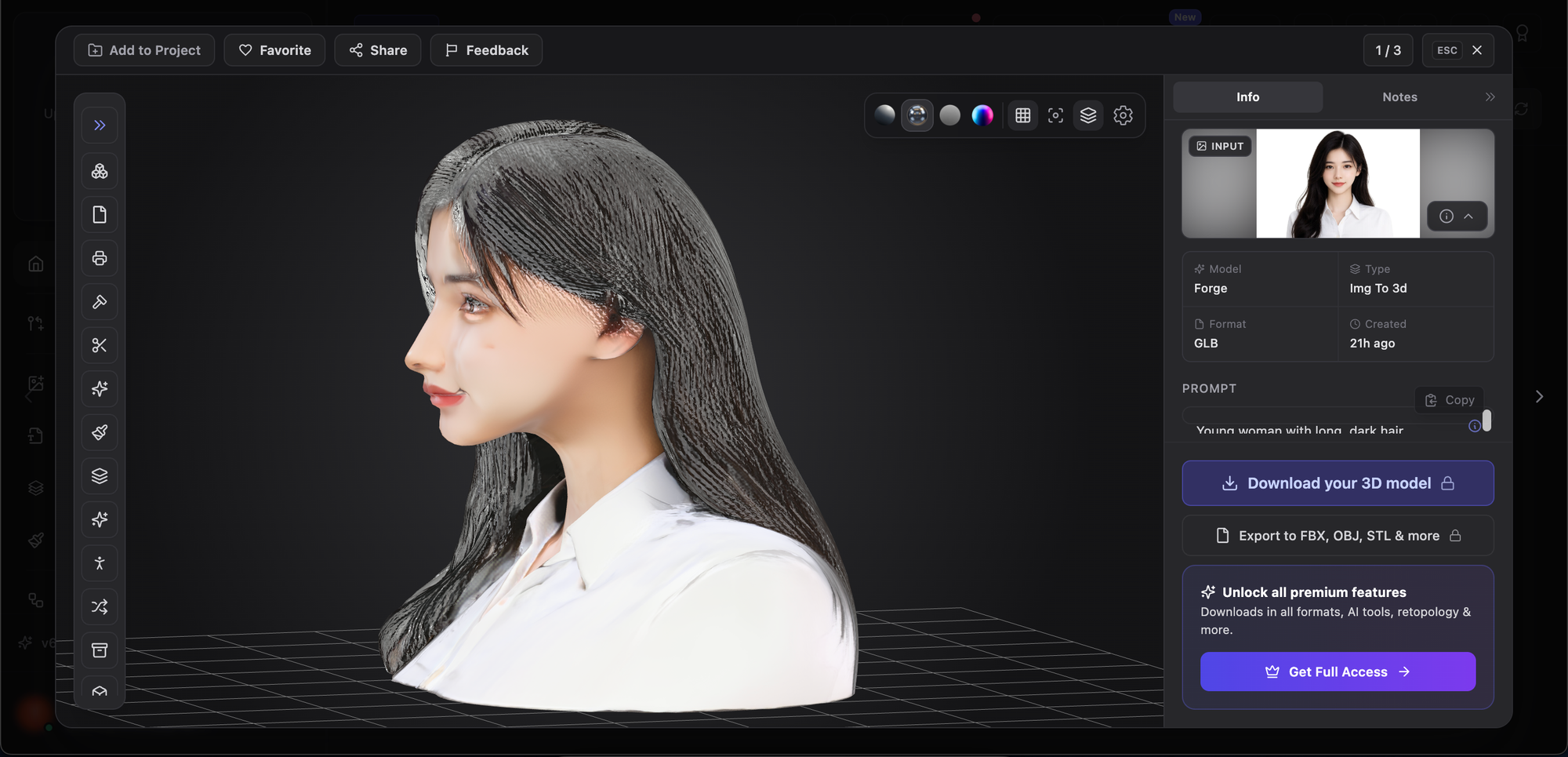
Forge struggled with portrait reconstruction in this test.
Although the overall silhouette remained recognizable, the generated texture contained heavy noise and visible artifacts. Facial features became distorted, while hair reconstruction suffered from severe visual defects.
Pros
- Basic character structure preserved
Cons
- Heavy texture noise
- Distorted facial features
- Poor hair reconstruction
- Low visual quality
Verdict
For portrait generation, Forge currently requires significant improvement before it can compete with stronger Image-to-3D models.

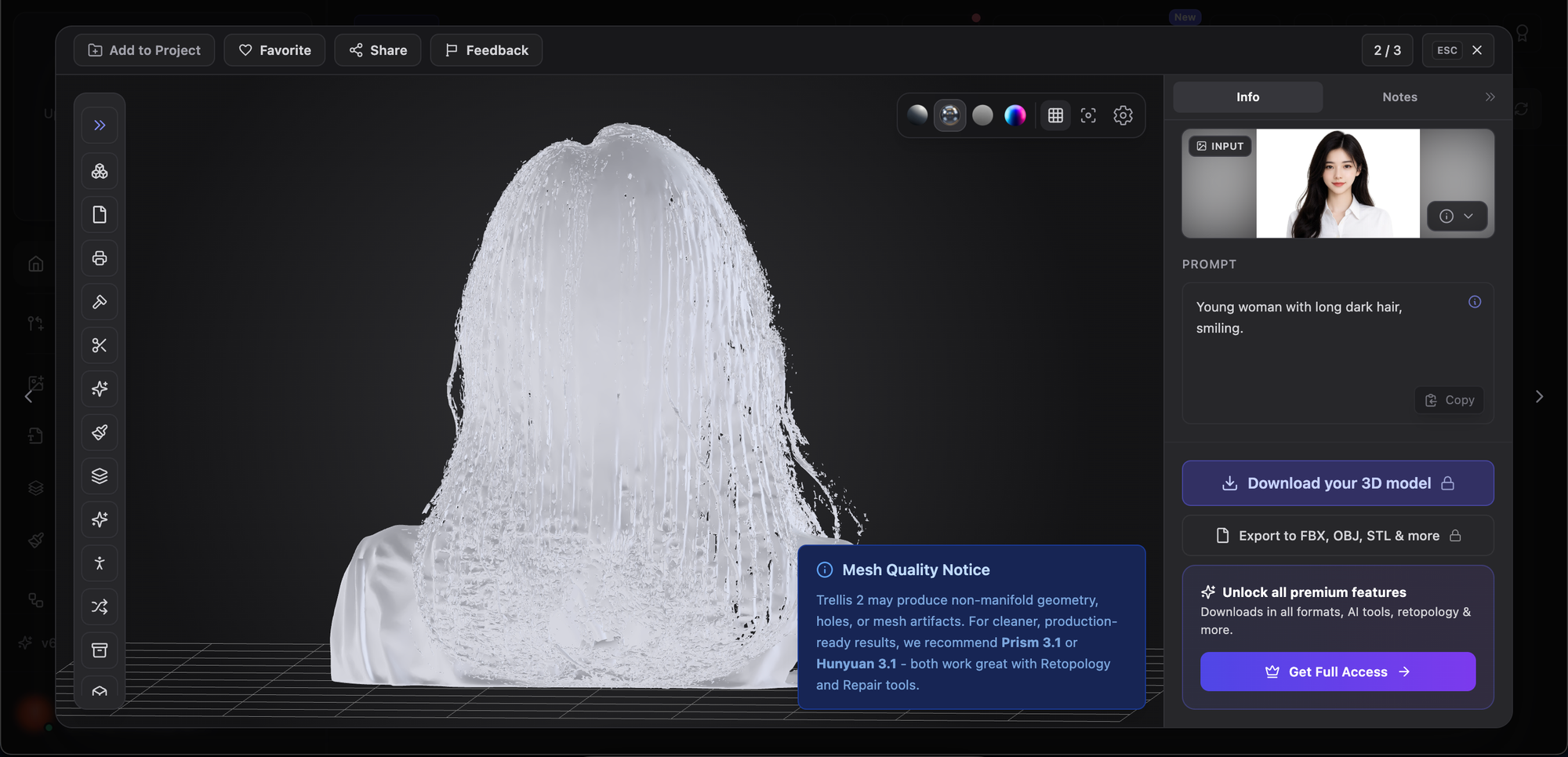
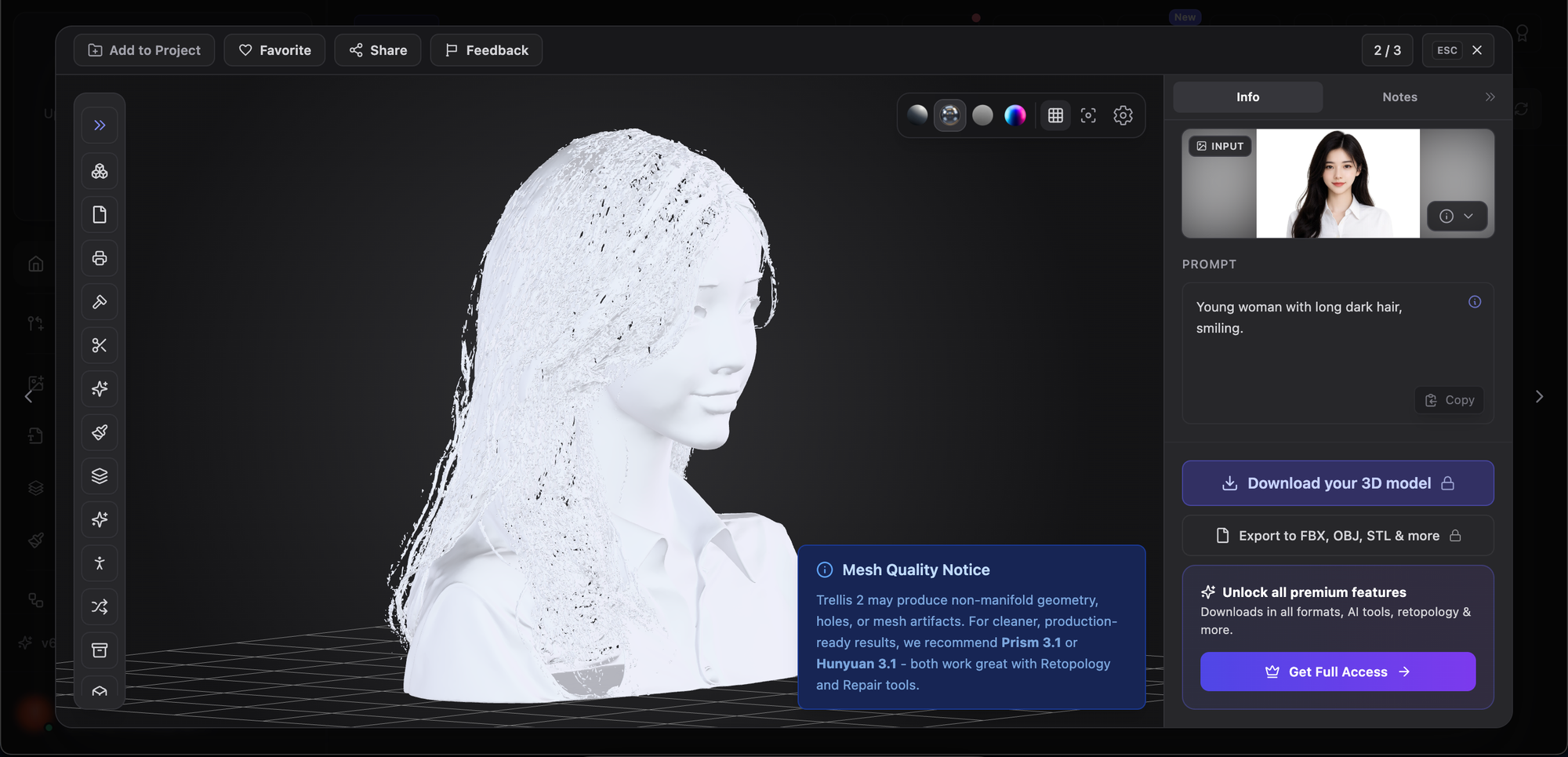
6. Trellis 2
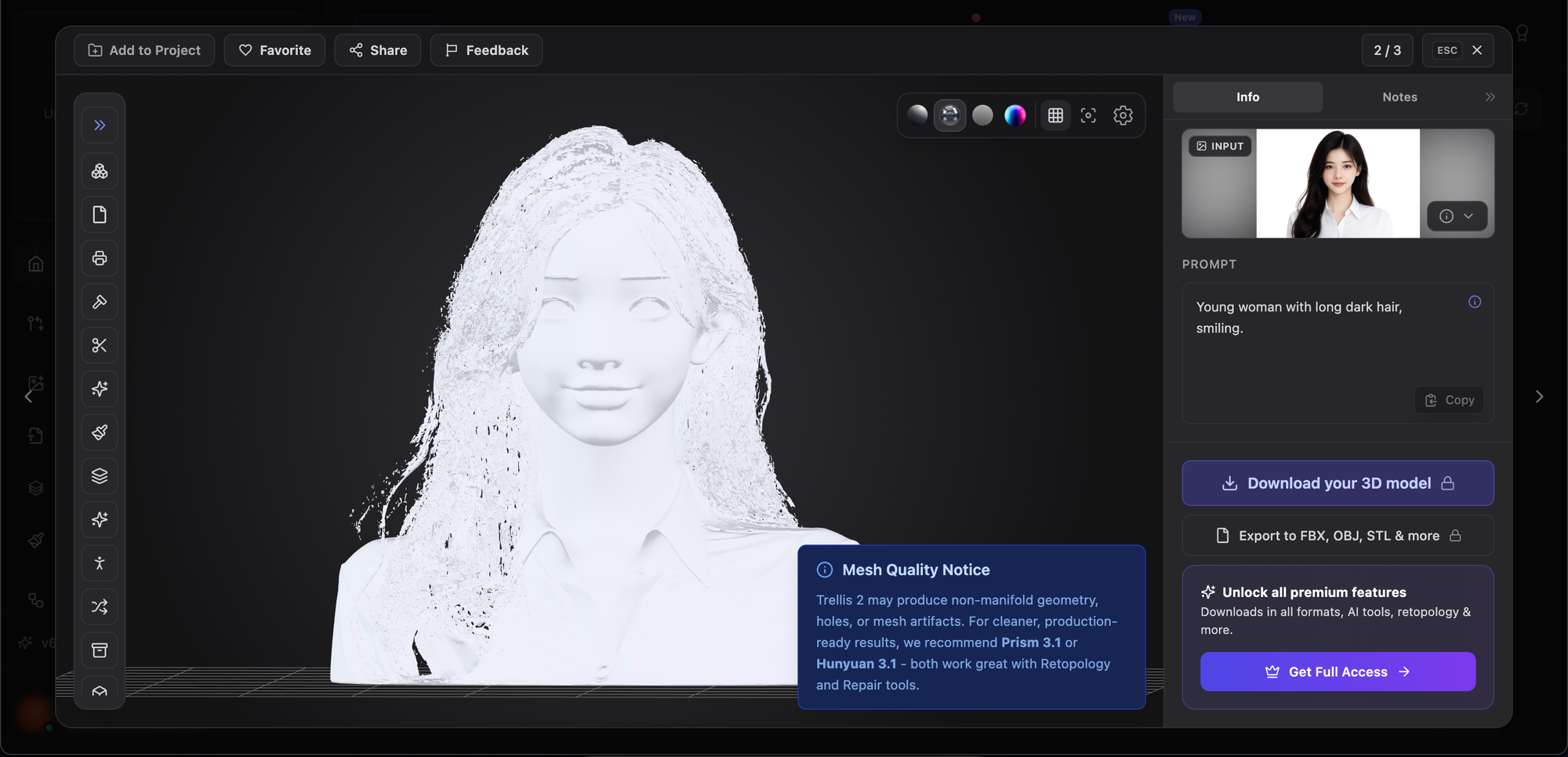
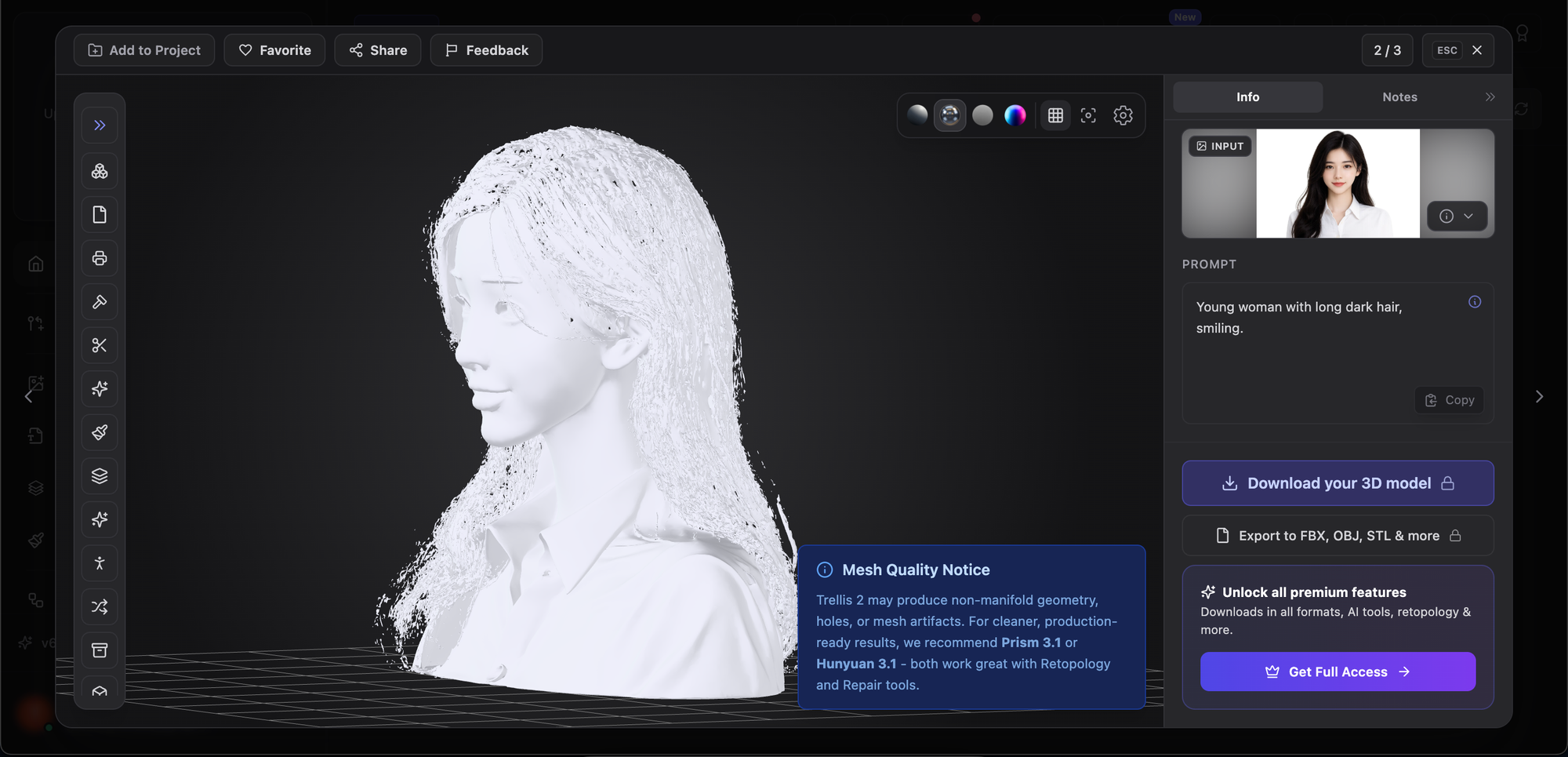
As one of the most popular open-source Image-to-3D projects, Trellis 2 demonstrates strong geometry generation but still shows limitations in production-quality output.
The generated mesh captured the overall body shape reasonably well, but contained numerous holes, broken hair strands, and mesh artifacts. Facial features appeared more sculpted than realistic.
Pros
- Strong overall geometry
- Useful base mesh for editing
Cons
- Mesh artifacts
- Holes in geometry
- Limited facial detail
- Not suitable for direct production
Verdict
Trellis 2 works best as a starting point for further retopology and refinement rather than as a finished asset.

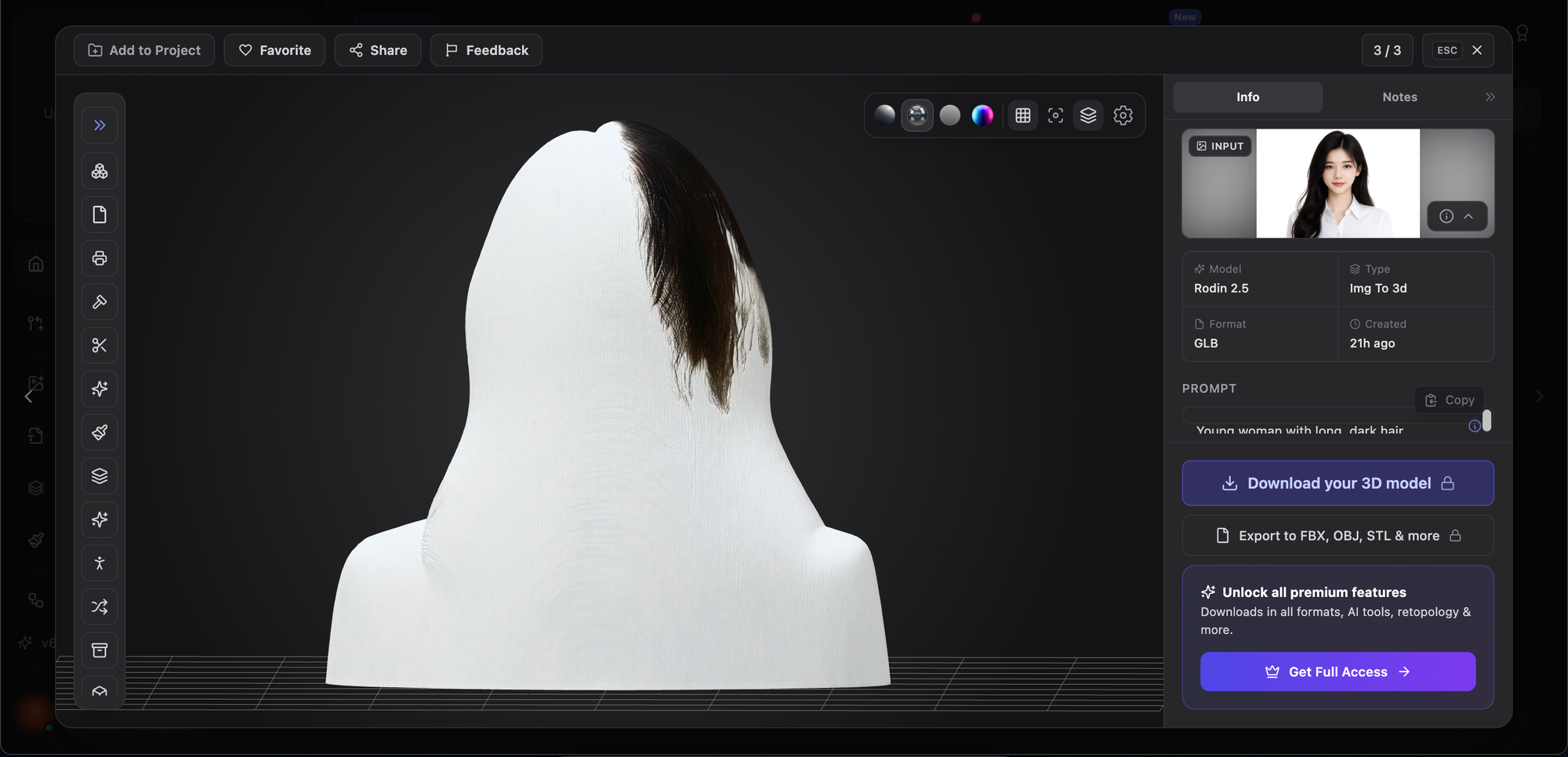
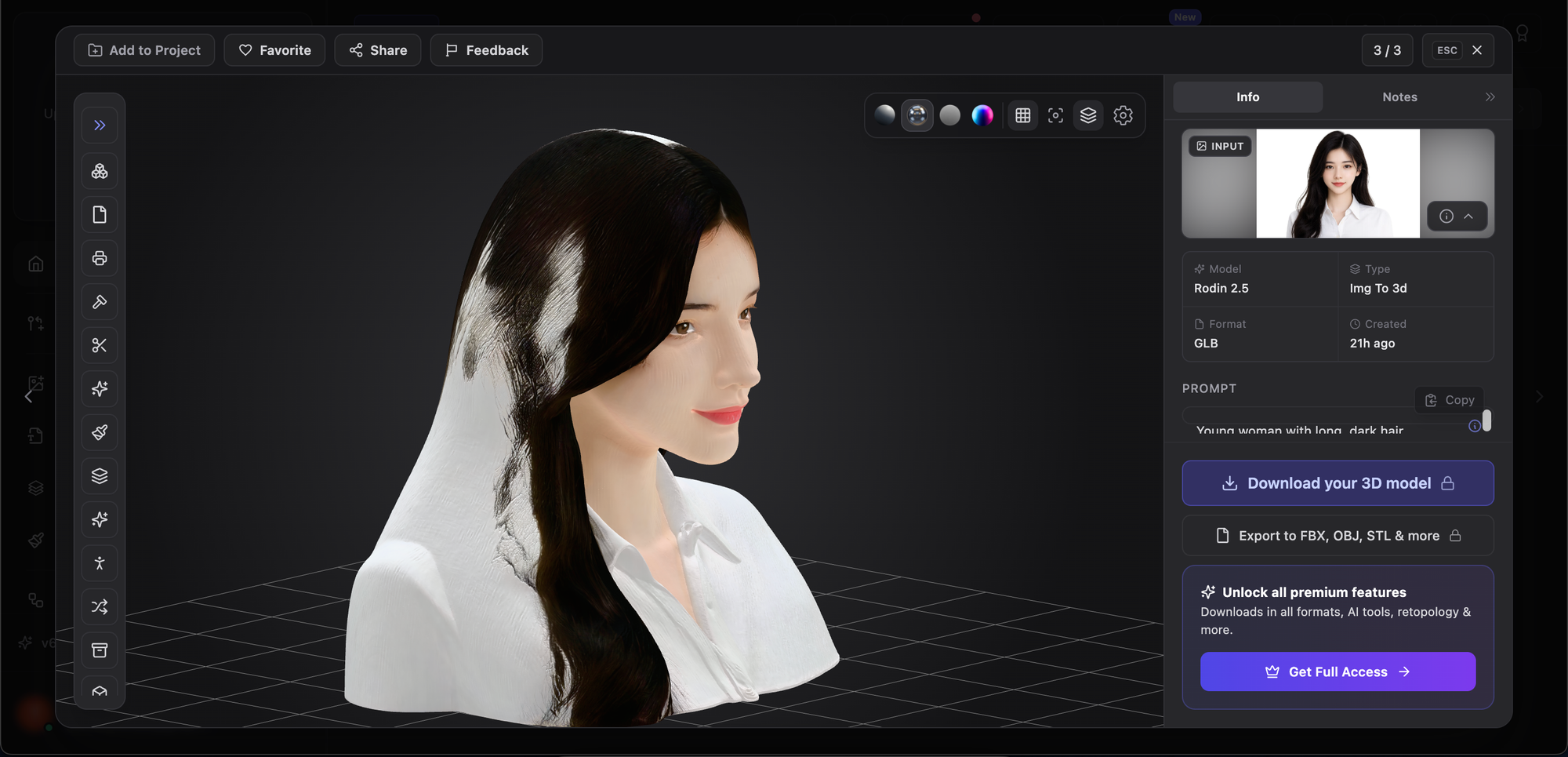
7. Rodin 2.5
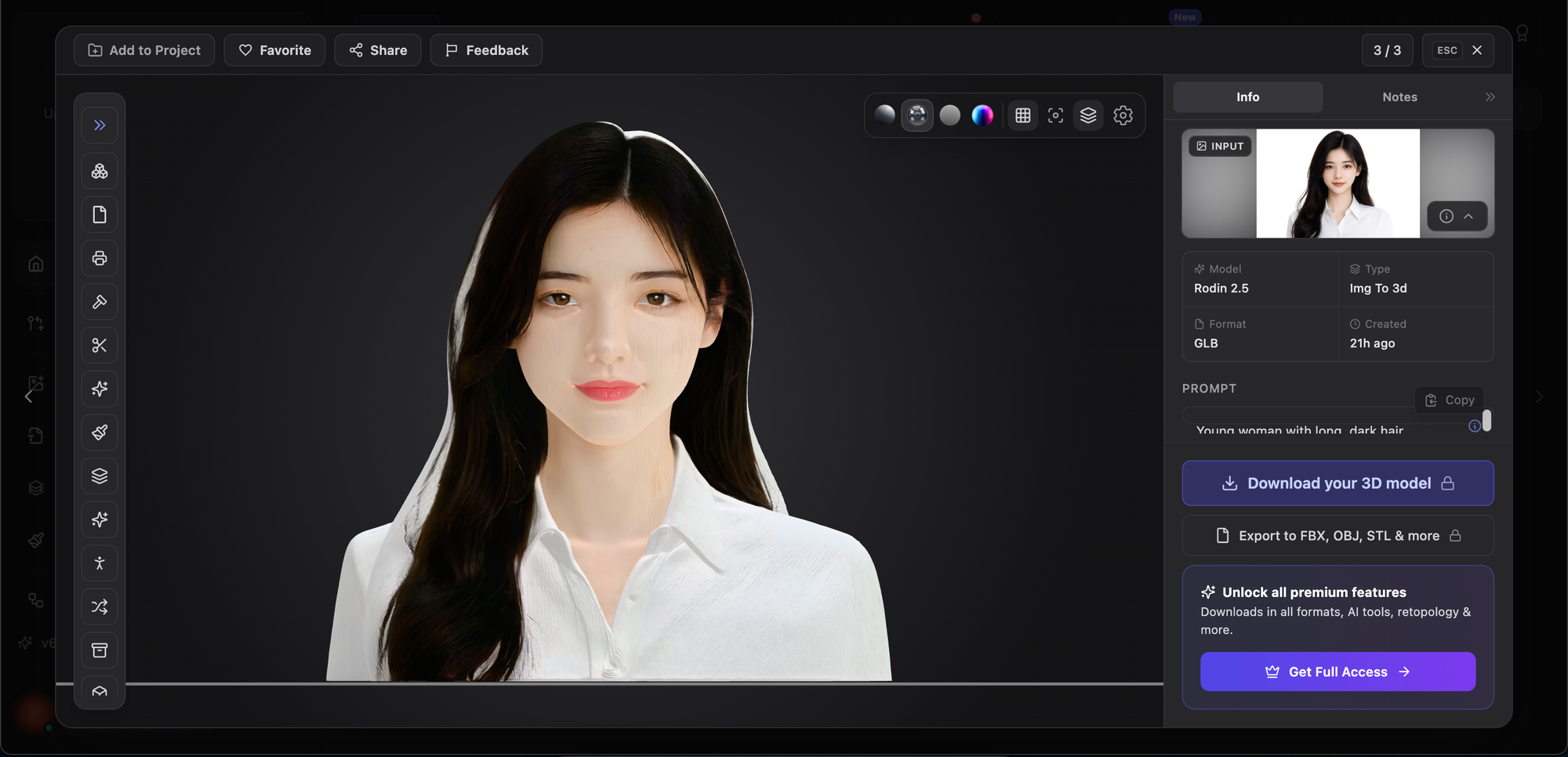
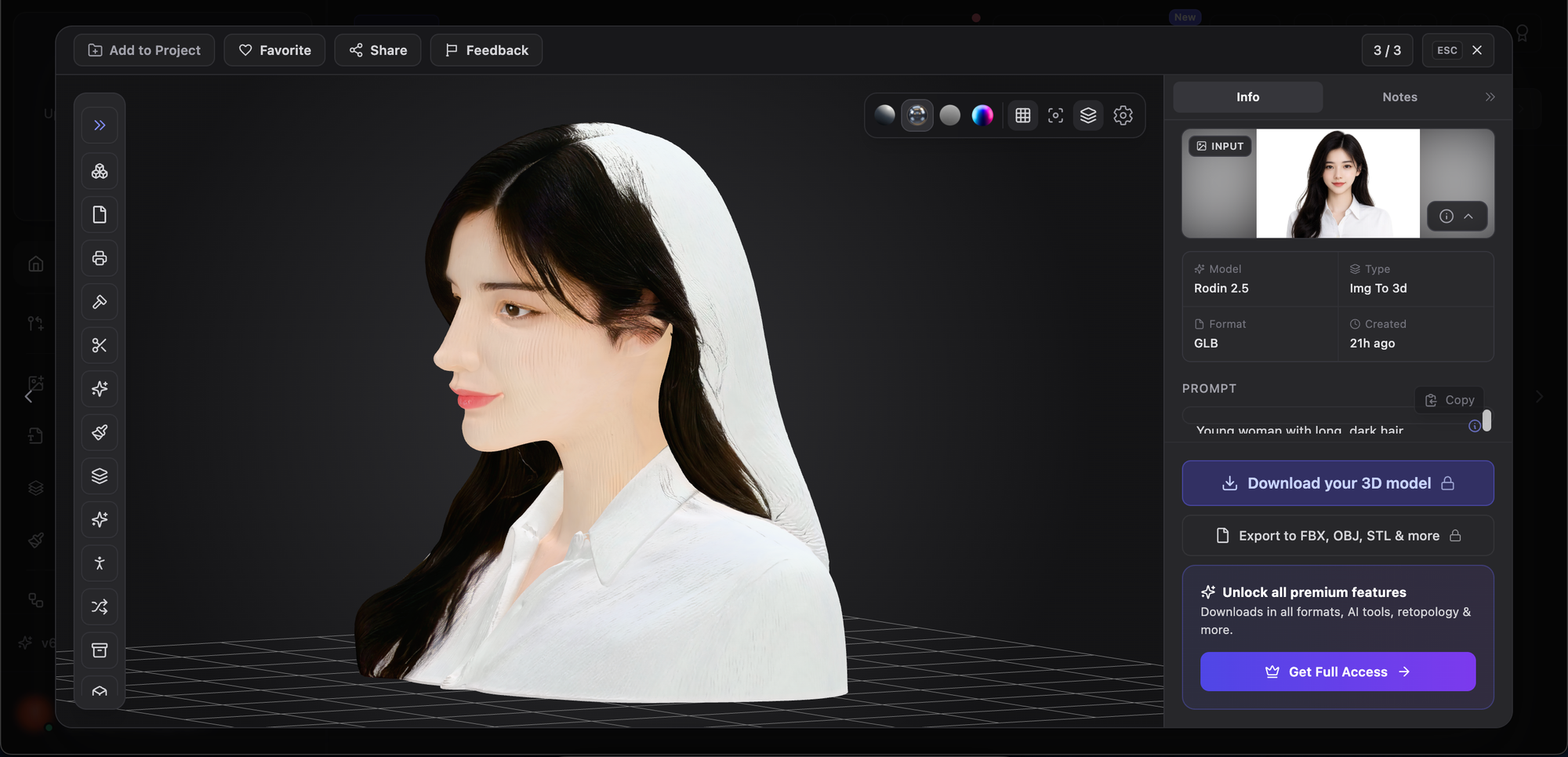
Rodin 2.5 successfully reconstructed the overall character layout but fell short in texture realism.
Skin color appeared inconsistent, facial details were noticeably softer, and both clothing and hair lost a significant amount of information compared to the source image.
Pros
- Good overall proportions
- Clean mesh
Cons
- Weak texture quality
- Soft facial details
- Loss of clothing and hair information
Verdict
Rodin 2.5 is capable of producing usable base models but may require additional texture work to achieve realistic results.

Overall Ranking
| Model | Visual Quality | Texture | Mesh | Recommendation |
|---|---|---|---|---|
| 🥇 Prism 3.1 | ⭐⭐⭐⭐⭐ | ⭐⭐⭐⭐⭐ | ⭐⭐⭐⭐⭐ | Best for realism |
| 🥇 Tripo P1 | ⭐⭐⭐⭐⭐ | ⭐⭐⭐⭐⭐ | ⭐⭐⭐⭐⭐ | Best overall balance |
| 🥈 Hunyuan3D | ⭐⭐⭐⭐☆ | ⭐⭐⭐⭐☆ | ⭐⭐⭐⭐☆ | Best open-source option |
| 🥉 Meshy 6 | ⭐⭐⭐⭐☆ | ⭐⭐⭐☆☆ | ⭐⭐⭐⭐☆ | Great for fast asset creation |
| Trellis 2 | ⭐⭐⭐☆☆ | ⭐⭐☆☆☆ | ⭐⭐⭐☆☆ | Best as a base mesh |
| Rodin 2.5 | ⭐⭐⭐☆☆ | ⭐⭐☆☆☆ | ⭐⭐⭐⭐☆ | Requires additional refinement |
| Forge | ⭐⭐☆☆☆ | ⭐☆☆☆☆ | ⭐⭐☆☆☆ | Not recommended for portraits |
My Personal Thoughts
After testing all seven Image-to-3D generators, two models clearly stood out to me: Prism 3.1 and Tripo P1.
Prism 3.1 impressed me with its ability to preserve facial identity while producing highly detailed textures and realistic geometry. Although it took slightly longer to generate, the final quality made the wait worthwhile.
Tripo P1, on the other hand, offered the best balance between speed and quality. The generated assets were clean, lightweight, and immediately felt suitable for game development workflows in engines like Unity or Unreal Engine.
That said, I'd like to emphasize that these impressions are based on my first experience using each model. AI-generated 3D content is heavily influenced by the input image, prompts, and generation parameters. Running the same model with different settings could produce noticeably different results.
For that reason, this article should be viewed as an initial hands-on comparison rather than a definitive ranking. I'll continue testing these models with more subjects and workflows to build a more comprehensive evaluation over time.
Final Thoughts
AI Image-to-3D technology has progressed remarkably over the past year.
While none of the current models are perfect, tools like Prism 3.1 and Tripo P1 demonstrate that AI-generated 3D assets are becoming increasingly practical for artists, designers, and game developers.
If you're looking for production-quality realism, Prism 3.1 is my top recommendation.
If you need the best balance between speed, quality, and game-ready assets, Tripo P1 is hard to beat.
The pace of improvement in this field is incredibly fast, and it will be exciting to see how these models evolve over the coming months.
Struggling to turn ideas into reality? With a proven track record of over 1,000 clients, our agile and flexible team will accelerate your business growth.