Cyc — 40 Years of Trying to Write Common Sense by Hand
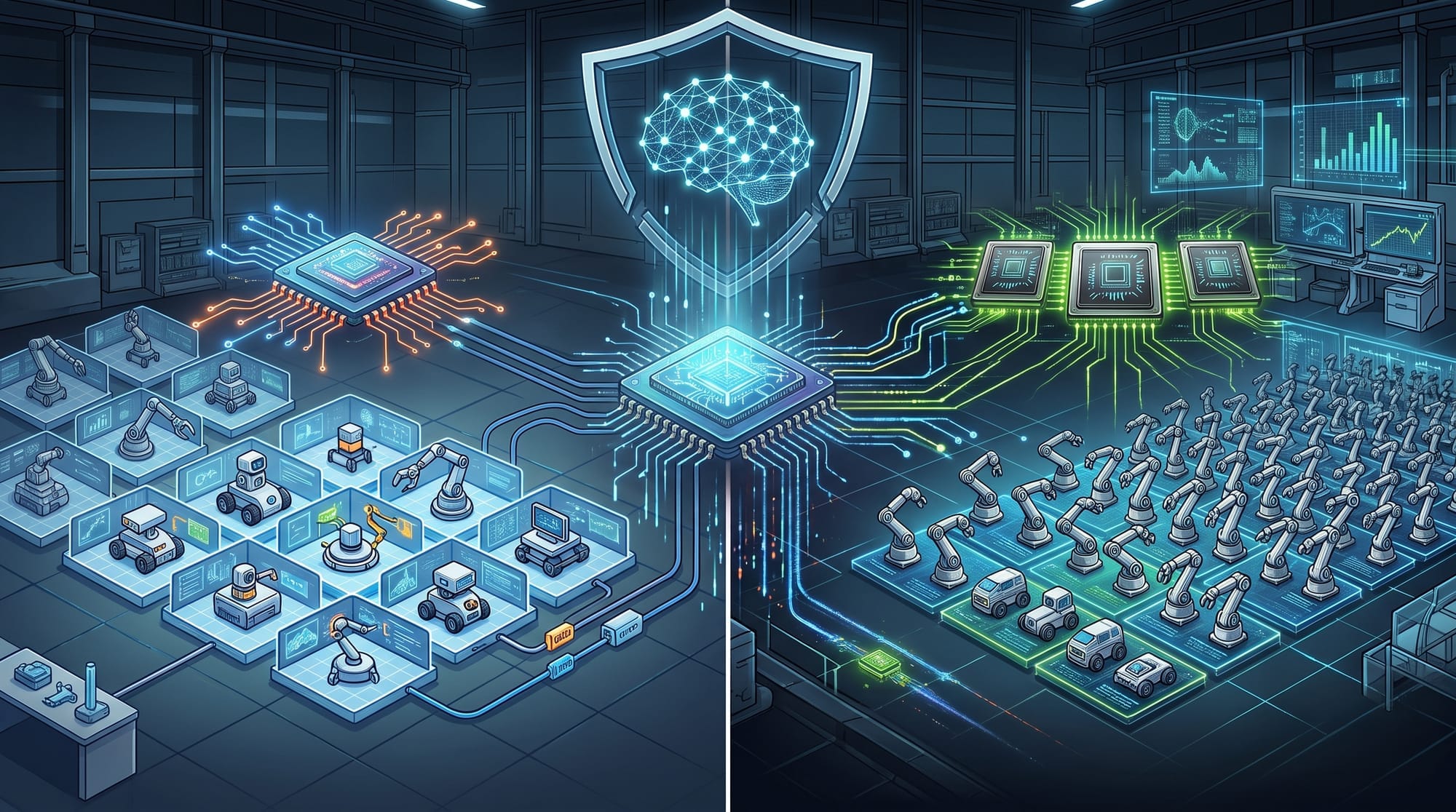
Cyc is an AI project launched in 1984 to encode human common sense by hand. This article traces Douglas Lenat’s path from AM and Eurisko to CycL, microtheories, OpenCyc, the contrast with LLMs, and the renewed interest in neuro-symbolic AI.


On this page
- Introduction
- Prologue: The AI That Conquered a Space Fleet Game
- AM: A Program That “Discovered” Mathematics
- Eurisko: Learning the Heuristics Themselves
- What the Victories Taught About the “Common-Sense Barrier”
- Birth: Japan Was Part of the Trigger
- The Ambition: Writing What Encyclopedias Do Not Say
- The Real Plan Was to “Prime the Pump”
- The Method: Writing Common Sense One Fact at a Time
- “Microtheories”: A Way to Contain Contradictions
- Scale
- One Important Caveat About Reasoning
- The Difficulty of Writing Common Sense: “Is Fred Still Human While He Is Shaving?”
- Independence and Public Release: Cycorp and OpenCyc
- The Birth of Cycorp
- OpenCyc: Knowledge That Was Once Public
- Knowledge Graphs as “Relatives”
- The Arrival of LLMs: The “Machine That Reads and Learns” Came From Another Direction
- The Irony of History
- Why It Is Too Simple to Say Cyc “Lost”
- Lenat’s Final Years and His Last Paper
- How Should We Evaluate Cyc? Praise and Criticism
- Praise: It Took On a Question Almost No One Else Dared to Touch
- Criticism: The Promised Breakthrough Never Came
- How to Understand These Two Evaluations
- Conclusion: The Questions Have Returned
- References
Introduction
Cyc is a project that set out to teach machines all of human “common sense.” It began in 1984 and is still ongoing in 2026. In the history of AI, there are very few projects that have continued pursuing a single question for this long.
Cyc is often described as a “sad project left behind by the times.” It certainly took an approach almost completely opposite to that of large language models (LLMs) such as ChatGPT, and it gradually disappeared from the spotlight. But Cyc still exists as a company, and there are still people using it. Reducing the entire story to the word “sad” feels a little too simplistic.
In this article, we will trace, in order, whose questions gave rise to Cyc, how far it progressed, and what it left behind. We will look at both the praise and the criticism.
Prologue: The AI That Conquered a Space Fleet Game
The story of Cyc becomes much easier to understand if we begin with the early research of its creator, Douglas Lenat.
AM: A Program That “Discovered” Mathematics
In the 1970s, while a graduate student at Stanford University, Lenat created a program called AM, or Automated Mathematician. Guided by heuristics for finding “interesting-looking concepts,” AM built up concepts of numbers by itself. It then “rediscovered” basic arithmetic ideas such as addition and multiplication, as well as several theorems in number theory.
For this work, Lenat received the prestigious IJCAI Computers and Thought Award, which recognizes promising young AI researchers.
Eurisko: Learning the Heuristics Themselves
AM was confined to a single domain: mathematics. Lenat therefore created a program that could be used in any field and could even learn how to use and revise its own heuristics. He named it Eurisko, from the Greek phrase meaning “I discover.”
An event in 1981 made Eurisko famous almost overnight.
There was a nationwide tournament based on the science-fiction wargame Traveller in which participants had to “design and fight a space fleet with a budget of one trillion credits.” Players studied a thick rulebook and competed to determine how best to allocate a limited budget among armor, engines, weapons, and other components.
Lenat gave the rules to Eurisko and had it design a fleet. While the human participants created balanced fleets of around 20 ships, Eurisko produced something bizarre: dozens of nearly identical ships that could barely move.
Its ships were sunk one after another, but there were so many of them that the opponent was wiped out first. Eurisko won the tournament.
The following year, in 1982, the organizers changed the rules so that fleet mobility would also affect the outcome. Eurisko then found a loophole: if it immediately scuttled its own damaged ships, it could keep the fleet’s overall mobility score high. It won again.
The organizers reportedly told Lenat that if he entered and won once more, they would cancel the tournament. Lenat withdrew and was instead said to have received the honorary title of “Grand Admiral.”
There is, however, debate over how much of these victories should truly be credited to Eurisko. Lenat himself is also reported to have said that more than half of the result came from his own work.
What the Victories Taught About the “Common-Sense Barrier”
The real lesson of this episode was not that Eurisko won.
Lenat later explained, in essence, that the human participants filled in the parts not written in the rules with assumptions like, “In the real world, it would probably work this way.” Eurisko had no such preconceptions.
That was precisely why it could reach solutions that humans would never think of — and would never choose.
Seen from the other side, this meant that machines had none of the “obvious things that go without saying.”
At the same time, Lenat had also run into the enormous burden of teaching Eurisko domain-specific knowledge one piece at a time.
These two realizations became the starting point for Cyc.
Birth: Japan Was Part of the Trigger
Cyc was not a Stanford University project. It was born at MCC, a research organization in Austin, Texas, and Japan played a major role in the circumstances that led to its creation.
In 1981, Japan’s Ministry of International Trade and Industry announced a national project called the “Fifth Generation Computer Systems” initiative, and in 1982 it established the research institute ICOT.
The highly ambitious plan was to build, within ten years, computers capable of “knowledge processing” based on logical reasoning.
The announcement caused considerable concern in the United States.
In response, at the end of 1982, a group of U.S. computer and semiconductor companies jointly formed a research consortium: MCC, the Microelectronics and Computer Technology Corporation.
Its leader was Bobby Ray Inman, a former director of the U.S. National Security Agency (NSA).
In 1984, Inman invited Lenat, then an assistant professor at Stanford, to join MCC. Lenat proposed Cyc as a flagship AI research project for the organization.
Cyc began operating in Austin in July 1984.
In other words, Cyc was born in the middle of the U.S.-Japan competition over AI and advanced computing.
Japan’s Fifth Generation project ended in the early 1990s without producing the practical results that had originally been expected. Cyc, which emerged in part as a response to that effort, is still continuing more than 40 years later.
The Ambition: Writing What Encyclopedias Do Not Say
The name Cyc comes from the word “encyclopedia.”
But the goal was not to make a machine memorize the contents of an encyclopedia. The goal was to capture the common sense that humans already assume — the things that are not written anywhere, but that people rely on in order to understand an encyclopedia in the first place.
At the time, one of the dominant approaches in AI was the expert system.
In narrow fields such as medical diagnosis, expert systems could sometimes make judgments comparable to specialists. But when something even slightly outside their expected domain occurred, they could produce absurd answers.
They lacked facts that any human would take for granted, such as:
- Water flows from higher places to lower places.
- A person cannot be in two places at the same time.
- A person who has already died cannot die again.
Lenat believed that AI would remain brittle unless machines could somehow possess this kind of ordinary knowledge.
The Real Plan Was to “Prime the Pump”
This is one of the most overlooked parts of the Cyc story.
Lenat did not intend to write all of common sense by hand forever.
His idea was this: first, humans would manually enter a sufficiently large amount of common-sense knowledge. That knowledge would “prime the pump.” Once the knowledge engine started working, the system would begin reading text and experimenting on its own, learning by itself.
In other words, the ultimate goal was a machine that could read and learn.
This idea becomes especially important later in the story.
Cyc is sometimes described as a project aimed at artificial general intelligence (AGI). That description is close to what it was trying to achieve, but the term “AGI” did not become widespread until the 2000s. It was not the language used in 1984.
The Method: Writing Common Sense One Fact at a Time
Cyc’s method was simple — and almost unimaginably laborious.
People known as “Cyclists,” including philosophers and programmers, entered concepts about the world and the relationships between them, one by one.
For example:
- Birds have wings.
- Parents are older than their children.
- If A is inside B, and B is inside C, then A is inside C.
This knowledge was written not in English or Japanese, but in a dedicated language called CycL.
By expressing knowledge in an unambiguous form, the system could combine individual pieces of knowledge and derive conclusions that had never been explicitly written down.
“Microtheories”: A Way to Contain Contradictions
Once you start writing common sense down, a problem appears immediately: human knowledge is full of contradictions.
For example, “dragons can fly” is true in a fictional story but not in reality. Humans switch between these contexts naturally.
Cyc handled this using a mechanism called microtheories.
Knowledge was divided into context-specific compartments such as “the world of a story,” “modern physics,” or “the laws of a particular country.”
That way, even if knowledge in different compartments conflicted, the system as a whole did not collapse.
It may sound like a minor detail, but this is perhaps one of the most human-like aspects of Cyc’s design.
Scale
Forty years of accumulated work resulted in figures like these:
| Point in Time | Number of Concepts (Terms) | Number of Knowledge Assertions | Effort / Cost Invested |
|---|---|---|---|
| 1994 | About 100,000 | About 1 million | — |
| 2002 | — | — | About $60 million, 600 person-years |
| 2017 | About 1.5 million | About 24.5 million | — |
| 2025 estimate | — | About 30 million | About $200 million, 2,000 person-years |
A “person-year” means the amount of work one person does in one year.
Two thousand person-years is equivalent to 100 people working continuously for 20 years.
One Important Caveat About Reasoning
Because Cyc derives conclusions logically from written knowledge, it is possible to trace why it reached a particular answer.
In this respect, it contrasts with LLMs, which are often poor at explaining the basis of their answers.
However, it would be an exaggeration to say that “Cyc uses perfect logic and never makes mistakes.”
The correctness of its answers depends on the correctness of the knowledge entered into the system. And in order to produce answers within a practical amount of time across an enormous knowledge base, Cyc also uses various shortcuts and stopping rules during inference.
A more accurate description would be that it is less likely to fabricate arbitrary answers and makes it possible to trace the reasoning behind them.
The Difficulty of Writing Common Sense: “Is Fred Still Human While He Is Shaving?”
There is a famous episode that illustrates just how difficult it is to express common sense in logic.
It is the story of “Fred shaving,” introduced in the 1992 documentary The Machine That Changed the World.
One morning, researchers tried to make Cyc understand a scene in which a man named Fred was shaving.
Of course, Cyc knew that “humans shave.” It could also understand that Fred was holding an electric razor in his hand and shaving.
Cyc also contained knowledge stating that a tool a person is holding and using can, in a certain sense, be treated as part of that person’s body.
But then another piece of knowledge came into play.
Cyc also knew that “humans do not have electrical components.”
Now consider “Fred while he is shaving.”
If the electric razor he is holding is treated as part of Fred, then within Cyc’s reasoning, “Fred while shaving has an electrical component.”
That creates a conflict between two pieces of knowledge:
- “Humans do not have electrical components.”
- “Fred while shaving has an electrical component.”
A human would not struggle with this.
We naturally understand that “Fred is merely holding the electric razor; Fred himself does not contain electrical components.”
Even when we use a phrase like “an extension of the body,” we understand from context that the object has not literally become part of the body.
But when common sense is expressed as individual logical statements, this kind of “natural understanding” becomes extremely difficult.
Consider these rules:
- “Humans shave.”
- “Humans do not have electrical components.”
- “A tool being held and used can, in some sense, be treated as part of the body.”
None of these statements seems particularly strange on its own.
But combine them in logical inference, and you can end up with the bizarre question: “Is Fred still human while he is shaving?”
The interesting part is that the problem did not occur because Cyc lacked the simple common-sense knowledge that “people shave.”
Quite the opposite: the problem arose because Cyc already contained a great deal of common-sense knowledge.
Humans make countless subtle judgments almost unconsciously:
“This is metaphorical.”
“This relationship is temporary.”
“This property should only be inherited up to this point.”
To make a computer do the same, it is not enough to write down individual facts. You also have to specify how far each piece of knowledge is allowed to propagate through reasoning.
The story of Fred shaving vividly demonstrates that Cyc’s decades-long attempt to “give common sense to computers” was not a problem that could be solved simply by registering more and more common-sense facts.
Independence and Public Release: Cycorp and OpenCyc
The Birth of Cycorp
After the first ten years of work at MCC, Cyc became an independent company at the end of 1994.
That company was Cycorp, based in Austin.
Funding came from government agencies and private-sector companies, and Lenat remained CEO until his death.
Cycorp has been involved in projects for the U.S. government, military, intelligence agencies, scientific research organizations, and others.
In 2002, it also built a security tool using Cyc to identify weaknesses in networks.
OpenCyc: Knowledge That Was Once Public
Part of Cyc’s knowledge base was once made publicly available as OpenCyc.
- Spring 2002: The first version was released. It was relatively small, with 6,000 concepts and 60,000 knowledge assertions.
- 2006: A larger version, ResearchCyc, was made freely available to researchers.
- June 2012: OpenCyc 4.0, the final version, was released. It contained around 240,000 concepts and roughly 2 million knowledge assertions, many of them classification facts such as “A is a kind of B.”
- Around March 2017: Public distribution ended. Cycorp explained that fragments of the system had been extracted and circulated in ways that caused confusion, leading people to mistake OpenCyc for Cyc itself.
For 15 years, OpenCyc contributed to the development of machine-readable knowledge.
For example, the knowledge framework UMBEL was derived largely from OpenCyc.
Knowledge Graphs as “Relatives”
Today, when you search for a person in a search engine, you often see a side panel showing a biography and related people.
Behind this is a concept known as the knowledge graph.
Public knowledge bases such as Wikidata are based on a similar idea.
These systems are not direct descendants of Cyc.
However, the idea of representing “things in the world and the relationships between them in a machine-readable form” was something Cyc pursued earlier and more thoroughly than almost anyone else.
The Arrival of LLMs: The “Machine That Reads and Learns” Came From Another Direction
While Cyc continued writing down common sense, the mainstream of AI changed dramatically.
Instead of humans writing rules, machines began discovering patterns by themselves from large amounts of data.
The age of machine learning — and later deep learning — had arrived.
One culmination of that trend is the large language model, or LLM, such as ChatGPT.
By reading enormous amounts of text from the internet, LLMs acquired the ability to produce responses that appear to reflect common sense.
Nobody manually wrote down, one line at a time, that “water flows downhill.”
The Irony of History
Now recall the earlier discussion of “priming the pump.”
Lenat’s ultimate goal was a machine that could read text and learn for itself.
What eventually achieved something resembling that goal did so through an approach almost exactly opposite to Lenat’s.
Rather than first writing common sense by hand as a primer, researchers fed machines enormous amounts of text from the beginning.
The machine Lenat dreamed of arrived by a road he did not choose.
This may be the most ironic — and most thought-provoking — part of the Cyc story.
Why It Is Too Simple to Say Cyc “Lost”
Still, it would be too simple to describe this as Cyc’s defeat.
The strengths and weaknesses of LLMs and Cyc are almost mirror images of one another.
| LLM | Cyc | |
|---|---|---|
| How knowledge is acquired | Learned automatically from massive amounts of text | Written one fact at a time by humans |
| Scope | Very broad | Limited to what has been encoded |
| Fluency in conversation | Strong | Weak |
| Plausible errors (hallucinations) | More likely | Less likely |
| Explaining the reason for an answer | Weak | Reasoning path can be traced |
Thinking back to Eurisko reveals another interesting contrast.
Eurisko had so few preconceptions that it produced solutions humans would not choose.
LLMs, by contrast, inherit an enormous number of human preconceptions from human-written text.
That makes them behave more naturally, but correctness is not guaranteed.
Cyc can be understood as an attempt to occupy a space in between: building common sense whose correctness could be explicitly grounded.
Lenat’s Final Years and His Last Paper
In 2023, when LLMs were drawing worldwide attention, Lenat published a paper.
Released in July and coauthored with cognitive scientist Gary Marcus, it was titled Getting from Generative AI to Trustworthy AI: What LLMs Might Learn from Cyc.
The paper begins by listing 16 properties that trustworthy AI should possess, including the ability to explain why it gave an answer, reason step by step, and infer what another person may be thinking.
It argues that LLMs struggle with many of these properties and shows how Cyc can address each of them.
The conclusion is that LLMs should be combined with systems for explicit knowledge and reasoning like Cyc.
Such combinations are often described as neuro-symbolic AI.
Just over a month later, on August 31, 2023, Lenat died of bile duct cancer in Austin. He was 72.
He did not live to see the project to which he devoted his life return to widespread attention.
But it is worth remembering that his final work did not reject LLMs. Instead, it proposed a way for the two approaches to work together.
Cycorp announced that it would continue operating after Lenat’s death.
How Should We Evaluate Cyc? Praise and Criticism
Opinions about Cyc remain sharply divided.
It would be unfair to present only one side, so here are both.
Praise: It Took On a Question Almost No One Else Dared to Touch
In a memorial piece for Lenat, Marcus described him as someone willing to tackle a project that nobody else had the courage to attempt.
Spending 40 years confronting something as vast and seemingly endless as human common sense was itself an extraordinary undertaking.
Cyc also advanced the idea of ontology engineering — organizing knowledge into concepts and relationships — at an early stage, and influenced later efforts around knowledge graphs and the Semantic Web.
Criticism: The Promised Breakthrough Never Came
There are also harsh assessments.
A long 2025 essay by Yuxi Liu titled Obituary for Cyc, based on extensive research into source materials, concluded that Cyc failed as an attempt to achieve general intelligence.
According to the essay, Lenat repeatedly predicted that a breakthrough was near, but those breakthroughs did not materialize.
It also argued that although Cycorp maintained an unusually stable financial position for a small technology company, its known commercial applications were functionally not very different from ordinary data-integration and information-retrieval systems also offered by large technology companies.
In that view, there is little visible evidence that Cyc’s distinctive “higher intelligence” became a competitive advantage.
How to Understand These Two Evaluations
We need to distinguish between two statements:
“Cyc is still being used.”
and
“Cyc is uniquely superior for those uses.”
The first is a fact.
The second is, at least from the outside, difficult to verify.
What can be said is that Cyc became the longest-running and largest-scale experiment in asking, “What happens if we write common sense down by hand?”
Learning where that approach gets stuck, and why it is difficult, is itself an important contribution to the history of AI.
Conclusion: The Questions Have Returned
Was Cyc’s history a “sad fate”?
I do not think so.
The questions Cyc spent 40 years confronting have returned in new forms.
The problem of LLMs producing plausible falsehoods.
The problem that AI often cannot explain the reasons behind its answers.
The effort to combine knowledge graphs and retrieval with LLMs so that trustworthy external knowledge can be supplied to them.
All of these are questions Cyc had been thinking about for decades.
Perhaps Cyc was a project that asked the right questions, but pursued a path toward the answers that did not align with its era.
And whether that path was truly wasted remains unresolved.
The history of AI is not a straight line of winners and losers. It is a history of paths that split apart and later cross again.
Cyc kept walking one of those paths longer than almost anyone else.
And people are still working at the end of that road today.
References
- Cyc (English Wikipedia)
- Douglas Lenat (English Wikipedia)
- Eurisko (English Wikipedia)
- Traveller Adventure 5: Trillion Credit Squadron (English Wikipedia)
- Eurisko (Traveller Wiki)
- A Brief History of Artificial Intelligence Beating Humans (PC Gamer)
- George Johnson’s article on Eurisko (Alicia Patterson Foundation)
- Replicating Douglas Lenat's Traveller TCS Win (LessWrong)
- Microelectronics and Computer Technology Corporation (English Wikipedia)
- Communications of the ACM, September 1983 (Fifth Generation and MCC)
- Cyc (aiwiki.ai)
- Fare Thee Well, OpenCyc (Mike Bergman, 2017)
- OpenCyc (KBpedia)
- AI Pioneer Douglas Lenat (I Programmer)
- Enterra Solutions memorial article
- Introduction to Obituary for Cyc (mjtsai.com)
- Obituary for Cyc (Yuxi Liu)
- Lenat, D. & Marcus, G. (2023), Getting from Generative AI to Trustworthy AI: What LLMs Might Learn from Cyc (arXiv)
Struggling to turn ideas into reality? With a proven track record of over 1,000 clients, our agile and flexible team will accelerate your business growth.