Is Your “Digital Twin” Just an Expensive 3D Model? The Essence Is State Synchronization, Not Appearance
A high-fidelity 3D model alone does not make a digital twin. This article explains why state synchronization matters, how digital models and digital shadows differ, why real-time updates are not always necessary, when 3D is useful, and five questions to answer before implementation.

On this page
- The Boundary Between a 3D Model and a Digital Twin
- There Are Different Levels of “Synchronization”
- The Real Value Is Being Able to Test “What If?”
- Do We Need 3D in the First Place?
- Why Do “3D Virtual Cities” Stand Out So Much?
- It Does Not Have to Be “Real Time”
- Why the Phrase “It Is Complete” Feels Wrong
- Five Questions to Answer Before Implementation
- 3D Can Be Added Later
As companies and local governments push forward with DX initiatives, we are seeing more announcements that “a digital twin has been built.” High-resolution 3D city models that can be freely explored in a browser, or beautiful CAD data of factories, can make it feel as though the future has already arrived.
However, there is a common trap that the entire industry can easily fall into.
Many projects mistakenly assume that a digital twin is complete simply because they have created impressive-looking 3D CG.
The Boundary Between a 3D Model and a Digital Twin
Let us return to the meaning of the term “digital twin.” If we call it a twin, the real world and the virtual world must be connected in some way.
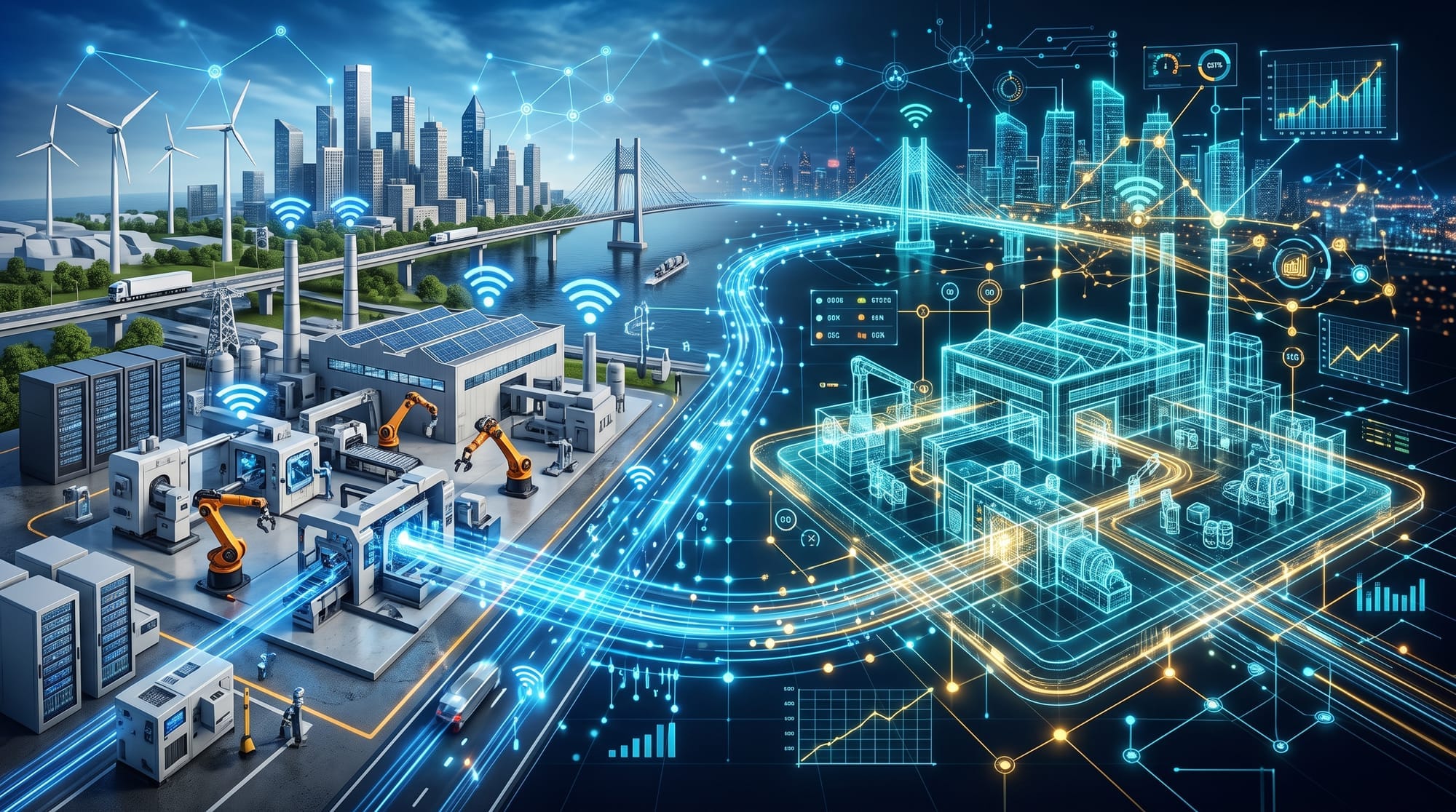
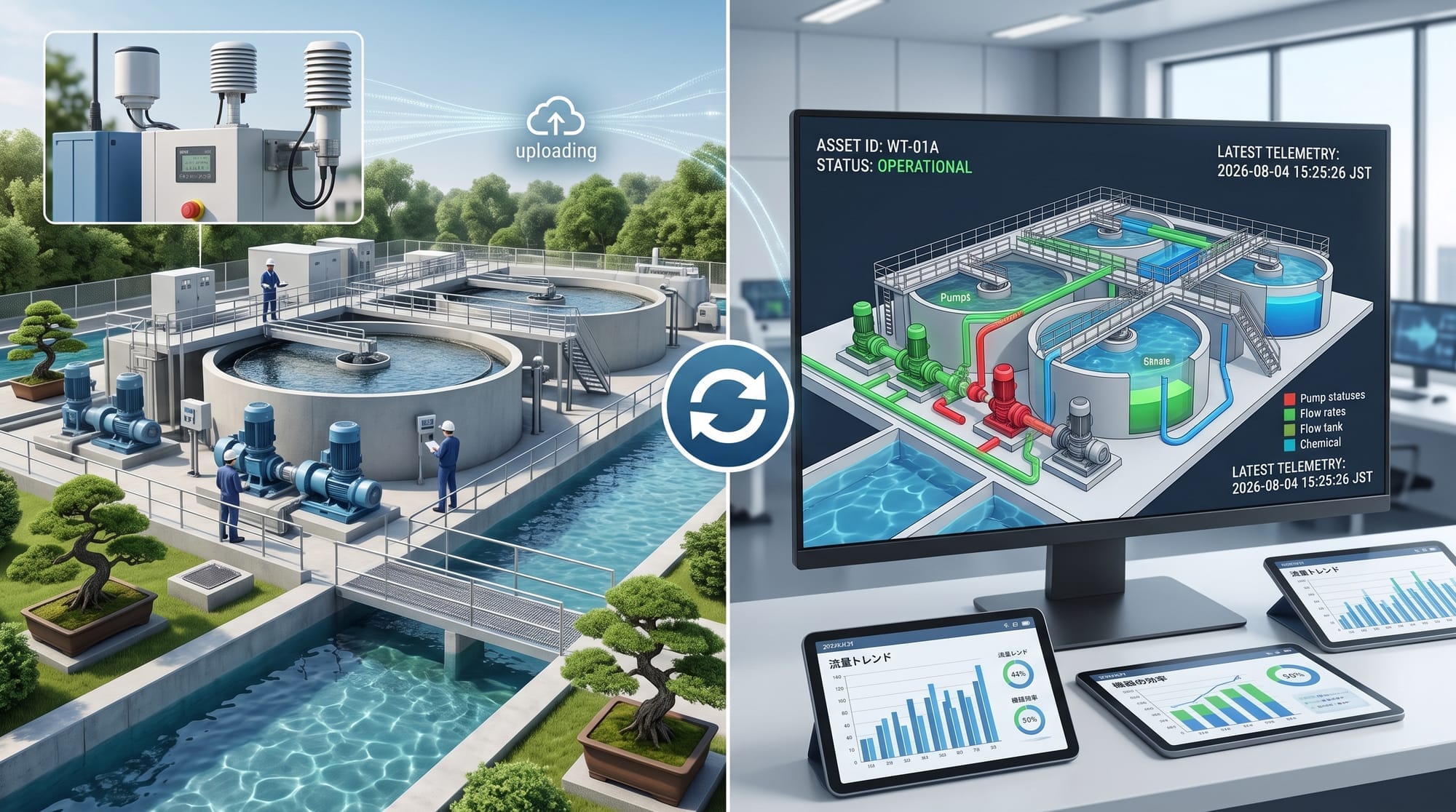
If traffic congestion occurs in the real city, vehicles also accumulate in the digital city. If the temperature of a machine rises in the real factory, the digital machine also issues an alert. Only when changes in the real world are reflected on the digital side through data can we say that we have reached the starting point of a digital twin.
Even if tens of millions of yen are spent creating a 3D model of a city, if it only preserves “the scenery at the moment it was created,” then it is simply a 3D map or an expensive catalog. The essence of a digital twin is not “reproducing appearance,” but “synchronizing state.”
There Are Different Levels of “Synchronization”
It becomes easier to understand the path toward a digital twin if we distinguish three stages.
The first is a digital model. It simply captures reality at a particular point in time and is similar to a photograph. The “3D city that only preserves the scenery at the time it was created” mentioned above falls into this category.
The second is a digital shadow. Changes in the real world are automatically reflected on the digital side. It is like a live broadcast. You can see what is happening in reality, but you are only watching it.
The third is the true digital twin. While observing the live feed, you can test “what would happen if we did this?” on the digital side, then use the result for real-world decisions or operations. Information moves from the real world to the digital world and from the digital world back to reality. Only when information moves in both directions does the “twin” become truly useful.
The Real Value Is Being Able to Test “What If?”
You cannot casually run experiments on a real city or factory. You cannot build a daycare center just to see what happens, or intentionally operate a machine until it breaks. The value of a digital twin lies in being able to test these “what if?” scenarios repeatedly without harming the real world.
“What if we built a new daycare center in this district? How many fewer children would be waiting for placement?”
“If we changed the way this machine is operated, how much longer could we delay a failure?”
State synchronization is a prerequisite for ensuring that these estimates are based not on “old reality,” but on “current reality.” In other words, before asking “what should we synchronize?”, the first question should be: “Which decisions do we want to improve?”
Do We Need 3D in the First Place?
At this point, another important fact becomes clear: in many business applications, 3D graphics are not the main component of a digital twin.
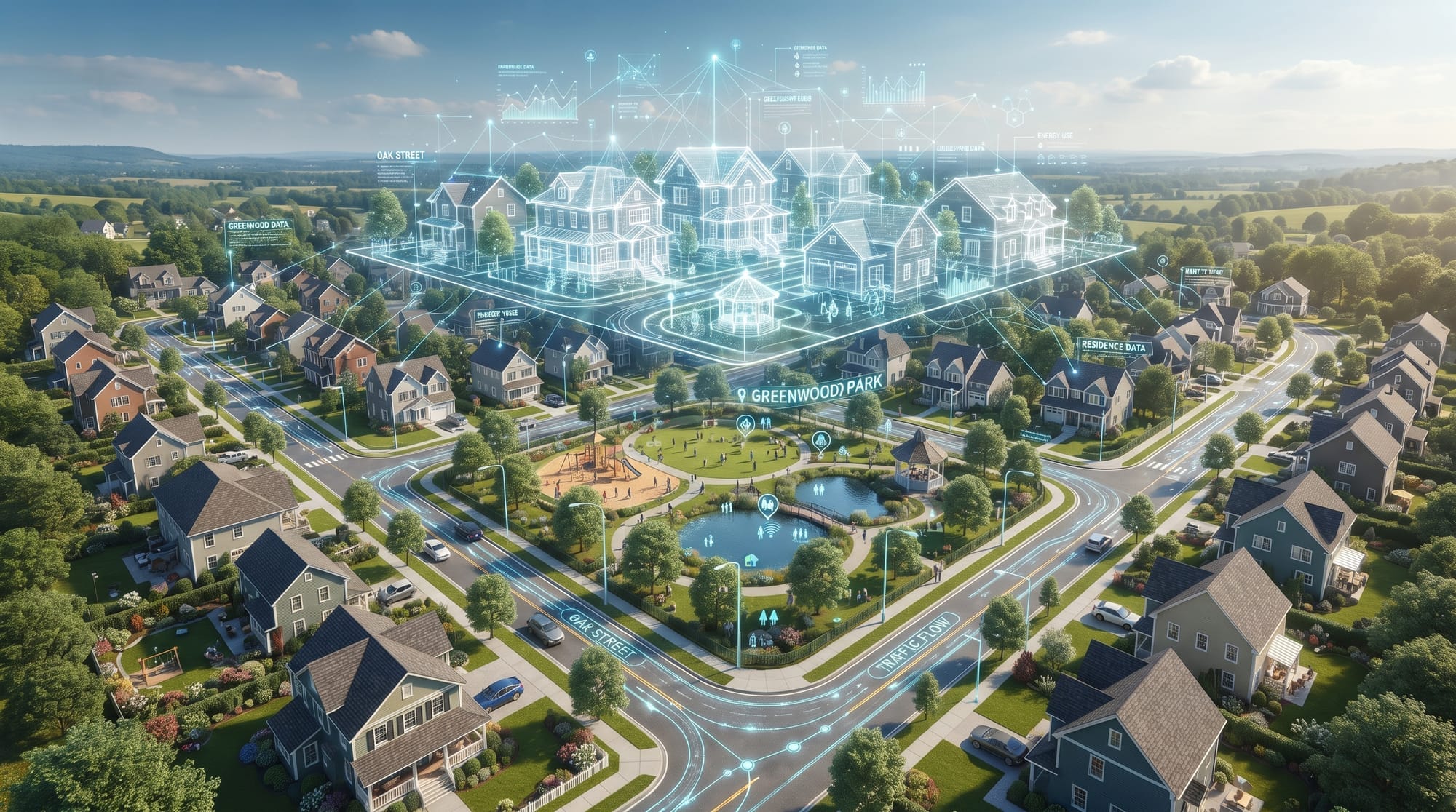
For example, if a local government wants to improve public services, it does not need to create a 3D avatar for every resident and make them walk around a virtual space in order to forecast daycare demand or plan evacuations for people who may need assistance during a disaster.
What is needed is data such as age groups, household composition, and facility usage, understood as statistics by district.
This collection of “attribute and movement data” is the substance of a digital twin for public administration. In most cases, charts, maps, and dashboards are enough for people to understand the situation.
Of course, there are also cases where 3D is essential. To simulate how water flows during a flood or how a new building changes sunlight conditions, a spatial model with shape and position is necessary. 3D is also useful when identifying exactly which piece of equipment is being discussed at a factory, or when sharing the appearance of a completed development at a public briefing.
There are also 3D city models, such as Japan’s Ministry of Land, Infrastructure, Transport and Tourism’s PLATEAU, that contain attribute data such as building use and height. So “3D” does not automatically mean “appearance only.”
The important point is not to frame it as a choice between “3D or data.” 3D is one display method selected according to the purpose—nothing more and nothing less.
Why Do “3D Virtual Cities” Stand Out So Much?
Even so, why do 3D virtual cities come to mind so easily when we hear the term “digital twin”?
The biggest reason is that 3D makes the result visible. At a press conference or in an explanation to a local assembly, a beautiful cityscape moving in a browser communicates the outcome instantly.
By contrast, a mechanism that collects data from different departmental systems and keeps updating it on a regular basis does not show anything visually. It is difficult to explain and does not make for an impressive photograph. As a result, the most important parts are often the least likely to attract budget and attention.
It Does Not Have to Be “Real Time”
When people hear “synchronization,” real-time updates are often presented as the ideal. But the necessary frequency should be determined by the speed of the decision that uses the information.
A factory machine anomaly may require updates every few seconds, while road congestion may need updates every few minutes. For daycare demand forecasting, however, once a month or even once a year may be sufficient. Household composition and age distribution do not change every minute in the first place.
Trying to make everything real time causes costs to rise rapidly. Conversely, simply matching the synchronization frequency to the decision cycle can eliminate a large amount of unnecessary investment.
Why the Phrase “It Is Complete” Feels Wrong
A digital twin is not a finished product that is built once and then left alone. As long as reality keeps changing, people, mechanisms, and budgets are needed every year to keep the data updated. Sensor maintenance, integration between systems, and data-quality checks all have to continue.
The moment these stop, the digital twin turns back into nothing more than a picture of the past—in other words, a digital model.
In that sense, an announcement saying “the digital twin is complete” can itself be somewhat inconsistent with the nature of a digital twin.
The question should not be the date on which it was completed, but how many years its operation has continued.
Five Questions to Answer Before Implementation
Companies and local governments considering a digital twin should answer the following questions themselves before looking at a vendor proposal.
- Which decisions do we want to improve, and how?
- What real-world data is required for that?
- How frequently must that data be updated for the decision to be made in time?
- Who will keep the data updated, and who will bear the cost?
- Does physical space materially affect the result? If so, consider using 3D.
When dealing with data related to residents, another essential question is: “Whose data are we allowed to use, and to what extent?”
If these questions cannot be answered before ordering a high-resolution 3D model, the investment may end up reversing the relationship between purpose and means.
3D Can Be Added Later
Once the data flow is in place, 3D can be added later as a way to present the information. But if you build only the appearance first, a data flow will not naturally emerge afterward.
Do not start with appearance. Work backward from the decisions you want to change. For many organizations, the invisible flow of data is the real core challenge that deserves attention.
Struggling to turn ideas into reality? With a proven track record of over 1,000 clients, our agile and flexible team will accelerate your business growth.