Lost in the Majestic Underground: When the Entire World of Caves Fits Within Your Sight
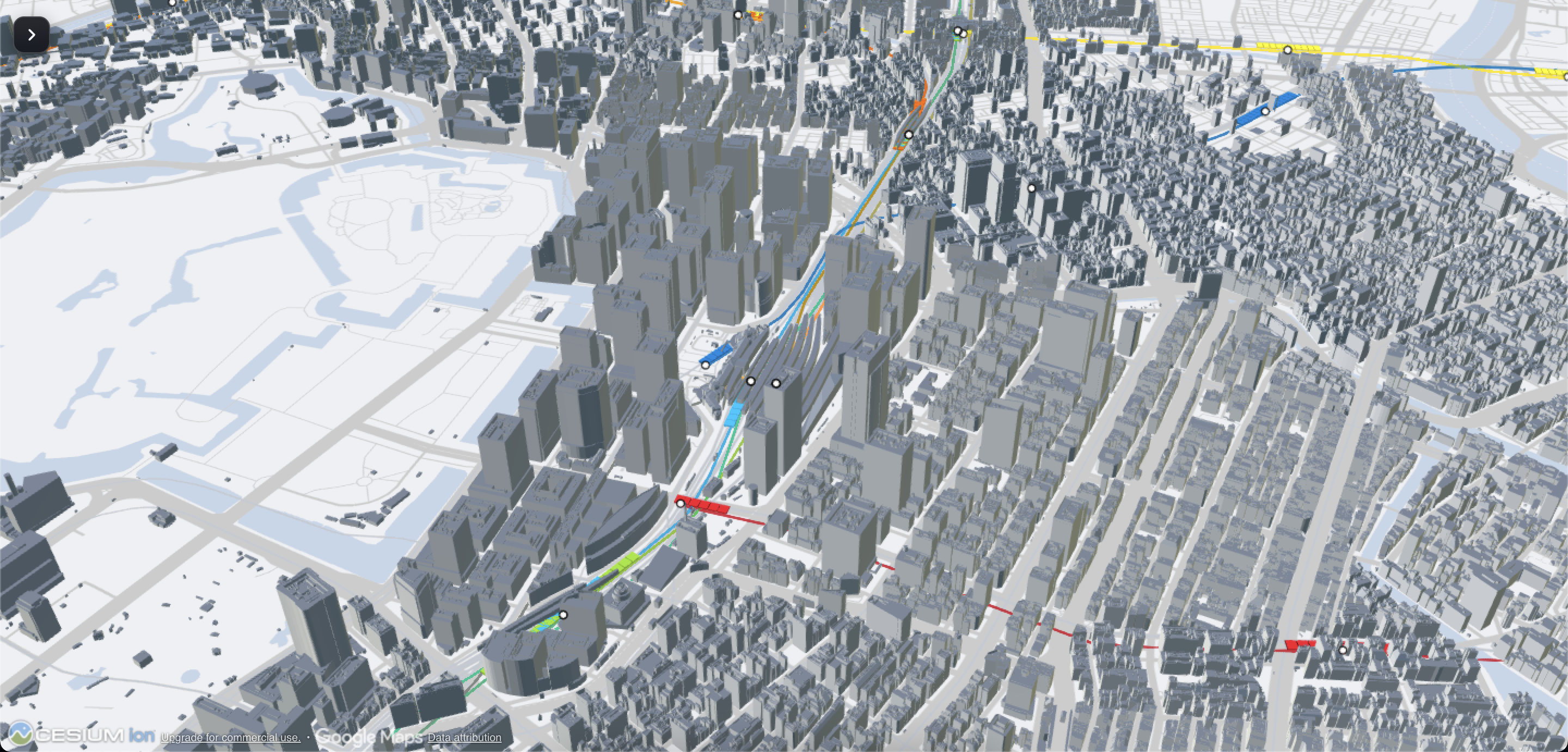
Cave Explorer turns real cave scans into an interactive web experience using point clouds, 3D Tiles, LOD, and real-time rendering. This article explains the data pipeline, browser performance challenges, remote exploration, digital heritage use cases, and future features.
On this page
- Bringing the underground world to your screen
- The key to solving the massive data problem: Why 3D Tiles?
- The journey of turning lifeless numbers into an interactive world
- Opening the door to distance-free travel
- Technical knots that need untying
- Future: Where static data becomes a living world
- The future of digital space exploration technology
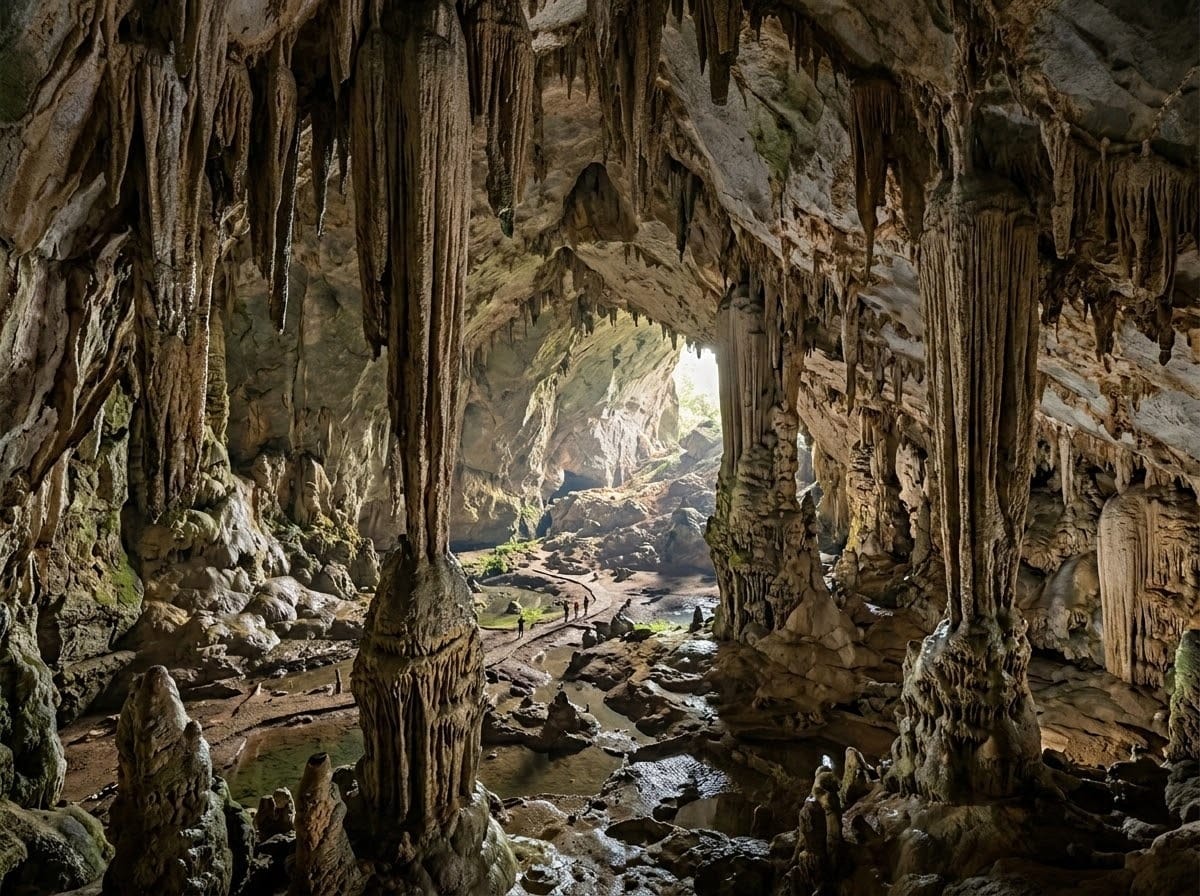
Imagine you are standing in front of a colossal cave entrance, with the sound of dripping water echoing from the deep darkness and mysterious shafts of light piercing through the stone walls. You feel the vastness and grandeur of nature, yet... you are sitting comfortably in your desk chair. There is no need to exhaust yourself on arduous climbing journeys, no obstacles of narrow spaces; the entire underground world suddenly appears seamlessly right on your browser screen. Digitizing a messy and complex natural structure like a cave was once a technical "nightmare," but what happens when we truly solve that problem?
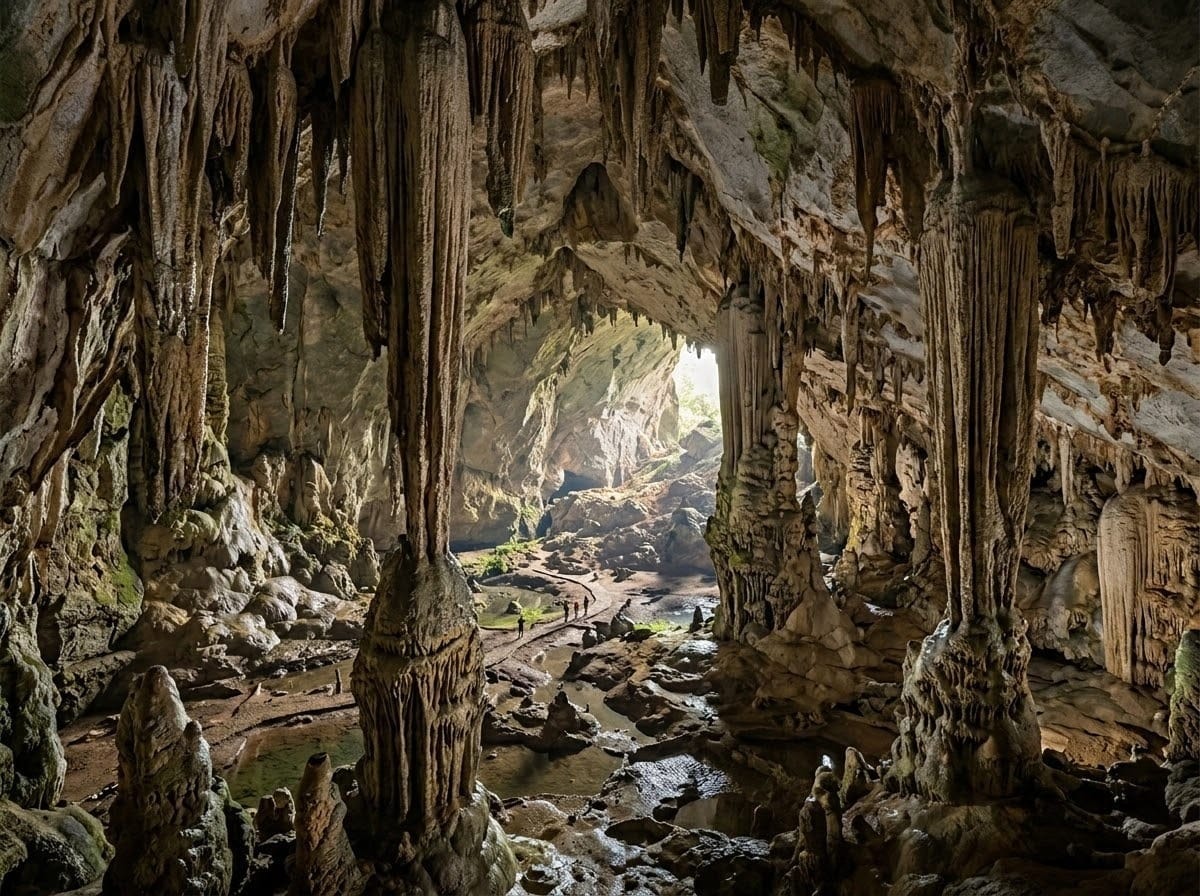
Cave Explorer was born from that very desire. This is not just a typical 3D demo project, but an experimental journey that brings actual cave data into a direct, seamless interactive experience right in your web browser.
Experience the Cave Explorer demo right here: Explore Cave Explorer Demo
Bringing the underground world to your screen
Instead of forcing users to imagine through 2D photos or flat maps, Cave Explorer opens a truly vivid 3D space door.
Imagine rotating the viewpoint yourself, weaving through narrow crevices, or gazing out at the vast cave dome, all happening smoothly in three-dimensional space.
This experience helps you fully grasp the depth, scale, and spatial connection between areas, something no book or photograph can fully convey.
The secret behind this experience is 3D Tiles technology. Imagine that loading a massive cave at once is like trying to stuff a car through a keyhole. 3D Tiles solve this problem by breaking down data and streaming it intelligently.
3D Tiles help break down massive data into spatial pieces, loading only what your eyes are seeing to deliver a smooth 60fps experience on the web.
Every time you move the camera, the system focuses on sharpening the details right in front of your eyes, while keeping distant areas at a sufficient level. Thanks to this mechanism, the massive volume of data is processed neatly, yet your exploration experience remains smooth without a hint of lag.
The key to solving the massive data problem: Why 3D Tiles?
Every square meter of a cave, when scanned in reality, creates an incredibly huge amount of geometric data.
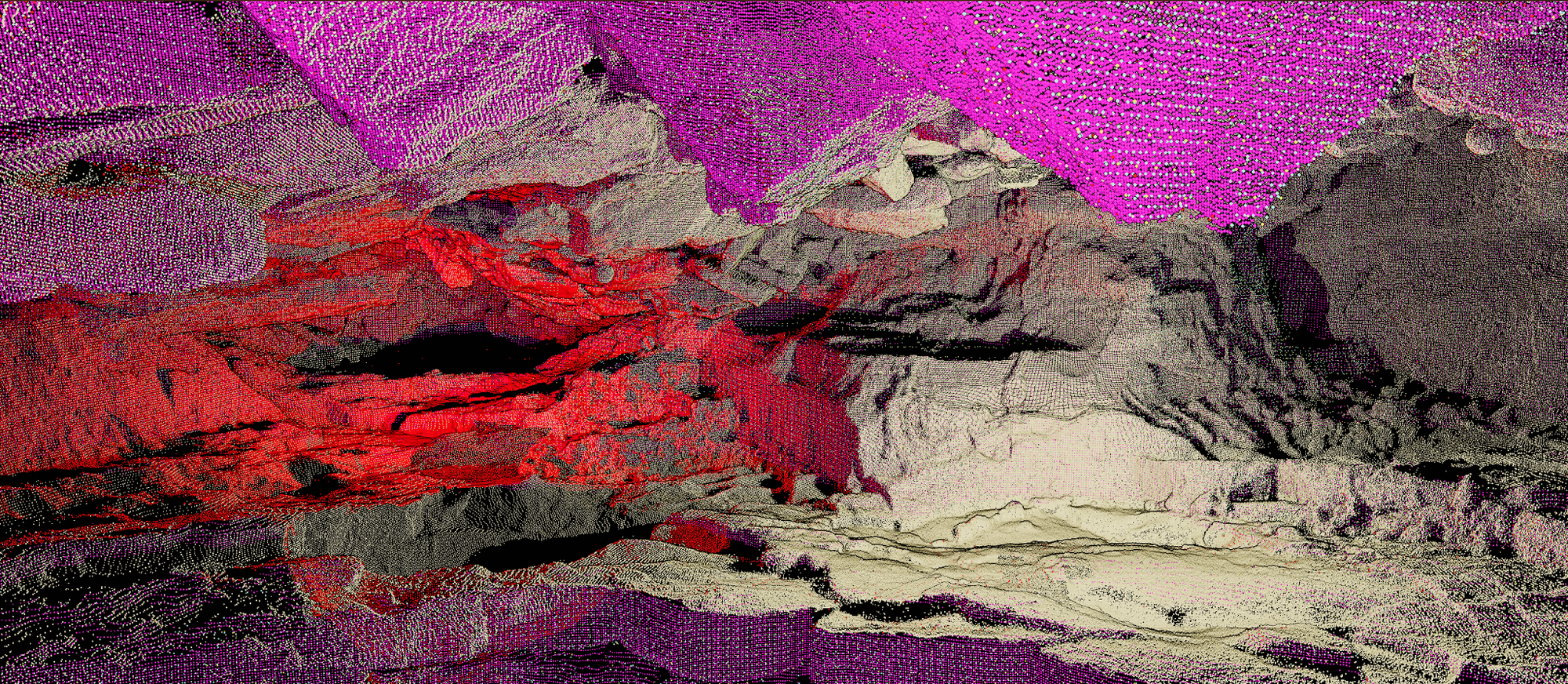
A high-quality scan contains millions of points (Point Cloud) and ultra-detailed surfaces. If you force the browser to load all this data at once, your computer will certainly "go on strike" due to running out of memory.
And 3D Tiles are the savior that helps upgrade scalability indefinitely.
The Spatial Hierarchy & LOD (Level of Detail) structure automatically adjusts the sharpness of detail when approaching and reduces resource load at long distances, helping to optimize RAM and GPU usage superiorly.
The entire environment is organized according to an intelligent hierarchical tree structure. When you approach a stalactite, this technology immediately adds sharp detail specifically to that area, while saving resources in areas far from your sight.
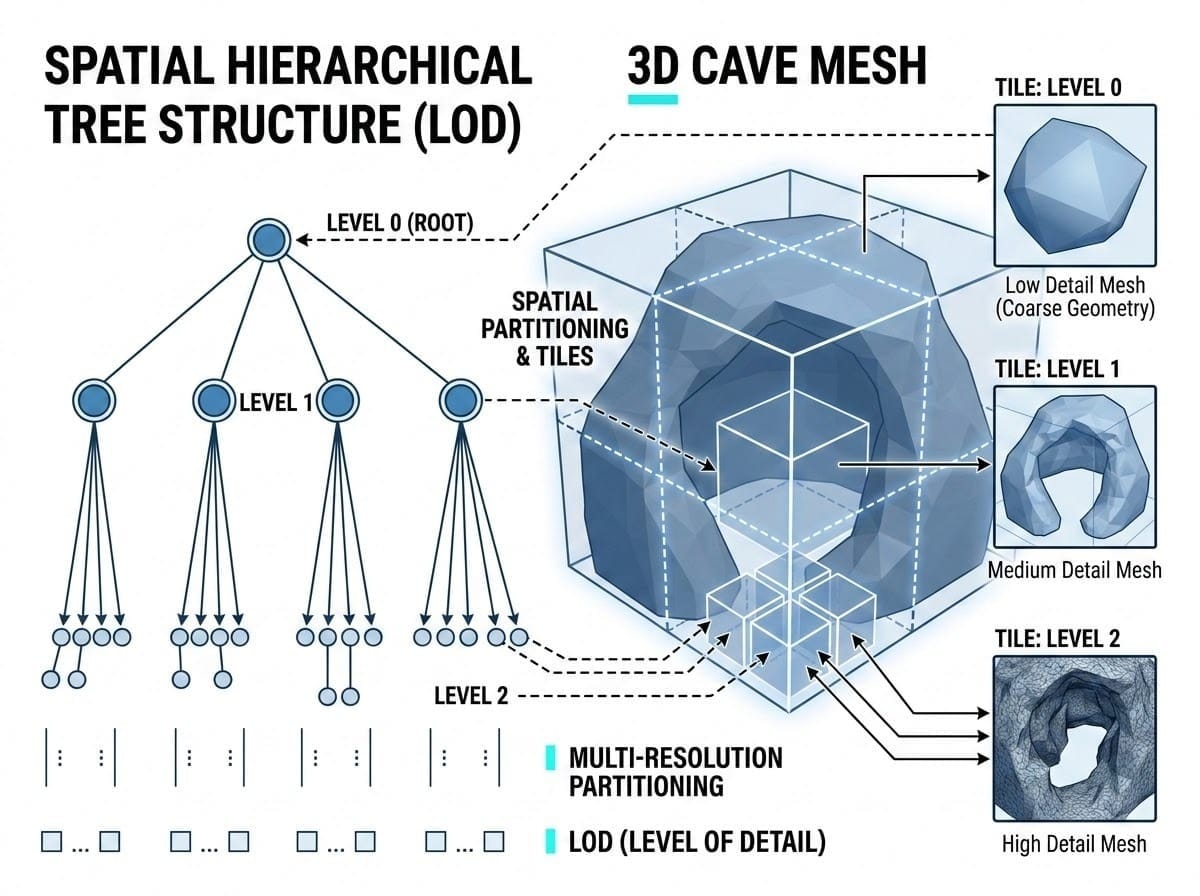
Thanks to this approach, we can comfortably stroll through vast 3D spaces without worrying about loading times or storage capacity.
The journey of turning lifeless numbers into an interactive world
What excites the development team the most is the moment of seeing raw data points turn into a vivid world that you can touch.
Let's look back at the magic chain behind the scenes:
Real-world cave → Specialized 3D scanning → Point Cloud → 3D Tiles packaging → Vivid 3D experience on the Web
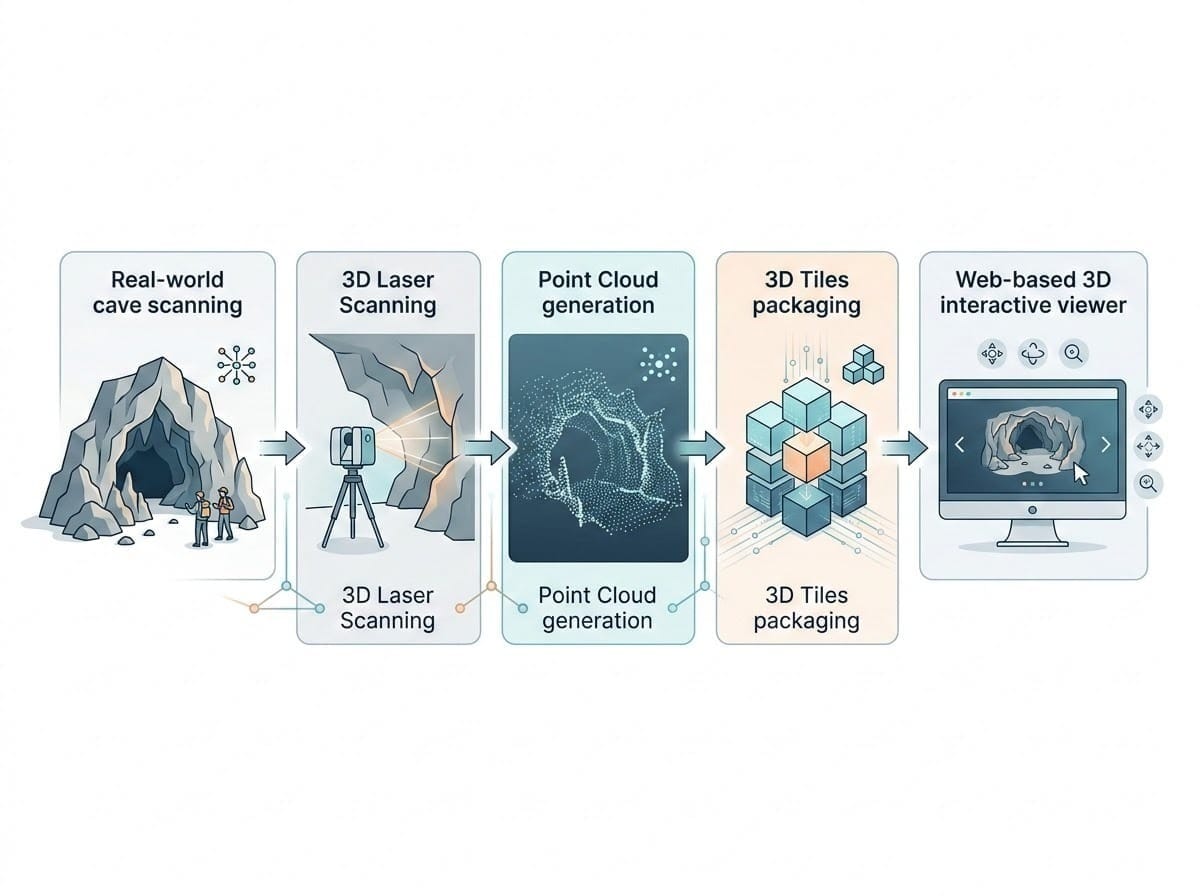
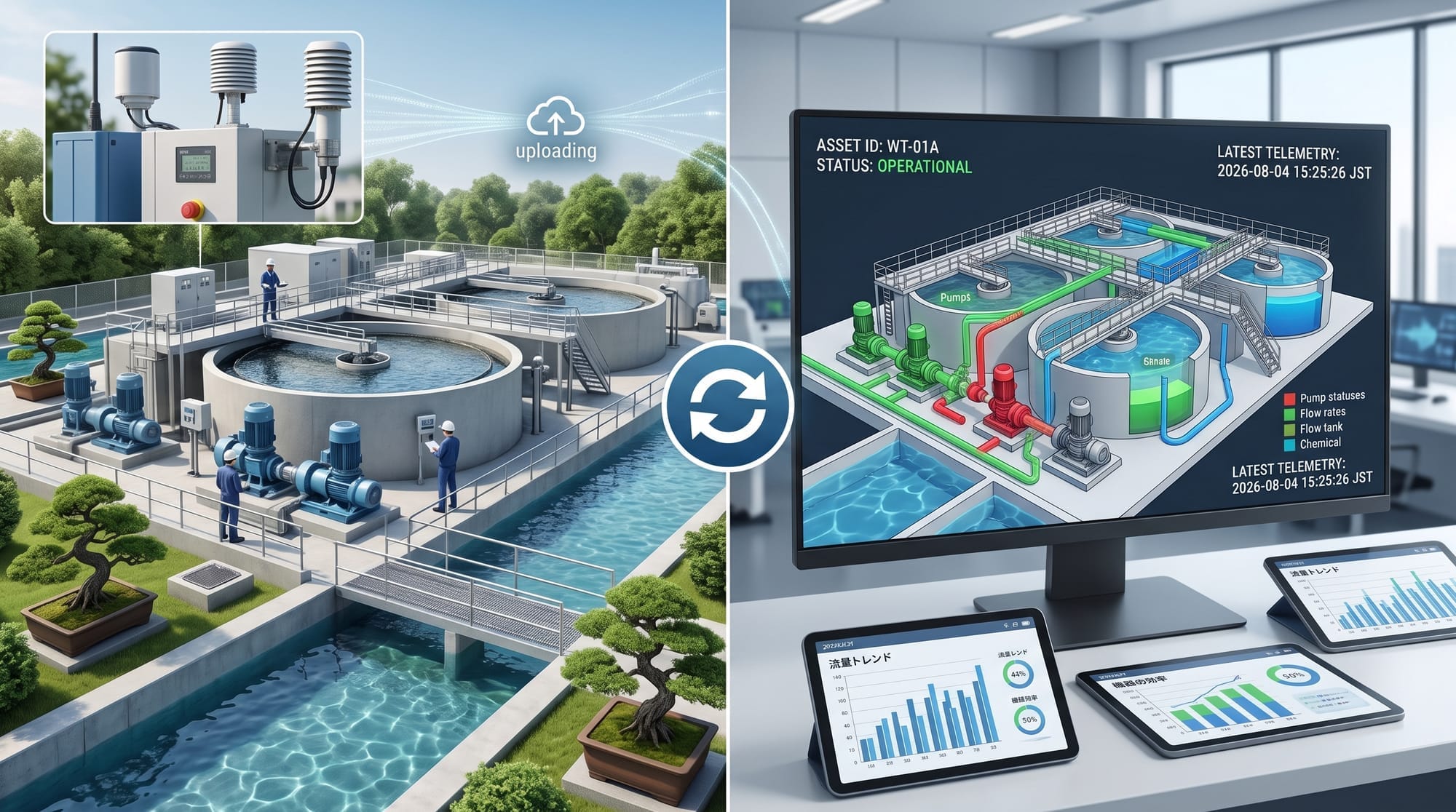
Everything starts with laser scanning devices capturing every physical line of the underground.
This data then undergoes a rigorous "honing" and optimization process to be ready for smooth real-time streaming to your browser.
The final result is not just a lifeless 3D model to look at, but an environment truly opened up for you to explore freely.
Opening the door to distance-free travel
The greatest value that this technology brings is the ability to explore remotely.
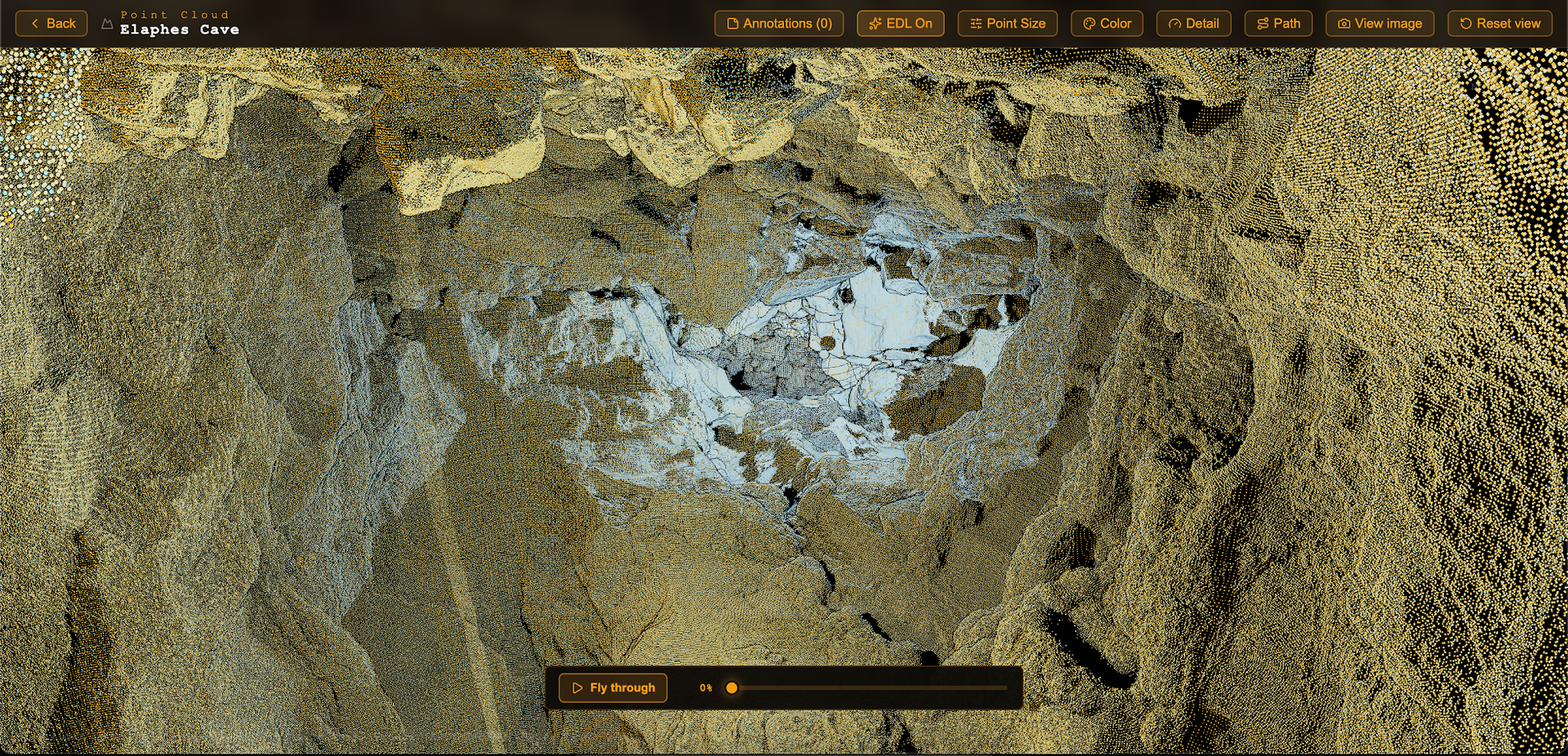
Now, the most remote or dangerous caves in the world can be brought to researchers, students, or travel enthusiasts, all with just a click of a mouse.
Moreover, this is also a great solution for the problem of storing and preserving digital heritage.
This digital copy is like a "time capsule," helping us preserve the beauty of nature intact for future generations, even if the actual site is impacted by time or natural disasters.
Technical knots that need untying
Achieving a few minutes of smooth user experience is a battle of optimization behind the scenes.
The engineering team has to constantly rack their brains to solve key challenges:
- Data streaming optimization: How to ensure data flows continuously without stuttering?
- Detail balancing (LOD): Automatically fine-tuning display quality according to the viewer's every move.
- Maximizing GPU & Memory power: Keeping hardware running smoothly, avoiding overloading RAM and graphics cards.
- Accelerating render speed & Natural camera angles: Ensuring smooth frames and natural camera movement in tight spaces.
- Mastering network bandwidth: Minimizing packet size so that even an average network connection can view well.
Every camera angle close to the cliff is a calculation the system makes to increase sharpness. Conversely, distant dark corners will be reasonably reduced in load.
The key point of the project is finding the "golden point" that balances stunning graphics and smooth performance.
Future: Where static data becomes a living world
Cave Explorer does not stop at building a static 3D model.
The project affirms that spatial data can absolutely become a launching pad for much more diverse interactive digital experiences.
In the next upgrade versions, look forward to breakthrough features such as:
- Marking cave entrance coordinates and dangerous locations
- Virtual tours with accompanying guides
- Interactive information markers placed at special points
- Real-time tools for measuring distance and cave volume
- Layered view mode for displaying geological architectural plans
- Teleporting to noteworthy camera angles
- Integration of in-depth geological research data layers
- Diverse flexible display modes (Point Cloud, Surface Mesh, etc.)
When these pieces are complete, 3D caves will elevate from a mere observational model to a comprehensive digital exploration platform.
The future of digital space exploration technology
Cave Explorer is the first brick proving the ability to bring complex real-world environments to web browsers easily.
The perfect combination of 3D scanning, 3D Tiles, WebGL/WebGPU, and real-time rendering techniques has removed hardware barriers, turning massive data into an intuitive journey that anyone can access.
The project opens a new vision for web 3D graphics technology: not just stopping at viewing, but truly engaging and immersing yourself in data as if you were actually there.
And the cave is just the starting point.
This model can be applied to archaeological sites, mine tunnels, complex architectural structures, or treacherous natural landscapes, places where humans can hardly set foot.
Cave Explorer is an affirmation of a future where technology brings the most distant wonders right before your eyes through high-end interactive digital space.
Technology not only recreates space but also removes all geographical limitations to bring people closer to the most magnificent natural wonders. Are you ready to step into your own underground exploration journey today?
Experience the Cave Explorer demo right here: Explore Cave Explorer Demo
Struggling to turn ideas into reality? With a proven track record of over 1,000 clients, our agile and flexible team will accelerate your business growth.