
What Is a Digital Twin? A Complete 2026 Guide to How It Works, Its History, Use Cases, and Differences from the Metaverse and Simulation

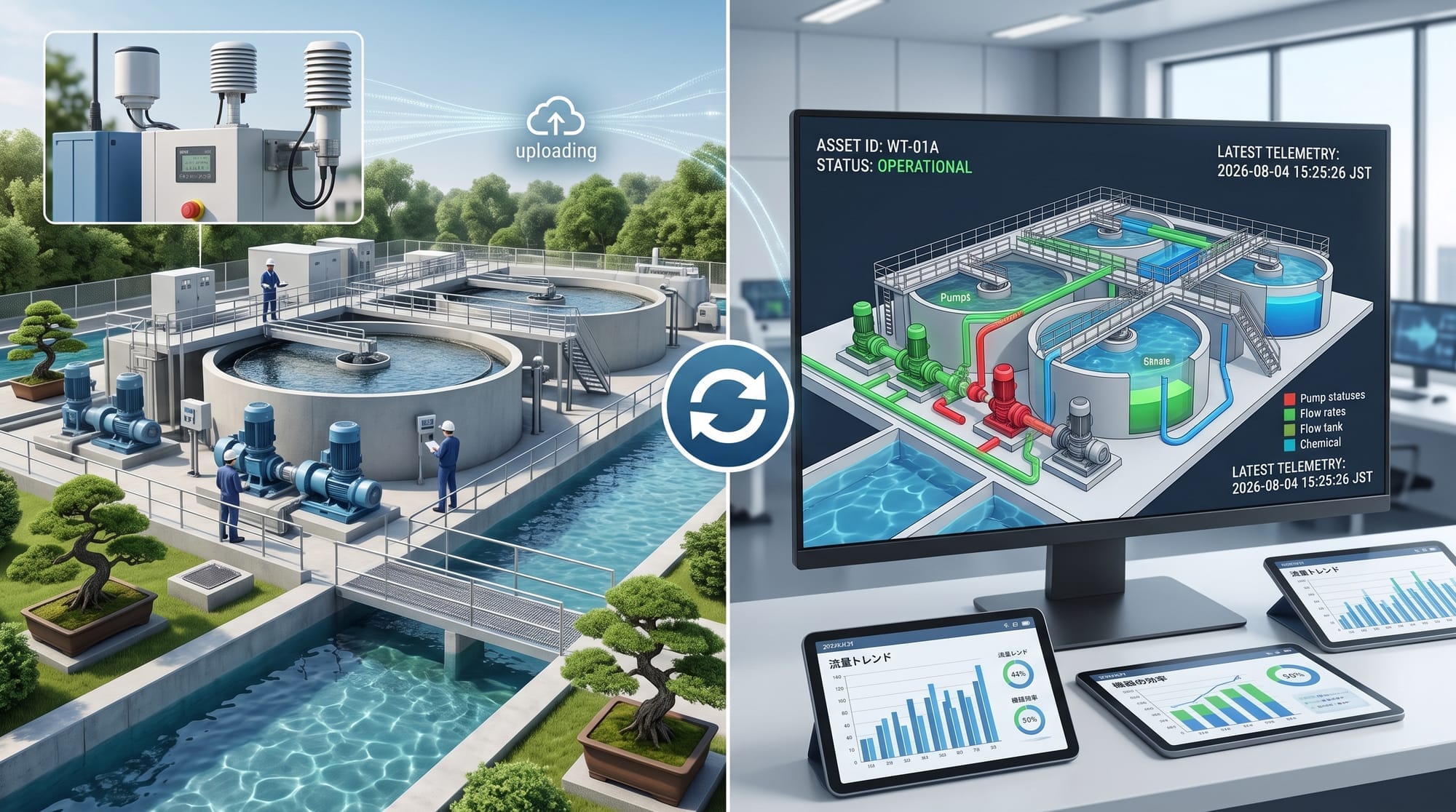
In recent years, the adoption of digital twins has accelerated not only in manufacturing but also across a wide range of fields, including urban development, healthcare, logistics, disaster prevention, and infrastructure maintenance.
Many people may have heard the term but still wonder: “How is a digital twin different from a conventional simulation or 3D model?”, “Who first proposed the technology, and when?”, or “Is it only for large corporations, or can it also be applied to our own business?”
Behind this growing interest are social conditions that make a transition to data-driven management increasingly urgent. These include severe labor shortages, the retirement of experienced professionals, and the need to address decarbonization and green transformation, rather than continuing to rely only on intuition and experience.
This article provides a clear and comprehensive explanation for beginners and business professionals considering adoption. It covers the basic concept of digital twins, their history and mechanisms, recent use cases, implementation benefits and common challenges, as well as their differences from the metaverse, conventional simulation, and cyber-physical systems (CPS).
According to research available in 2026, 62% of large companies in asset-intensive industries have already deployed at least one digital twin in a production environment, and the market is projected to reach USD 73.5 billion by 2027, with a compound annual growth rate of 38% (Informat, 2026). Digital twin-related patent applications also grew by 600% between 2017 and 2025, with 2,451 applications filed in 2025 alone. The global market is expected to expand rapidly to USD 180.28 billion by 2030, with a compound annual growth rate of 37.87% (PatSnap, 2026).
What Is a Digital Twin? The Basic Concept and Why It Matters Now
The Basic Concept of a Digital Twin
The term “digital twin” literally means a “digital double.”
It refers to a technology that uses IoT sensors and other means to collect data about the condition and movement of products, factories, buildings, cities, and even people and weather in the physical world, and then reproduces them in real time in a digital or virtual space.
The core idea is to create a state in which events taking place in the physical world are reproduced in the digital space in real time, with virtually no delay. Simulations and experiments can then be performed in that digital environment, and the results can be fed back into the physical world.
By constructing “another reality” in digital space, organizations can pursue advanced initiatives such as:
- Real-time remote monitoring and analysis: Understand operating conditions and abnormalities at a distant site at a glance.
- Risk-free simulation: Repeatedly conduct tests and experiments that would be too costly or dangerous in the physical world.
- Future prediction and forecasting: Work with AI to detect and prevent faults or other problems before they occur.
Why Is Digital Twin Technology Receiving So Much Attention Now? The Social Context in 2026
The renewed attention given to digital twins is driven not only by technological progress but also by increasingly serious social challenges.
Labor Shortages and the Transfer of Expert Knowledge
As populations age and birth rates decline, experienced workers are becoming scarce in manufacturing, construction, and infrastructure inspection. The need is growing to visualize, standardize, and preserve the intuition and practical know-how of skilled workers as data within digital twins.
Decarbonization and Energy Optimization
Digital twins are becoming an essential foundation for visualizing electricity consumption and CO2 emissions across factories and buildings in real time, and for using AI to optimize control.
Supply Chain Uncertainty and Risk Management
By reproducing global supply chains digitally, companies can quickly simulate alternative routes when disruption occurs due to geopolitical risks or natural disasters.
The History and Development of Digital Twins: From the Apollo Program to the Present
Digital twins may appear to be a relatively new concept, but the underlying idea has a history spanning more than half a century and has evolved through several major technological paradigm shifts.
Conceptual Roots in the 1970s: NASA’s “Twin on the Ground” During Apollo 13
The conceptual roots of digital twins can be traced back to the Apollo 13 explosion in 1970.
At the time, full-scale physical verification simulators built on Earth—“twins on the ground”—were used to test and develop survival and recovery procedures for the unexpected problems occurring in space.
This episode was the first major embodiment of the fundamental digital twin concept: understanding the state of a remote physical entity through its twin and testing possible solutions in a safe location.
However, the systems of that era remained within the domain of conventional simulation, relying on pre-entered static data. They did not yet have a mechanism for following dynamic changes in the physical world in real time.
This was also a period in which various individual approaches began to be discussed and explored in medical and physiological modeling, including ideas that later contributed to concepts such as the Virtual Physiological Human (VPH), a precursor to human digital twins.
The Birth of the Modern Concept in 2002: Dr. Michael Grieves
The explicit conceptual model that led to today’s digital twin was presented in 2002.
During a lecture on product lifecycle management (PLM), Dr. Michael Grieves of the University of Michigan introduced a concept consisting of three elements:
- A physical entity in the real world
- A virtual entity in digital space
- A real-time data connection linking the physical and virtual entities in both directions
At the time, the model was referred to by names such as the “Mirrored Spaces Model.” It became the first blueprint for the modern digital twin.
The Aerospace Paradigm Shift in the Early 2010s: Glaessgen and Stargel
NASA and the U.S. Air Force gave the theoretical concept the formal name “digital twin” and developed it into a practical framework.
After the term was adopted in a 2010 roadmap, Glaessgen and Stargel published the joint research paper The Digital Twin Paradigm for Future NASA and U.S. Air Force Vehicles.
Their work played a decisive role in evolving the digital twin from a simple 3D representation into a self-evolving dynamic system that integrates physical characteristics with real-time data at a high level.
Under this approach, digital twins moved beyond static CAD models. It was proposed that each aircraft should contain between 150,000 and 200,000 unique dynamic parameters (Duraiyan, 2025).
This highlighted the need for a high-precision simulation infrastructure capable of processing and reflecting the vast amounts of real-time data collected by aircraft and spacecraft during operation—from 844 GB per day to as much as 1.2 TB for newer aircraft (Duraiyan, 2025).
The integration of sensor data was also described as enabling digital twins to accurately reflect 99.3% of the parameters of an aerospace vehicle, detect performance deviations as small as 0.37% from baseline values in real time, and predict aircraft failures weeks or months in advance (Duraiyan, 2025).
Rapid Industrial Adoption from the Mid-2010s: The Convergence of IoT and Communications Technology
Digital twin adoption accelerated dramatically in the mid-2010s.
This was driven by the rapid maturation of supporting technologies that had previously lagged behind the theory, including IoT sensors, 5G communications, and edge and cloud computing.
Low-cost, network-connected IoT sensors could now be deployed in large numbers across manufacturing equipment and large infrastructure. Combined with low-latency processing at the edge, this made it possible to synchronize physical and digital environments at sub-second intervals at a realistic cost.
The approach also aligned closely with Germany’s Industry 4.0 national strategy. Digital twins began to be adopted as a central framework for smart factories and predictive maintenance in manufacturing (Keskar, 2025).
During this period, standard specifications and communication protocols such as OPC UA, MQTT, and OpenUSD were developed, and global consortia were formed to prevent platform silos and enable plug-and-play integration and information exchange through shared frameworks.
The Pandemic’s Forced “Five-Year Time Jump” and the Surge in Patents in the 2020s
The most unexpected turning point in the history of digital twins was the COVID-19 pandemic in the early 2020s.
Global lockdowns and travel restrictions created extraordinary situations in which workers could not physically enter operational sites. As a result, remote operational monitoring and the virtual commissioning of production lines became critical. Reports estimate that this accelerated industrial adoption of digital twins by three to five years (PatSnap, 2026).
The components of digital twins, which had previously been discussed more conceptually, were also formalized academically into a five-dimensional digital twin model consisting of:
- Physical entities
- Virtual entities
- Data
- Services
- Connections
This model began to be adopted as a standardized architectural blueprint for industrial systems (PatSnap, 2026).
Digital twin-related patent applications grew by 600% from 2017 to 2025, with 2,451 applications filed in 2025 alone. The field shifted from an area of academic interest into a major commercial and technological battleground (PatSnap, 2026).
Generalization and Democratization: From Every Domain to the Entire Earth
Today, digital twins have expanded far beyond their original domain of reproducing hardware such as aircraft and factories. They are becoming a vast ecosystem capable of representing physical phenomena and processes of almost every kind.
In healthcare, efforts are moving toward implementation of patient-specific organ and biological models. These models aggregate medical images, genomic information, and real-time data from biosensors to enable personalized treatment simulations. Projects such as MEDITWIN and EDITH are examples of this development (Agence du Numérique en Santé, 2025).
At an even larger scale, projects such as Destination Earth (DestinE), led by organizations including the European Space Agency (ESA) and the European Centre for Medium-Range Weather Forecasts (ECMWF), are moving into an operational phase. These initiatives construct ultra-large-scale digital twins of Earth systems for climate change simulation and preparation for extreme weather (ESA, 2026).
The history that began with Apollo 13’s analog “twin on the ground” has evolved over half a century into competitive infrastructure that supports the predictability and reliability of society, connecting everything from microscopic organ movement to global climate change through real-time, logically structured data.
How Digital Twins Differ from Similar Concepts: Simulation, the Metaverse, and CPS
The following table summarizes the differences between digital twins and concepts with which they are commonly confused.
| Comparison | Conventional Simulation | Digital Twin | Metaverse | CPS |
|---|---|---|---|---|
| Data linkage | Based on historical data or assumptions; often one-off | Continuously synchronized with the physical world in real time | Not necessarily synchronized with the physical world | Linked to and coordinated with the physical world |
| Primary purpose | Prediction during design and planning | Real-time monitoring, control, future prediction, and optimization | Communication, entertainment, and virtual economic activity | Optimization and automated control of society-wide systems |
| Information flow | One-way: data entered by humans, followed by computation | Two-way: a continuous physical-digital feedback loop | Shared spaces and interaction among users | Two-way, large-scale data feedback |
| Primary target | Specific parts or localized phenomena | Multi-layered, ranging from a single product to factories, cities, and people | Avatars and spaces in virtual environments | Social infrastructure and entire industrial systems |
Key Differences from Similar Concepts
Versus Conventional Simulation: Is There Real-Time, Bidirectional Synchronization?
Conventional simulations generally calculate future outcomes from previously entered static data and then end. The flow is one-way.
A digital twin, by contrast, immediately reflects physical-world changes in the digital environment, and returns the results of analysis or control from the digital environment to the physical world. This always-on bidirectional loop is the defining difference.
Versus the Metaverse: Does It Depend on the Physical World?
The metaverse focuses on activities and experiences in virtual worlds that differ from physical reality.
A digital twin focuses on reproducing the physical world in order to solve and optimize real-world problems.
Versus CPS: Breadth of Concept and Perspective
A cyber-physical system is the broader concept or philosophy of closely integrating cyberspace with physical space.
A digital twin can be understood as a central representation technology or model used to realize a CPS.
Correcting the Misconception That “Digital Twin Means 3D”: Can Text-Based or CLI Digital Twins Exist?
When people hear the term “digital twin,” they often imagine visually impressive real-time 3D graphics or VR and AR environments, such as BMW’s virtual factories or the 3D city models of Project PLATEAU.
However, this assumption is only partly correct and has been shaped by highly visible use cases.
The conclusion is straightforward: a digital twin does not necessarily require 3D visualization.
Text-based or command-line interface (CLI) digital twins, as well as machine-only digital twins that are not directly viewed by people, clearly exist in practice and within academic and standards-based definitions.
How Standards Organizations Define Digital Twins
A technical report published by the U.S. National Institute of Standards and Technology (NIST) in February 2025 provides the following highly abstract and inclusive definition:
“A digital twin is the virtual (i.e., digital) representation of a physical or perceived real-world entity, concept, or notion.”
This definition does not require a 3D space or graphical rendering.
The report also explains that a visual graphical user interface is not always required for an application that runs simulations. A table of numerical results displayed in a console or data written to a file can still constitute a valid presentation of a digital twin model.
In other words, a system can receive real-time sensor data, process it, and output numerical values, text, or logs through a CUI or CLI. If it virtually represents the behavior of the physical environment in real time and supports prediction or optimization through bidirectional data linkage, it can still be a digital twin.
Examples of Non-Visual Digital Twins Without 3D
In practice, digital twins that do not include graphics—or in which graphics are not the main element—are already in operation.
Digital Twins of Abstract Processes
Digital twins do not represent only physical objects such as engines or buildings.
They can also reproduce intangible processes as data structures, including operating-system processes, supply chain workflows, and manufacturing-line steps.
Because monitoring and throughput prediction for these processes may be performed through a CLI or API, they do not require a 3D model.
Digital Twins Focused on Machine-to-Machine Integration
Standards assume not only visualization formats for human users but also data representations designed solely for machines to read and process.
For example, cloud-based databases and graph-structured data infrastructure, such as Microsoft Azure Digital Twins, use logical maps of assets, states, and relationships as the digital twin itself, before any 3D model is rendered.
Closed-Loop Digital Twins Operating at the Edge
In autonomous optimization using 5G and edge AI, digital twins can simulate the movement of physical machinery in milliseconds and feed control commands directly back into the equipment.
Because the entire process is completed machine-to-machine, 3D rendering for human viewing is unnecessary. Systems commonly omit even a GUI to save resources, reduce power consumption, and minimize latency.
Why Is 3D Visualization So Common?
Why, then, is 3D visualization so often treated as if it were a prerequisite for digital twins?
There are two main reasons.
Supporting the Limits of Human Cognition
People rely heavily on visual information.
When a large volume of time-series data, such as IoT logs, is presented as CLI text or tables, it is difficult to understand the overall situation or instantly identify where an abnormality has occurred.
With 3D, VR, and AR, even non-specialist field workers can intuitively see, understand, and act on information such as where frictional heat is occurring or which intersection is congested.
Reusing Existing CAD and BIM Assets
Manufacturers and construction companies often already possess high-precision 3D CAD or BIM data created during product or building development.
Because digital twins are built on top of these existing assets, 3D models naturally become prominent as visual elements.
In practice, the accuracy of predictions and physical calculations—handled by physical simulation and data structures—and the usability of the interface—handled by 3D graphics and VR interaction—are treated as entirely different tool layers.
Before combining them into a system, organizations should first determine whether 3D is truly necessary or whether data linkage and predictive calculation through text, CLI, or APIs are sufficient. This is a key to controlling implementation costs.
Practical Application: Can Building Digital Twins Use 2D Drawings and Station-Map-Level Abstraction?
When building digital twins for buildings, public facilities, and infrastructure, it is entirely practical to avoid creating a heavy 3D environment and instead use 2D floor plans based on existing CAD data.
It is also acceptable—and often preferable—for the graphics to be simplified and abstracted to the level of a railway-station map rather than reproduced with architectural precision.
The NIST technical report (NIST, 2025) and the ethical report by the French Digital Health Delegation under the Ministry of Health (Agence du Numérique en Santé, 2025) provide clear theoretical support for this approach from the perspectives of systems engineering, human factors, and trust.
The Practical Reality: 2D Floor Plans Can Be Easier to Use and Read
The NIST technical report uses architecture as an example to explain that 2D views and floor plans are not shortcuts. They are rational choices that can improve practical readability.
Architects normally create multiple 2D views, such as site plans, floor plans, and elevation drawings. The report notes that even if 3D views are created, they may be harder to read and less useful to the contractors who actually build the structure.
A visually impressive 3D rendering is not always the best interface for people making operational decisions.
For tasks such as checking the placement of equipment and wiring on a floor or monitoring specific assets, a 2D floor plan may be more intuitive and can improve operational efficiency.
Information Overload Can Distort Decision-Making
When deciding whether a display should have the precision of an architectural drawing or the simplicity of a station map, digital twin trust and quality requirements support simplifying the representation and removing unnecessary information.
In its twelfth trust consideration, certification, NIST warns about the adverse effects of providing too much data or visual information.
The report emphasizes the importance of avoiding irrelevant information that confuses users about how a twin should be used or even what the twin represents.
For a system whose purpose is to manage room temperature, detect the flow of people, or monitor whether doors are locked, millimeter-level wall thickness and high-precision 3D material data for pipes are merely irrelevant information.
A graphic simplified to the level of a station map may make it easier for people to grasp the overall situation immediately and make rapid, unambiguous decisions.
Excessively Complex Models Can Undermine the Entire System
When multiple equipment and room-level twins are combined to create a composite system such as an entire building, excessive precision and complexity in each individual twin can rapidly reduce system-level reliability.
From the perspective of composability, NIST explains that a digital twin that is too complex can create problems when attempting to predict and evaluate the trustworthiness of a combined system made from multiple twins.
The report therefore describes the importance of using industry standards to define only the required connection points and of pruning extraneous information from each twin.
If every room, asset, and air-conditioning unit attempts to synchronize millimeter-level 3D data and unnecessary telemetry continuously, communication and rendering loads across the system can grow dramatically, leading to synchronization delays and defects.
Restricting the model to the data and connection points that are genuinely needed within the target domain—and pruning everything else—is a fundamental engineering principle for operating large, stable groups of digital twins.
The Essence of a Digital Twin Is a Partial Abstraction of Reality
A briefing note produced by Working Group 15 of the French Digital Health Delegation also emphasizes that every digital representation inevitably simplifies the complexity of life and reality.
No matter how sophisticated a model becomes, it remains only a partial abstraction of the physical world.
Whether represented as a 3D model, a 2D map, or a text log, a digital twin is fundamentally an abstract representation that selects only the parts of reality needed for a particular purpose.
A practical building or spatial digital twin can therefore adopt the following approach:
- Background interface: Use a simple 2D floor plan created from existing CAD or paper drawings, or a graphic map abstracted to the level of a station map.
- Data linkage: Link only the IoT information that users genuinely need to monitor or control, such as room occupancy, power consumption, and temperature, to the simple map in real time.
This approach can dramatically reduce implementation cost and development difficulty, making it possible to start small.
It is also highly rational from systems engineering and standards perspectives because it helps prevent human misunderstanding while maximizing system reliability and operational assurance.
How Digital Twins Work: Four Supporting Steps
A digital twin is not a single technology. It functions through the coordination of multiple advanced technologies.
The seamless cyber-physical integration built on industrial IoT (IIoT) provides a core framework for smart factories and predictive maintenance.
1. Data Collection and Sensing
Real-time data is collected over a network from IoT sensors installed on physical equipment, facilities, and environments.
The data may include temperature, pressure, vibration, position, and images.
2. Reproduction in Digital Space and Visualization
The collected data is transmitted to cloud or edge servers.
It is integrated with 3D models or CAD and BIM data to draw and update a digital model that closely matches the physical world.
3. AI-Based Analysis and Future Prediction
Accumulated big data is analyzed using AI and physical simulation engines.
This makes advanced forecasting possible, such as predicting that a component will fail after a certain number of days under its current load or that cooling efficiency will fall by a certain percentage as the outside temperature rises.
4. Feedback to the Physical World, Control, and Optimization
Based on the analysis results, the system can automatically control physical equipment or display optimized work instructions on wearable devices such as AR or MR glasses.
This feedback improves physical-world operations.
Major Digital Twin Use Cases
The real value of digital twins lies in the way they make previously impossible activities possible.
The following sections compare the “before” and “after” states across five representative fields.
Manufacturing and Smart Factories: BMW and NVIDIA Omniverse
Conventional Limitations
When launching a new factory or production line, interference between robots and inefficiencies in worker movement often remained undiscovered until the equipment had been installed and test operations began.
If a design error was found, reconstruction could cause delays of several months and losses reaching hundreds of millions of yen.
Maintenance generally relied either on repairing equipment after failure or replacing parts at fixed intervals, leaving production lines exposed to unplanned shutdowns.
What Digital Twins Make Possible
A virtual factory can be operated and thoroughly tested in digital space before physical construction begins.
Robot-arm movement and workforce placement can be optimized virtually, shortening factory launch schedules by several months and reducing large rework costs, as demonstrated by BMW’s virtual factory initiatives.
After operations begin, AI can detect early signs of failure from subtle changes in vibration. This predictive maintenance can dramatically reduce factory downtime.
As of 2026, a mainstream software strategy for digital twins combines physical-property modeling tools, such as Ansys and Siemens software, with real-time rendering engines such as NVIDIA Omniverse and Unity.
Many demonstration cases report that predictive maintenance can reduce downtime by 20% to 40%.
Urban Planning, Disaster Prevention, and Smart Cities: Project PLATEAU and Singapore
Conventional Limitations
Urban development and disaster-prevention planning traditionally relied on two-dimensional maps and historical statistics.
During typhoons and torrential rain, it was extremely difficult to predict in real time how flooding would spread over time, which intersection would be inundated next, or where congestion among evacuation vehicles would occur.
What Digital Twins Make Possible
Project PLATEAU, led by Japan’s Ministry of Land, Infrastructure, Transport and Tourism, makes 3D city models from across Japan available as open data.
By overlaying weather data, pedestrian movement, and traffic volume, these models can visualize flood simulations and imbalances in pedestrian flow during heavy rainfall.
This supports better evacuation guidance and urban planning that takes wind damage and sunlight conditions into account.
Advanced AI-based urban infrastructure management is also progressing in areas such as:
- Mitigation of the urban heat island effect
- Energy-consumption forecasting for smart grids
- Real-time flood and inundation simulations combining rainfall and river-level sensors
At the global scale, the Destination Earth project led by organizations including ESA is constructing a digital twin of the entire Earth system for simulating extreme weather and climate change.
The project is scheduled to enter Phase 3 in July 2026, supporting reliable, AI-assisted, evidence-based climate action and adaptation planning.
Construction and Maintenance of Large Infrastructure: Bridges, Dams, and Smart Buildings
Conventional Limitations
Inspection of bridges, tunnels, and buildings often required scaffolding or elevated work platforms.
Experienced personnel conducted visual inspections and hammer-sounding tests, exposing workers to risk, generating high costs, and leaving the possibility that defects could be overlooked.
What Digital Twins Make Possible
Images captured by drones and data from fixed sensors can be mapped onto 3D infrastructure models.
This makes it possible to identify and track changes in microscopic cracks and internal corrosion that are difficult to see directly.
Workers can detect dangerous locations early and plan repairs remotely without climbing onto the structure.
In smart buildings, AI can optimize air conditioning and lighting automatically based on occupancy and solar radiation.
Initiatives using this approach are reducing energy consumption by 20% to 30%.
Healthcare: Digital Twins of the Heart and Other Organs
Conventional Limitations
For highly complex surgery, doctors traditionally had to mentally reconstruct a three-dimensional image from two-dimensional CT or MRI images before operating.
The side effects of medication and changes in blood flow associated with an individual patient’s physiology were also difficult to confirm before treatment was administered.
What Digital Twins Make Possible
A digital organ can reproduce the structure of an individual patient’s organs and the velocity of blood flow.
Surgeons can rehearse surgical procedures and incision positions repeatedly in the digital environment before the real operation, improving safety and the likelihood of success.
Drug responses can also be simulated digitally, bringing personalized precision medicine closer to practical reality.
According to a September 2025 briefing note by Working Group 15 of the French Digital Health Delegation, a healthcare digital twin should not be considered a simple replica.
It is defined as a dynamic representation based on medical and biological data that supports clinical decision-making.
In Europe, advanced clinical demonstrations are progressing through initiatives such as:
- EDITH, the European Virtual Human Twin program, which is developing a common digital twin foundation
- MEDITWIN, a project running from 2024 to 2029 and involving Dassault Systèmes, INRIA, university hospitals, and startups, which uses personalized virtual twins of the brain, heart, tumors, and other medical targets
Aircraft Maintenance: Lufthansa and Aircraft Engines
Conventional Limitations
Aircraft maintenance traditionally relied mainly on time-based maintenance schedules determined by flight hours or calendar intervals.
Unexpected component failures and aircraft-on-ground events caused high costs and delays.
The wear condition of complex components such as aircraft engines could often be assessed accurately only after disassembly, making it difficult to use the full service life of a component while maintaining an adequate safety margin.
What Digital Twins Make Possible
A digital twin can be created for each aircraft and engine by integrating operational data, sensor information, and maintenance history.
The article’s cited research reports:
- Average maintenance-cost reductions of 28.5%
- Improvements of up to 37.2% in aircraft availability
- A 42.7% reduction in unexpected maintenance events
- Detection of early engine-failure signs with 99.2% reliability
- An average 17.3% increase in engine time on wing
Conclusion and Outlook: A New Reality Woven from the Cyber and Physical Worlds
Almost a quarter of a century has passed since Dr. Michael Grieves proposed a three-element digital twin model in 2002, consisting of the physical world, digital space, and bidirectional data linkage (Keskar, 2025).
Digital twins have evolved from supporting tools for design and simulation into robust dynamic prediction infrastructure that supports industry, society, healthcare, and even environmental action at the scale of the entire planet (ESA, 2026; Agence du Numérique en Santé, 2025).
During this historical process, the way we understand digital twins has undergone a major paradigm shift.
One of the most important changes is the move away from the assumption that a digital twin must be an ultra-detailed 3D graphical environment.
As technical guidance from organizations such as NIST and systems engineering approaches make clear, the essence of a digital twin is not whether it includes graphical display.
Its essence lies in bidirectional data linkage and the consistency of the logical model that virtually reproduces physical-world behavior in real time for prediction and optimization.
This understanding is extremely important in practical implementation.
Unnecessary 3D rendering and excessive data collection can introduce noise into human decision-making.
They can also reduce composability and cause software defects and synchronization delays in large systems that combine multiple twins.
Avoiding 3D where it is unnecessary and using existing CAD data to create a simplified 2D floor plan—or a logical user interface abstracted to include only essential elements, like a railway-station map—can maximize reliability and dramatically reduce development costs.
This is a fundamental principle for starting with a small proof of concept.
At the same time, digital twins are producing substantial real-world value:
- Major reductions in factory downtime
- Urban heat-island mitigation and flood simulation in smart cities
- Patient-specific, high-precision preoperative rehearsal in healthcare
- Significant improvements in aircraft availability and maintenance efficiency
In the future, integration with generative AI, including large language models and multimodal AI, is expected to enable intuitive simulation instructions through natural language and increasingly automated decision-making.
Spatial computing is also likely to make full-scale, intuitive field operations more common.
However, the ultimate purpose of this progress is not automation alone.
As ethical warnings in healthcare emphasize, a digital twin is inevitably a simplification and only a partial abstraction of life and reality.
No matter how sophisticated it becomes, it should never be treated as identical to reality itself.
In essential decisions such as clinical judgment, human practical wisdom—phronesis—and ethical judgment grounded in substantive dialogue must remain central.
A digital twin should serve as a reflective ally that supports and illuminates those decisions.
Developers and organizations also need to address the environmental burden and sustainability challenges created by heavy IT infrastructure and enormous volumes of real-time data processing, including server electricity use and cooling water.
Data frugality—restricting data collection and processing to what is genuinely necessary—will be increasingly important for future digital innovation.
The true value of a digital twin lies at the intersection of three factors:
- Feasibility: Can it be implemented technically?
- Desirability: Is it socially and operationally desirable?
- Viability: Can it remain ethically, economically, and environmentally sustainable?
Organizations should identify their real bottlenecks and the essential problems they need to solve, then take the first step with a logical “small twin” focused on data linkage and predictive calculation.
References
The data and arguments in this article are based on the following public resources, academic papers, technical specifications, and industry reports.
NIST (2025)
National Institute of Standards and Technology (NIST), Security and Trust Considerations for Digital Twin Technology, NIST Internal Report (IR) NIST IR 8356, February 2025.
https://doi.org/10.6028/NIST.IR.8356
PatSnap (2026)
PatSnap Insights Team, Digital Twin Technology Landscape for Industrial Manufacturing 2026, April 2026.
https://www.patsnap.com/blog/digital-twin-technology-landscape-industrial-manufacturing-2026
Informat (2026)
Informat AI, Digital Twin Technology in 2026: Bridging Physical Operations and Digital Transformation, June 2026.
Keskar (2025)
Ankush Keskar, Advancing Industrial IoT and Industry 4.0 through Digital Twin Technologies: A Comprehensive Framework for Intelligent Manufacturing, Real-Time Analytics and Predictive Maintenance, World Journal of Advanced Engineering Technology and Sciences, 14(01), 228–240, 2025.
https://doi.org/10.30574/wjaets.2025.14.1.0019
Viewpoint Analysis (2026)
Phil Turton, Digital Twin Software Options 2026, Viewpoint Analysis.
https://www.viewpointanalysis.com/
Smart Spatial (2025)
Smart Spatial Blog, AI-Powered Urban Intelligence: How Digital Twins Are Transforming Smart City Infrastructure, July 2025.
ESA (2026)
European Space Agency (ESA), Europe’s Digital Earth Gets Ready to Grow User Community (Destination Earth), February 2026.
Duraiyan (2025)
Divakar Duraiyan, Tata Consultancy Services, Digital Twin Technology: Revolutionizing Aircraft Maintenance Through Simulation, European Journal of Computer Science and Information Technology, 13(9), 56–80, 2025.
https://doi.org/10.37745/ejcsit.2013/vol13n95680
Agence du Numérique en Santé (2025)
French Digital Health Delegation, Digital Twins in Health: Issues, Definitions and Ethical Challenges, September 2025.
https://esante.gouv.fr/produits-services/referentiel-ethique
Struggling to turn ideas into reality? With a proven track record of over 1,000 clients, our agile and flexible team will accelerate your business growth.
Book a Free ConsultationMore on "XR & 3D Web"
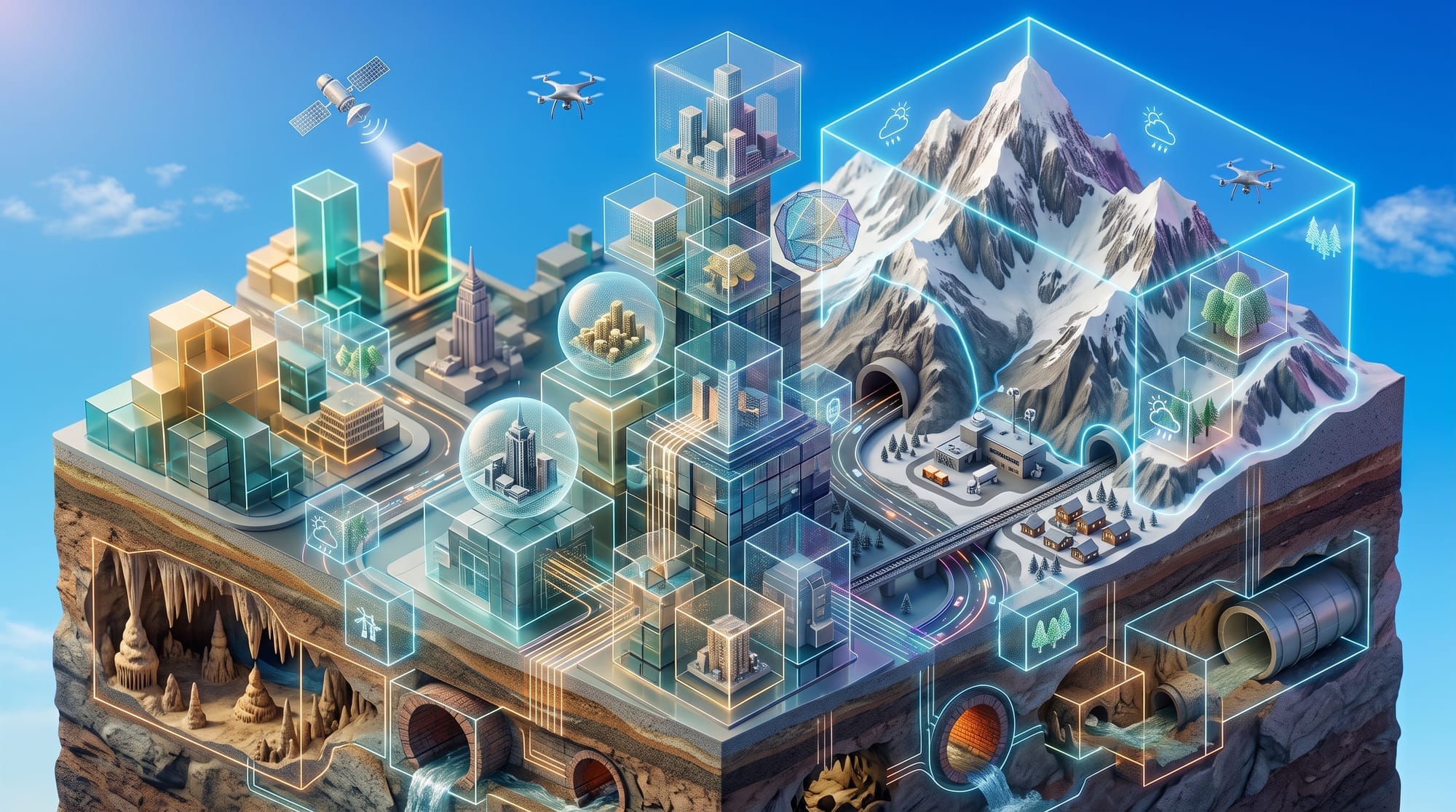
What Is 3D Tiles? A Complete Guide to Its Core Concepts, Latest Trends, and Use Cases
3D Tiles is an open standard for streaming massive 3D geospatial data. This guide explains HLOD, bounding volumes, tileset.json, differences between versions 1.0 and 1.1, use cases including PLATEAU and Google Photorealistic 3D Tiles, and independent LOD control in CesiumJS.
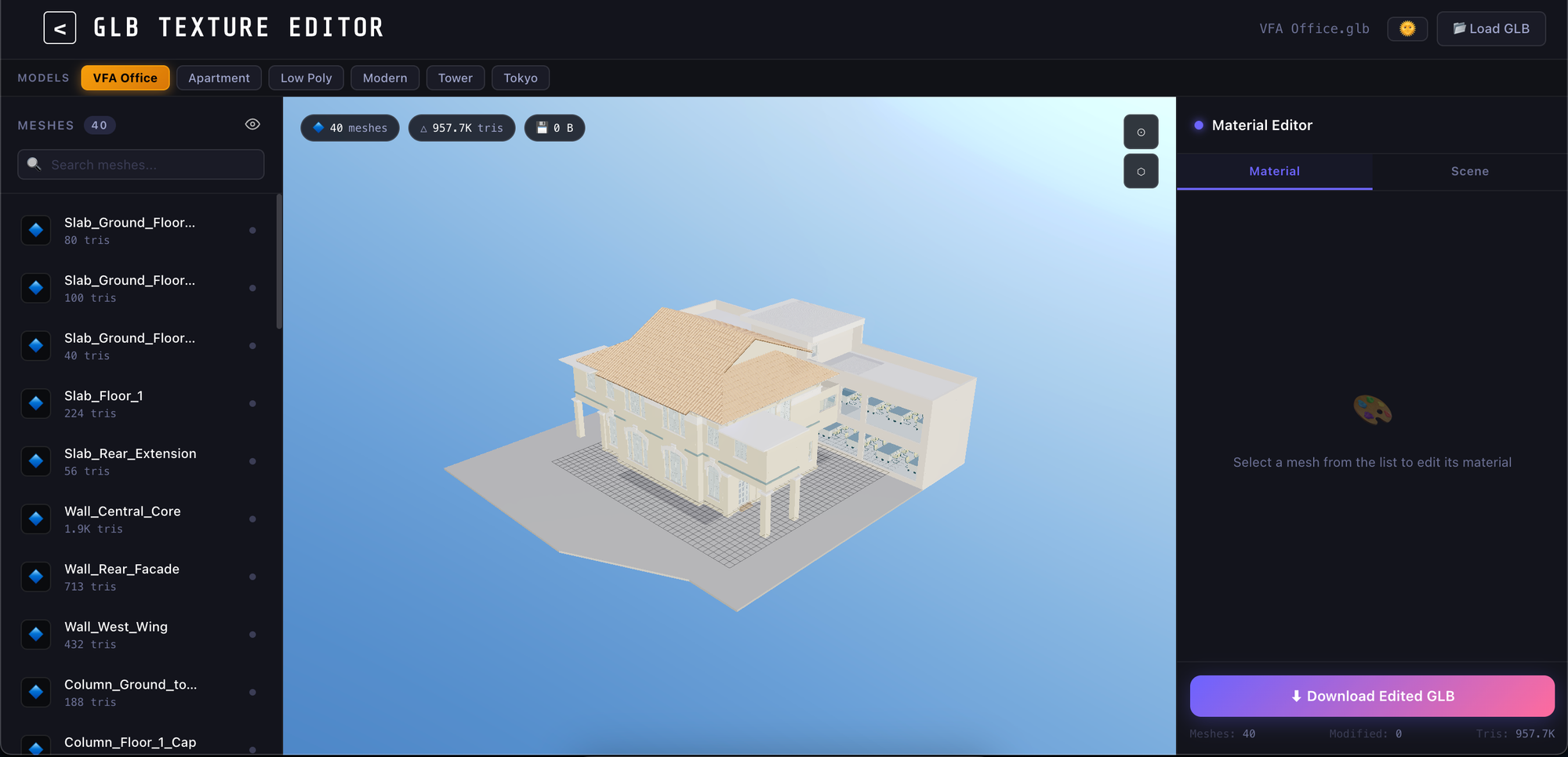
GLB Texture Editor: Edit 3D Model Textures and Materials in Real Time in Your Browser
GLB Texture Editor is a browser-based tool for editing 3D model textures and materials in real time. Upload a GLB file, adjust base color, roughness, metalness, transparency, UV mapping, position, rotation, scale, and projection settings, then preview and export the updated model.
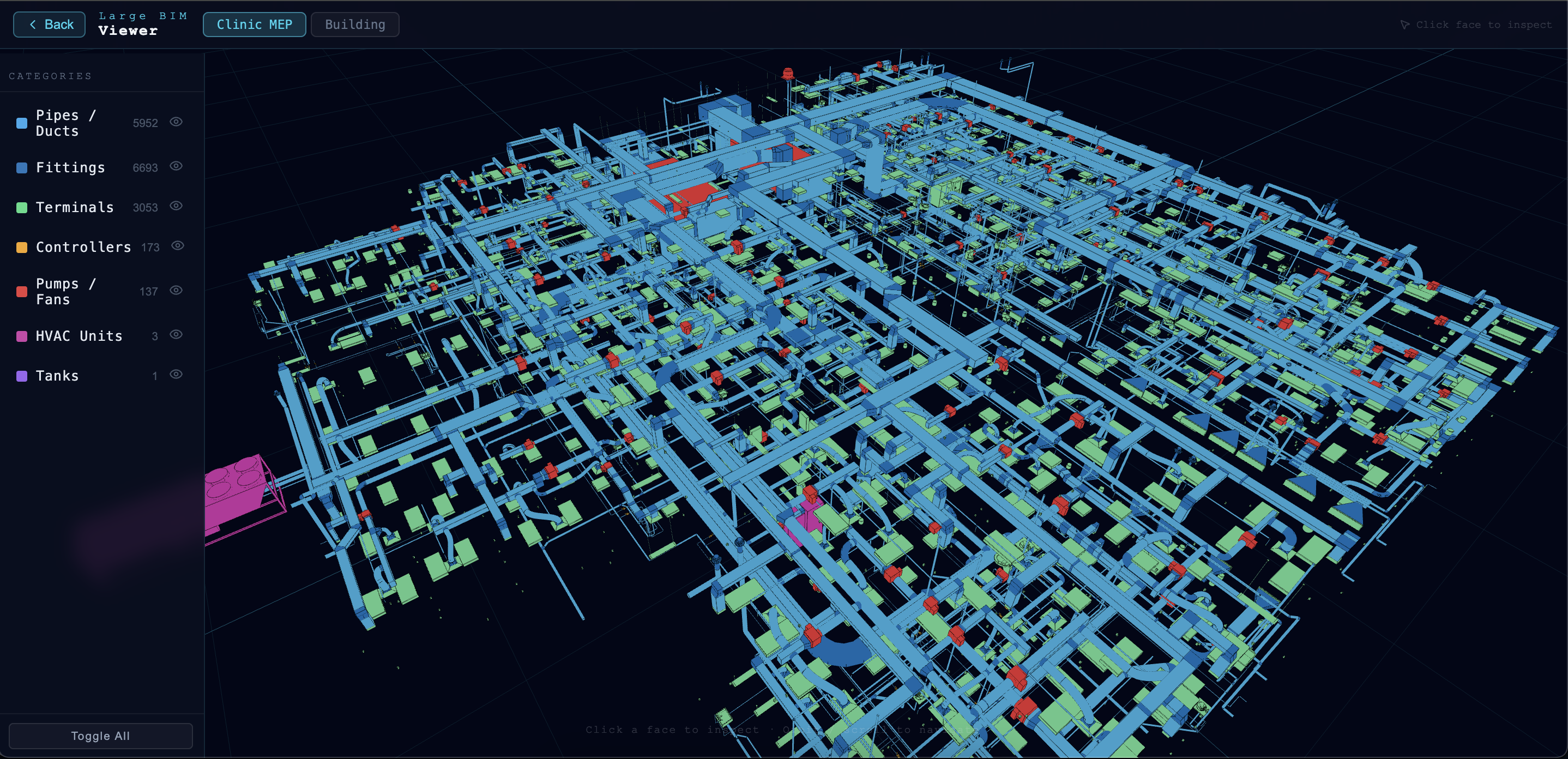
High-Performance Web BIM Viewer for Large IFC Models
This PoC converts large IFC models into optimized GLB files by BIM category for faster browser rendering. It demonstrates flexible layer controls, element data panels, smooth 3D navigation, and reduced z-fighting, while outlining a future automated IFC-to-GLB workflow.
