
Next-Generation Product Catalogs: Interactive Web Showcases with URDF

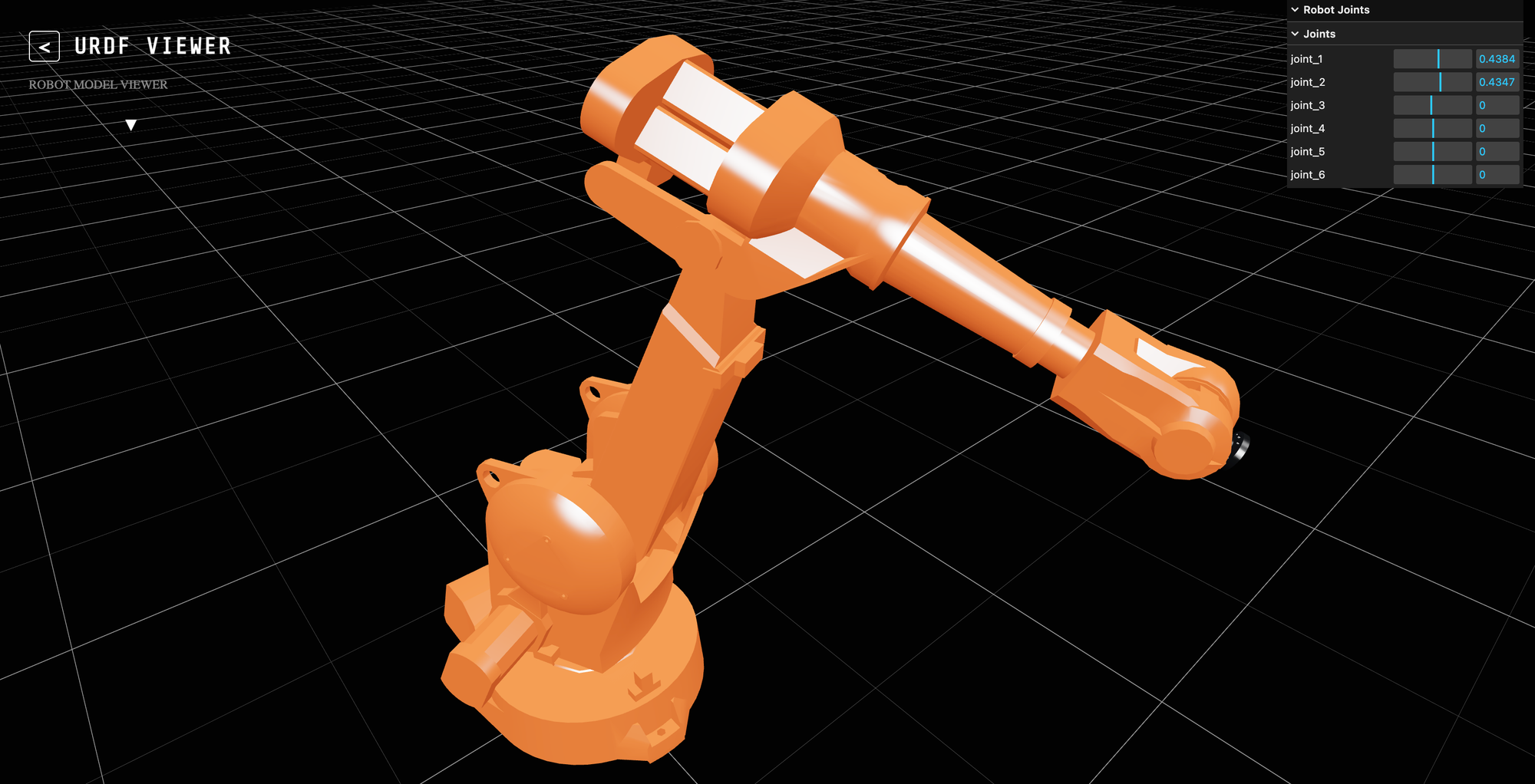
As part of our project to explore advanced web technologies, we created and released a showcase that displays URDF data in a browser and animates it smoothly.
Demo site: Web URDF ViewerWhy did a company focused mainly on game and application development become interested in URDF, a standard used in the robotics industry?
In this article, we explain the background and explore new possibilities for presenting products online.
What Is URDF? A Blueprint That Teaches a Robot’s “Brain” About Its Body
URDF, or Unified Robot Description Format, is a common language used to describe the structure of a robot to a computer.
A robot consists of body parts, called “Links,” such as arms and legs, and the “Joints” that connect them. URDF describes where each part is located, which direction it can move, and how far it can move, using XML.
URDF is normally used as specialized data in robot control systems such as ROS, or Robot Operating System, and in physical simulations.
However, we saw strong potential in another aspect of URDF: its ability to define the rules of movement for web content.
Why Use URDF on the Web Now?
We are not robotics specialists. We are an engineering team that works every day to improve the UI and UX of games and applications.
However, as manufacturing and architectural data such as CAD and BIM increasingly move into 3D, we have encountered a new challenge: how should products be presented on the web?
Traditionally, product websites have relied mainly on photographs and videos. More websites now allow users to rotate 3D models, but few let users intuitively experience exactly which parts move and how they move.
By combining URDF with web technologies such as Three.js, we can provide more advanced experiences.
Experience the Range of Motion
Users can operate the model with a mouse to simulate how far a robotic arm can reach or how widely a door can open.
Understand the Structure
Outline rendering and transparent displays can create an engineering-data style appearance, helping users visually understand the product’s internal structure.
Lightweight Performance
Heavy CAD data for manufacturing can be optimized for the web, providing a smooth experience even in a smartphone browser.
Bringing Movement to Life: A Game Developer’s Perspective
Displaying and moving URDF data may be possible for anyone using an existing library. However, different skills are required to give the product a natural character and a comfortable sense of movement.
Poorly configured animations often feel rigid and overly mechanical. One joint moves, pauses, and then the next joint begins moving, creating unnatural gaps.
Using animation techniques developed through game development, we implemented movement that conveys inertia, overlapping motion, and physical weight.
As a result, the product on the screen no longer feels like simple 3D data. It becomes a moving product with a greater sense of physical presence.
Our Proposal: An Interactive Catalog Beyond Photos
For manufacturers and machinery companies, does your website fully communicate the value of your products?
You may want customers to see the smooth movement of a particular joint or understand the benefits of a compact range of motion.
These qualities can be communicated far more effectively through interactive URDF content than through static images or one-way videos.
We can take your CAD data and transform it into a digital twin catalog that moves beautifully and intuitively on the web.
View the Showcase and Contact Us
In the showcase we created, you can see a robotic arm moving smoothly within a design inspired by a futuristic environment.
Demo site: Web URDF ViewerPlease feel free to contact us with questions such as:
“Can our products also be presented through an interactive showcase like this?”
“Can we use our CAD data to create web content?”
Through engineering and creative presentation, we help maximize the value and appeal of your products.
Struggling to turn ideas into reality? With a proven track record of over 1,000 clients, our agile and flexible team will accelerate your business growth.
Book a Free ConsultationMore on "XR & 3D Web"
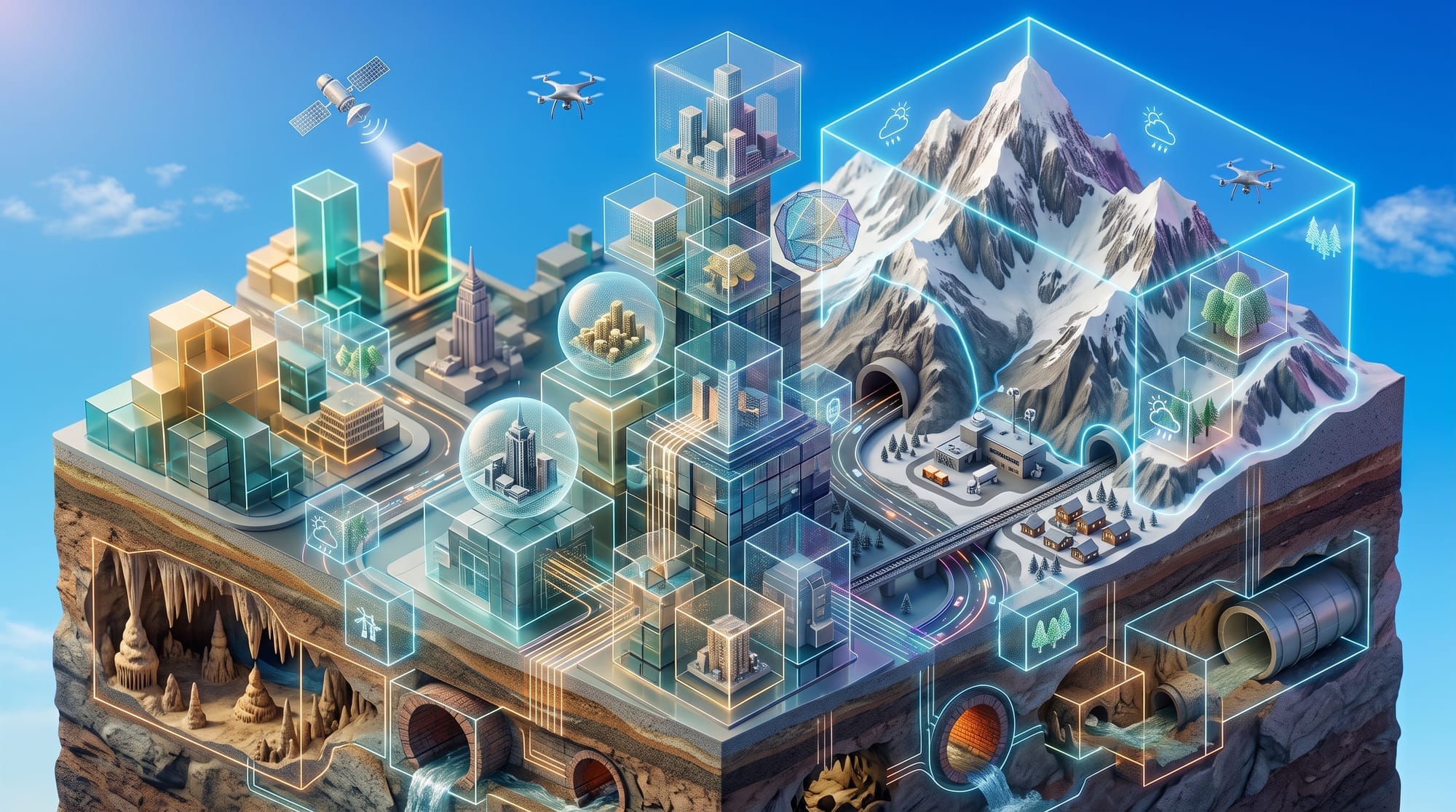
What Is 3D Tiles? A Complete Guide to Its Core Concepts, Latest Trends, and Use Cases
3D Tiles is an open standard for streaming massive 3D geospatial data. This guide explains HLOD, bounding volumes, tileset.json, differences between versions 1.0 and 1.1, use cases including PLATEAU and Google Photorealistic 3D Tiles, and independent LOD control in CesiumJS.
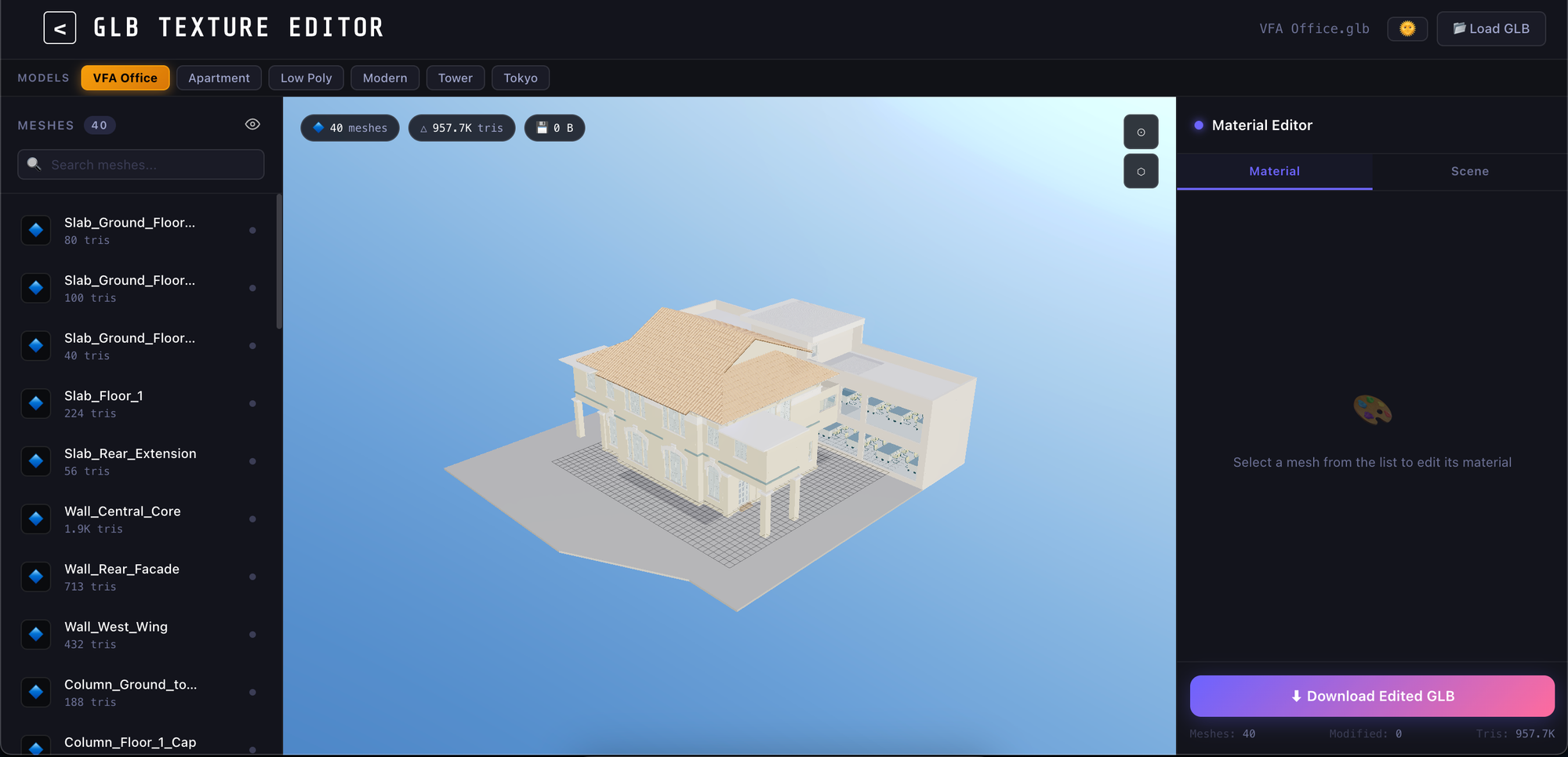
GLB Texture Editor: Edit 3D Model Textures and Materials in Real Time in Your Browser
GLB Texture Editor is a browser-based tool for editing 3D model textures and materials in real time. Upload a GLB file, adjust base color, roughness, metalness, transparency, UV mapping, position, rotation, scale, and projection settings, then preview and export the updated model.
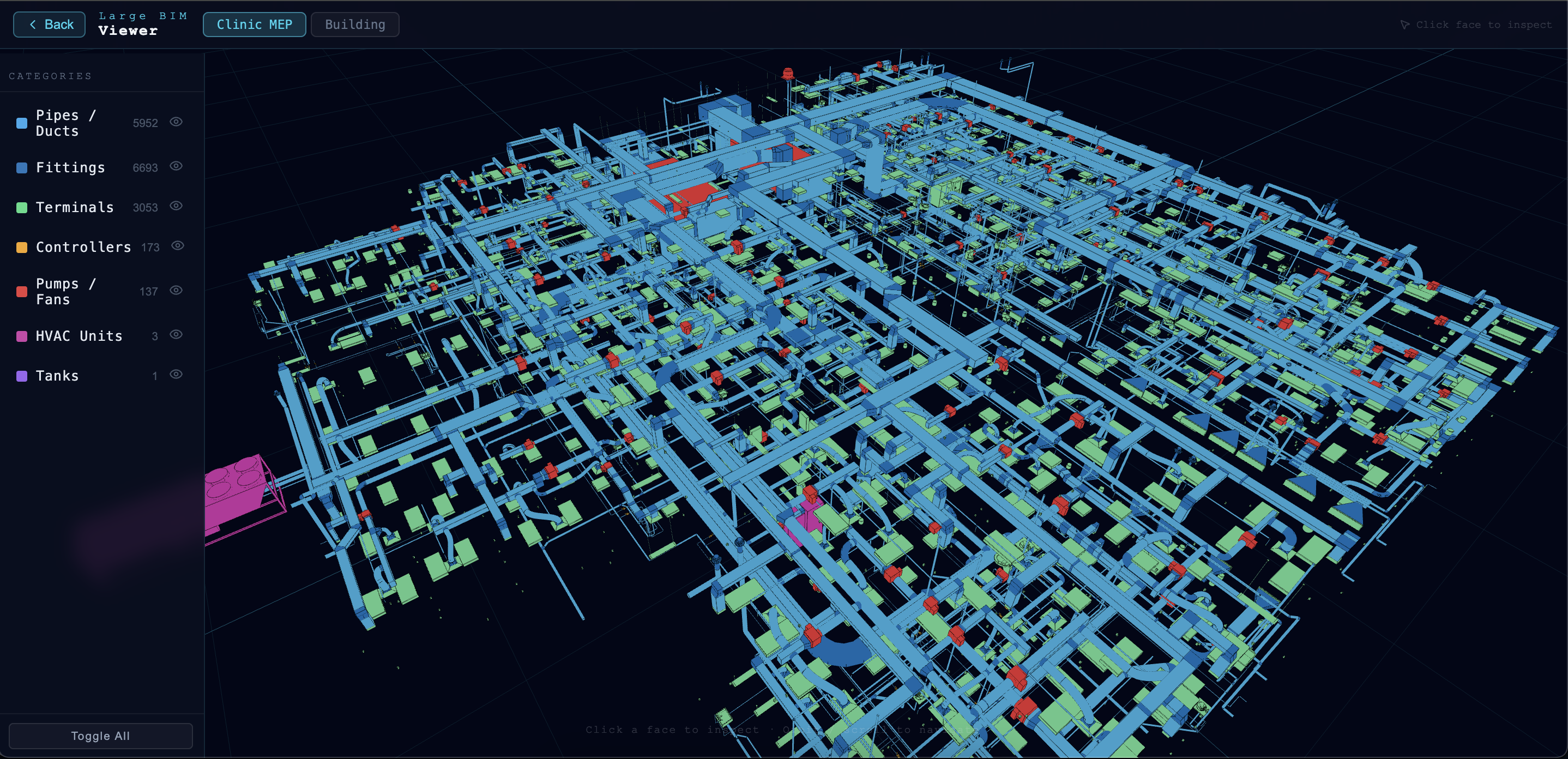
High-Performance Web BIM Viewer for Large IFC Models
This PoC converts large IFC models into optimized GLB files by BIM category for faster browser rendering. It demonstrates flexible layer controls, element data panels, smooth 3D navigation, and reduced z-fighting, while outlining a future automated IFC-to-GLB workflow.
