
Will AI Reduce Employment in Vietnam?


Recently, a Vietnamese HR company asked Vitalify Asia's COO, Kato, to write an article on the topic: "Will AI reduce employment in Vietnam?" Below is the translation of Kato's contributed article.
1. Trends in the Vietnamese System Development Industry It is pointless to predict the future because the uncertainty is too high. What I am focusing on is not just DX (Digital Transformation), but rebuilding organizations to maximize ROI. The traditional labor-intensive business model that simply sells "headcount" has been dealt the final blow by AI. For example, competing on low offshore rates is no longer a valid discussion. Naturally, malicious actors also have access to AI, making the speed of vulnerability analysis incomparably faster. As security risks become the new normal, we are in a phase where we must build AI environments that balance both "offense" and "defense."
2. The Status of AI Adoption We have passed the stage of simply chatting with AI on a browser. We are now at a stage where AI agents embedded in laptops, IDEs, and internal servers handle tasks autonomously in the background. The challenge is: "who will maintain the quality of that environment?" We cannot handle this using old concepts. We are already in a phase where "rogue code" and applications generated by AI are popping up everywhere, entering official company tools, and making security holes a daily occurrence. Giving employees an account and a set of rules is no longer enough. We need people to do highly difficult work: continuously maintaining a rapidly changing AI environment while setting up workflows, tools, and shared environments to handle risks.
3. Jobs That Have Actually Decreased Middleman jobs that earned high salaries simply due to information gaps or environmental factors are losing their value first. This includes engineers who make excuses like "there was a bug because the specs were incomplete," or Bridge SEs who do nothing but pass messages back and forth. If we just wait for "perfect specifications," there is no point in having humans involved. If such a "magic paper" existed, you could just feed it to an AI costing a few hundred dollars, and it would instantly create the product. The value of routine work that cannot answer the ROI question—"Why do we need humans at such a high cost?"—is already being stripped away.
4. Jobs That Have Actually Increased Conversely, the value of "pre-specification" work has gone up. The market changes so fast that defining perfect specifications from the start is now impossible. Therefore, the true value lies in human judgment: grasping pain points in the field, turning them into ideas, and breaking them down into requirements. Furthermore, AI allows us to test those ideas as prototypes on the same day. The cycle from concept to testing has become drastically shorter. Jobs that require both "depth of thought" and "speed of execution" simultaneously are rapidly increasing.
5. What AI Cannot Replace Ideas generated by AI tend to be "correct, but something we have seen before." AI can provide the optimal solution based on existing patterns, but it cannot have the baseless confidence of "why this is interesting." The true nature of that confidence is a human "aesthetic sense" absorbed through experience and failure. Similarly, when it comes to taking responsibility for a risky bet and deciding to "go with this," only humans can do that right now.
6. Predictions for the Next 3 to 5 Years I think predictions themselves are meaningless. Even today's AI will likely look completely different very soon. However, I am looking forward to the era where the physical walls protecting Vietnam disappear, and teams here are evaluated on a completely level playing field with teams worldwide. A scene where a small elite team overwhelms a giant organization will become commonplace. The Vietnamese offshore environment used to be a world where geographical and cultural distances served as an "excuse." Now that those walls are crumbling, we find ourselves in the same arena as the rest of the world. The line between success and failure will depend on whether an organization can implement "tolerance for uncertainty."
7. The Type of Talent Needed We need "talent with a self-destructive curiosity who continuously automates their own jobs with AI." I have been defining this internally. These are people who do not cling to a specific skill or job area, but can cross and connect business, technology, and AI. People who will have their jobs taken by AI are those who treat change as a "loss." Those who enjoy the process of having their jobs taken away will build the next era.
Struggling to turn ideas into reality? With a proven track record of over 1,000 clients, our agile and flexible team will accelerate your business growth.
Book a Free ConsultationMore on "Generative AI & ML"
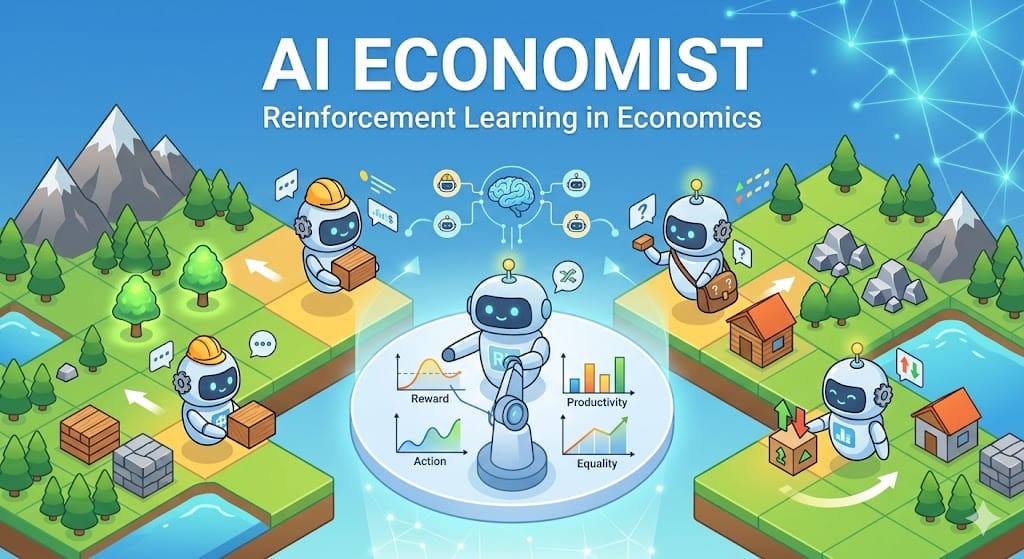
AI Economist: Reinforcement Learning in Economics
Experimenting with the AI Economist API to simulate free markets and communism using Reinforcement Learning (RL) agents.

Applying Self Pre-Training Method to GNN for Quantum Chemistry
Explore how self pre-training methods are applied to Graph Neural Networks (GNN) to improve predictions in quantum chemistry.
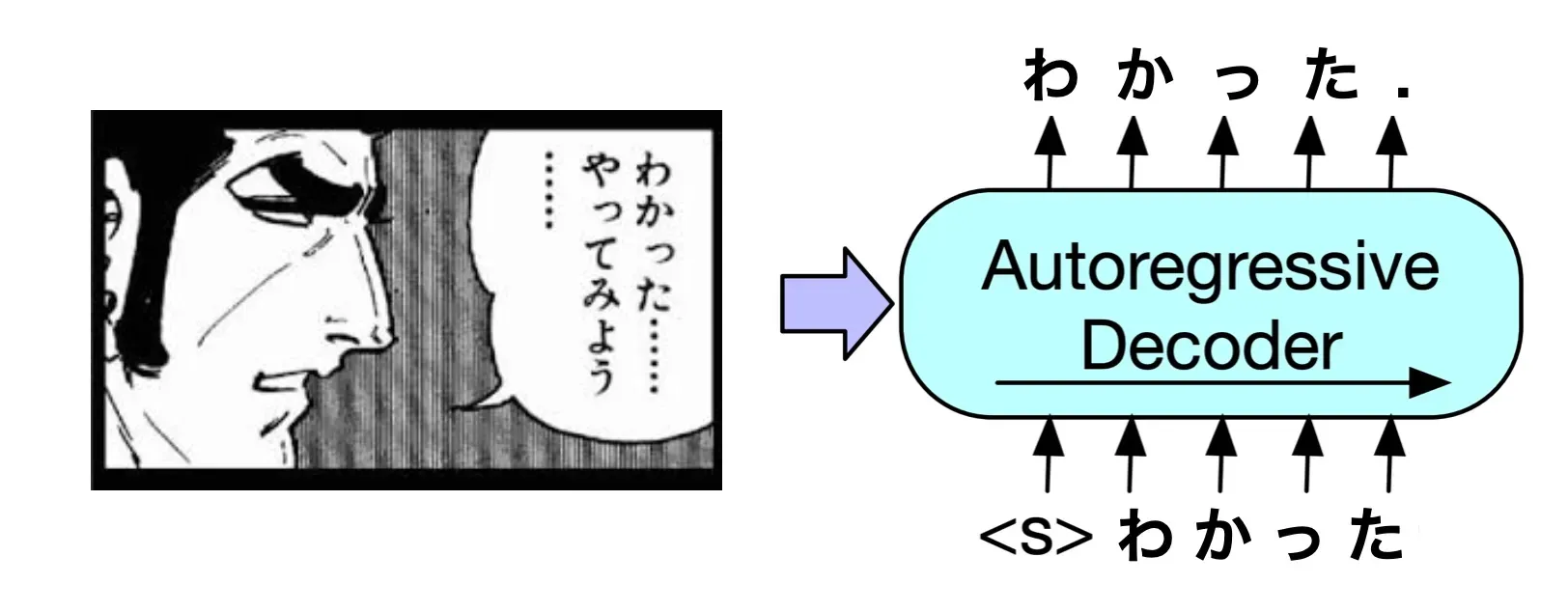
Transformer with OCR: From Molecule to Manga
Exploring the application of Transformer encoder-decoder models in OCR tasks, analyzing performance on Manga datasets.
